
Table of Contents
- What Is Call of Duty: Mobile?
- Multiplayer Mode: Classic Maps and Game Types
- Battle Royale Mode: Isolated, Blackout, and the 100-Player Fight
- Zombies Mode: Undead Siege
- Weapon Customization: The Gunsmith System
- Ranked Mode and Competitive Play
- Battle Pass and Seasons
- Esports: The Call of Duty Mobile World Championship
- Platforms and System Requirements
- Critical Reception and Player Base
- Tips for New Players
- Who Should Play Call of Duty: Mobile?
- FAQ
- Conclusion
- External Authority Sources
Few mobile games have managed to compress an entire console franchise into a phone screen without losing what made it work. Call of Duty: Mobile did exactly that. Since its global launch in October 2019, developed by TiMi Studio Group under Tencent and published by Activision, it has pulled together maps, weapons, operators, and modes from nearly two decades of Call of Duty history into a single free-to-play package that runs on hardware far less powerful than a PlayStation or Xbox. That alone would be a novelty. What kept it relevant for more than six years is that the core shooting still feels like Call of Duty — tight time-to-kill, readable gunfights, and movement that rewards aggression — translated onto touchscreen controls that actually hold up against controller and mouse-and-keyboard support. This guide breaks down every major system: the multiplayer maps pulled from across the franchise, the Isolated and Blackout Battle Royale maps, the Undead Siege Zombies mode, the Gunsmith customization system, ranked play, the Battle Pass and seasonal content cadence, the esports scene built around the CODM World Championship, and practical information for anyone deciding whether to install it. Whether you last played on console years ago or have never touched a Call of Duty game, this is the full picture of what Call of Duty: Mobile actually offers in its current state.
What Is Call of Duty: Mobile?
Call of Duty: Mobile (commonly shortened to CODM) is a free-to-play first-person shooter built specifically for iOS and Android devices. It launched worldwide on October 1, 2019, following a beta period, and was developed by TiMi Studio Group — the Tencent-owned studio also responsible for Honor of Kings and past mobile adaptations of other major franchises — in partnership with Activision. Rather than inventing a new setting, CODM functions as a greatest-hits compilation: its maps, weapons, operators, and killstreaks are drawn from Modern Warfare, Black Ops, and other mainline entries, reassembled into a mobile-first structure with touch controls, controller support, and simplified but recognizable systems.
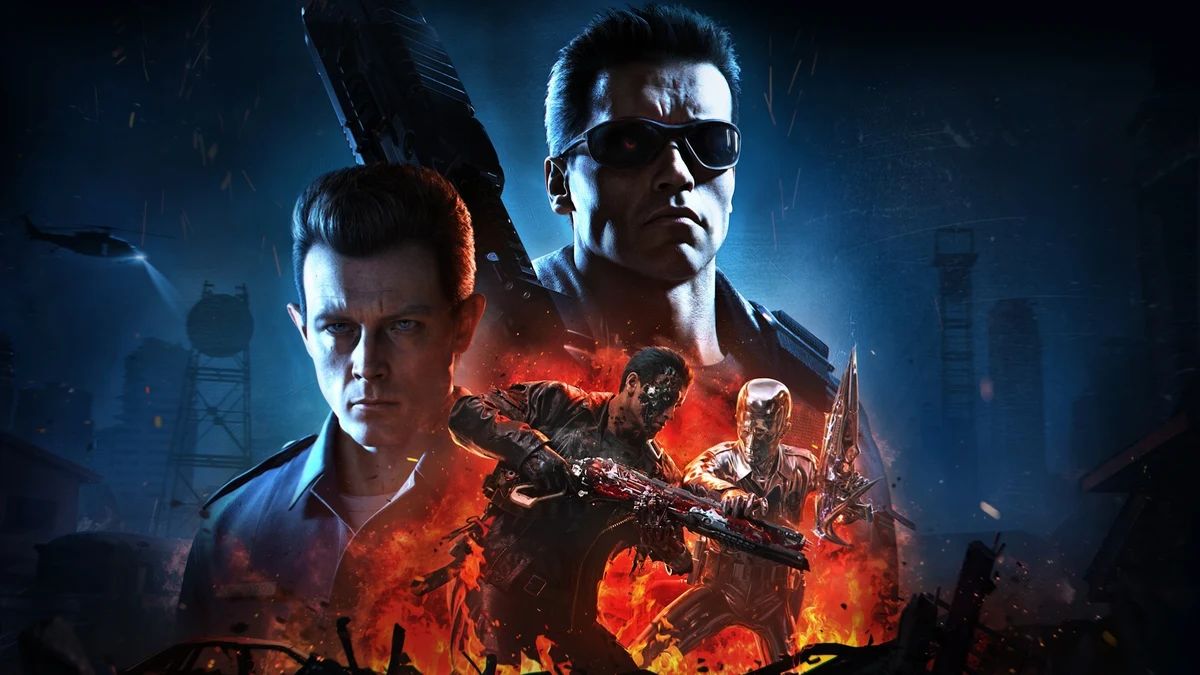
The game runs on a seasonal model. Every few weeks, a new season introduces a themed Battle Pass, new maps or map variants, weapons, operator skins, and often a crossover event tied to a film, another game, or an anniversary. Recent examples include Season 7 “Terminated,” which paired a Terminator 2: Judgment Day collaboration with a new Battle Royale mode called Lockdown, the Cronen Squall assault rifle, and a refreshed Nuketown map, and Season 4 “Eternal Prison,” part of the game’s ongoing 2026 content calendar. This cadence is what keeps CODM classified as a live-service game rather than a static app — content, balance, and meta shift every season, and staying current matters if competitive rank or Battle Pass completion is the goal.
Structurally, the game is divided into three pillars: Multiplayer (fast, arena-style 5v5 and objective modes on compact maps), Battle Royale (up to 100-player last-squad-standing matches), and Zombies (a cooperative survival mode). All three share the same account progression, weapon unlocks, and Battle Pass, which is part of why CODM retains players who might only be interested in one of the three modes — progress in one carries into the others.
Multiplayer Mode: Classic Maps and Game Types
Multiplayer is where Call of Duty: Mobile most directly channels its console lineage. The mode runs 5v5 (and occasionally larger team sizes for specific playlists) on tight, symmetrical maps designed for constant engagement rather than long sightlines or vehicle traversal. Nearly every map in rotation is a mobile-optimized recreation of a map from a prior console or PC Call of Duty title, chosen specifically because they were already built around close-to-mid-range gunfights that translate well to touchscreen aiming.
The map pool draws from across the franchise’s history. Nuketown, originally from Call of Duty: Black Ops, is one of the most requested and frequently returning maps in CODM — a small, near-symmetrical 1950s American suburb built around a pair of houses and a school bus, designed for chaotic, high-kill matches. Crash and Crossfire both originate from Call of Duty 4: Modern Warfare; Crash centers on an open courtyard with a downed helicopter surrounded by building interiors offering both close-quarters and mid-range angles, while Crossfire is a war-torn market street flanked by two-story buildings that has long been a go-to map for players who like elevated sightlines without going full sniper-map. Firing Range, from Black Ops, is a mid-sized U.S. military base map built for balanced infantry combat, and Raid, Standoff, Hijacked, and Killhouse round out a rotation that spans Modern Warfare, Black Ops, and Modern Warfare 2 eras.
Game modes follow the standard Call of Duty template. Team Deathmatch and Free-for-All are the default entry points for new players. Domination and Hardpoint reward map control and coordinated rotations. Search and Destroy strips away respawns entirely, turning every round into a single-life, plant-or-defuse standoff that most closely mirrors the tension of competitive Call of Duty. Gunfight mode strips things down further into 2v2 rounds with randomized loadouts on small maps, useful for players who want quick, mechanically focused matches without the pacing of a full lobby. Seasonal playlists also rotate in limited-time modes tied to that season’s theme, which is how crossover content like the Terminator 2 event gets its own dedicated game mode rather than just cosmetic skins.
Battle Royale Mode: Isolated, Blackout, and the 100-Player Fight
CODM’s Battle Royale mode supports up to 100 players dropping into a single persistent map, competing solo, in duos, or in squads of up to four, with a shrinking play zone forcing rotations until one team remains. The signature map is Isolated, which — much like the multiplayer map pool — is built as a composite of locations from across Call of Duty history rather than a single original setting. Isolated stitches together recognizable areas including a full recreation of Nuketown, a Dock zone modeled on the classic Shipment map from Call of Duty 4, and Estate, based on the Modern Warfare 2 campaign mission “Loose Ends.” Since launch, the map has been expanded multiple times; a Season 7 update titled “Radioactive Agent” added seven new coastal areas, changing rotation patterns and landing priorities across the map.
A second Battle Royale map, Blackout, entered the game as the centerpiece of the Season 8 “2nd Anniversary” update. Adapted from the Black Ops 4 Blackout mode that helped popularize battle royale on console, the CODM version of Blackout was rebuilt specifically for mobile pacing and introduced a significant mechanical shift: the original non-regenerating health system, which relied on med kits and adrenaline shots, plus a three-tier armor vest, was replaced by an armor-plate system closer to what Call of Duty: Warzone uses on console and PC. That update also introduced new movement options, including a briefly-teased jetpack class for faster rotations across the larger map.
Beyond the core last-team-standing format, CODM’s Battle Royale mode periodically runs alternate variants tied to seasonal events — Lockdown, introduced in Season 7 “Terminated,” is one recent example, layering different win conditions or map restrictions onto the standard BR loop for the duration of the season. Classes (functionally similar to specialist loadouts in other battle royale games) give players passive or activatable abilities — think a defibrillator-carrying medic role, a scout with tracking tools, or a mechanic role suited to Blackout’s vehicle-heavy layout — and choosing a class that complements a squad’s strategy is as important to winning as gun skill.
Zombies Mode: Undead Siege
Zombies is Call of Duty’s long-running cooperative survival mode, and CODM’s version — Undead Siege — adapts it for mobile with a structure distinct from the classic round-based Zombies format seen on console. Rather than an endless wave gauntlet on a small map, Undead Siege runs on a day-and-night cycle across the Blackout map. During the day, up to four players can move freely, scavenging for weapons, equipment, and upgrades across the open map with comparatively low threat. At night, the objective flips: the squad must return to and defend a central teleportation base against escalating hordes of the undead.
Players choose a difficulty before a match starts, which determines how many nights the squad needs to survive — either three or five — and how aggressive the zombie waves become. A Nightmare difficulty tier sits above the standard options, altering zombie behavior to make attack patterns less predictable and punishing squads that don’t communicate or hold defensive positions well. Undead Siege draws mechanically from two prior Call of Duty projects: the “Seven Days of Siege” mode from Call of Duty Online and elements of the Outbreak mode introduced in Black Ops Cold War, both of which used open-map survival structures rather than the tight, linear round progression of classic Zombies.
Undead Siege isn’t a permanent fixture — it debuted with Season 6 content and has returned as a recurring seasonal feature rather than an always-available mode, meaning its availability depends on the current season’s content lineup. When it is active, it sits in its own menu tab alongside Multiplayer and Battle Royale, with its own progression track and seasonal rewards tied to completing matches at higher difficulties.
Weapon Customization: The Gunsmith System
The Gunsmith is CODM’s core weapon customization system, and it is one of the more mechanically deep systems in any mobile shooter. Every weapon can be fitted with up to five attachments simultaneously, chosen from categories that include Muzzle, Barrel, Stock, Optic, Laser, Underbarrel (grip), Magazine/Ammunition, and Rear Grip, plus a separate Weapon Perk slot unlocked as a gun levels up through use. Each attachment changes a defined set of stats — accuracy, damage range, bullet velocity, recoil control, mobility, and ADS (aim-down-sight) speed among them — and virtually every attachment carries a tradeoff rather than being a pure upgrade.
That tradeoff design is what gives Gunsmith actual depth rather than being a cosmetic layer. A longer barrel extends effective range and improves damage retention at distance, but adds weight that slows movement and aim speed. A larger-capacity magazine reduces how often a player needs to reload during a firefight, but the added weight similarly affects handling. A bright laser sight boosts hip-fire accuracy for close-quarters trades, but the laser itself is visible to enemies, which can give away a position before a fight even starts. Because of this, there is rarely a single “best” build for any weapon — the correct loadout depends on whether a player is optimizing for Nuketown-style close-range chaos, a Crossfire-style long sightline, or a Battle Royale engagement where fights happen at unpredictable ranges.
Weapon perks, unlocked through weapon leveling rather than the account-level perk system, add another layer — bonuses like faster reload under pressure, improved bullet penetration through cover, or reduced flinch when hit while firing. Experienced players frequently treat a specific perk as more valuable than a marginal stat gain from a physical attachment, particularly on weapons used in Ranked or Search and Destroy where a single well-timed reload or penetration kill can decide a round. Custom loadouts built in Gunsmith can be saved and swapped between quickly, letting players carry different builds of the same weapon for multiplayer versus Battle Royale without rebuilding from scratch each match.
Ranked Mode and Competitive Play
Ranked Mode is CODM’s structured competitive ladder, separate from the casual multiplayer and Battle Royale queues, and it uses its own seven-tier rank system: Rookie, Veteran, Elite, Pro, Master, Grandmaster, and Legendary. The first four ranks — Rookie through Pro — are each broken into five divisions, and players climb through a tiered promotion system, clearing one division before advancing to the next within that rank. Once a player reaches Master, the structure changes entirely: Master, Grandmaster, and Legendary no longer use divisions, and progression instead becomes purely points-based, with rank determined by an accumulating score rather than win-streak gates.
Legendary is the top of the ladder and requires accumulating more than 8,000 points to reach. There is no subdivision within Legendary — players who reach it compete against each other on a live leaderboard rather than climbing further, which functions similarly to a top-percentile ranking system in other competitive games rather than a discrete rank tier. Points across all ranks are earned based on a combination of match outcome, placement, individual score, and eliminations, meaning Ranked rewards more than just winning — consistent individual performance in a loss still contributes positively.
Ranked seasons are not indefinite. Rank resets occur roughly every two months, aligned with the game’s broader two-Battle-Pass-season cycle, which soft-resets the ladder and gives every player, regardless of prior rank, a fresh climb with placement-adjusted starting points. This keeps the ranked population active each season rather than letting a small group of top-Legendary players permanently dominate matchmaking pools. Ranked play uses a curated map and mode rotation — generally favoring Search and Destroy and other objective-heavy formats over the more casual Team Deathmatch — since those modes put a higher premium on positioning, communication, and round-by-round decision-making, which is what a competitive ladder is meant to measure.
Battle Pass and Seasons
Call of Duty: Mobile’s monetization and content delivery both run through its seasonal Battle Pass system, which follows the format now standard across most live-service shooters but with CODM’s own specific structure. Each season’s Battle Pass spans a base 50 tiers, with additional bonus progression extending up to tier 200 for players who keep playing after finishing the core track — giving dedicated players a reason to stay engaged with a season well past the point of unlocking its headline rewards.
Two tracks run in parallel: a free track available to every player, and a Premium track unlocked by spending COD Points (CP), the game’s premium currency. The free track typically includes basic weapon blueprints, cosmetic items, and in-game currency, while the Premium track carries the bulk of a season’s headline content — high-quality weapon blueprints, operator skins, calling cards, and other cosmetics tied to the season’s theme. Pricing has varied over the game’s lifespan and by region, but recent seasons have offered a Standard Premium Pass around 560 CP, a Bundle option around 1,280 CP that includes extra tiers or items, and a Premium Pass Plus tier that grants everything in the standard Premium Pass plus an instant unlock of the first several tiers, letting players skip the early grind. A recurring Ground Forces subscription, priced separately on a monthly basis, offers additional daily and seasonal perks outside the standard Battle Pass structure.
Seasons themselves typically run four to six weeks and are built around a theme — sometimes an original Call of Duty universe story beat, sometimes a licensed crossover. Recent examples include Season 7 “Terminated,” built around a Terminator 2: Judgment Day tie-in with themed operator skins, weapons, and the Lockdown Battle Royale mode, and Season 4 “Eternal Prison,” part of the 2026 seasonal lineup. Anniversary seasons — marking the game’s launch date each October — tend to be the largest content drops of the year; the Season 8 “2nd Anniversary” update, for instance, introduced the Blackout Battle Royale map alongside its own dedicated Battle Pass and event lineup. Because weapon blueprints, operator skins, and camo unlocks are frequently season-exclusive, returning after a long break often means missing content permanently unless it reappears in a later store rotation.
Esports: The Call of Duty Mobile World Championship
Call of Duty: Mobile supports a genuine competitive esports ecosystem, anchored by the annual Call of Duty Mobile World Championship, run under Activision’s supervision as the top tier of CODM competition globally. Regional circuits throughout the year — including region-specific leagues across North America, Europe, MENA, Latin America, and Asia-Pacific — feed into the World Championship, which brings together the best-performing teams from each region for a single global finals event.
The 2025 World Championship illustrates the scale the scene has reached: the tournament carried a total prize pool of $850,000 and ran November 7-9, 2025, with 16 teams competing across the finals stage. Qing Jiu Club, a Chinese organization, won the tournament and took home $350,000 of the total pool — a result that also reflects the strength of the Chinese and broader Asian competitive scene, which has consistently produced top-tier CODM teams given the game’s TiMi Studio Group origins and large East Asian player base. Matches at this level are played primarily in the Search and Destroy and Hardpoint formats, favoring the same structured, round-based, objective-focused play that defines Ranked Mode, since those formats reward team coordination and repeatable strategy over individual highlight plays.
Esports coverage for CODM runs through official Call of Duty channels alongside dedicated tournament trackers like Liquipedia and Esports Charts, both of which maintain full historical records of prior World Championships, regional qualifiers, and team rosters. For players interested in the competitive path, the practical route runs through Ranked Mode performance and regional open qualifiers or scrim circuits, which is how most current professional CODM players were originally scouted — there is no separate, gated entry point outside of demonstrating consistent high-rank performance and getting picked up by an organization or qualifying independently through open brackets.
Platforms and System Requirements
Call of Duty: Mobile is available on iOS and Android exclusively — there is no official standalone PC or console client, though the game supports Bluetooth and USB controllers on mobile devices for players who prefer physical inputs over touchscreen controls, and keyboard-and-mouse input is supported on emulated setups even though that is not the officially marketed way to play. It is worth distinguishing CODM from Call of Duty: Warzone Mobile, a separate, more demanding battle royale title Activision released afterward; the two are distinct games with different install requirements and player bases, and this guide covers CODM specifically.
Minimum device requirements are intentionally modest given the game’s mobile-first design. On Android, CODM requires a device running Android 6.0 or later with at least 2 GB of RAM. On iOS, the requirement is iOS 15.0 or later with at least 2 GB of RAM. The installed game requires roughly 2 GB of free storage at minimum, though actual space used tends to run higher once seasonal content, high-resolution texture packs, and cached data are factored in — players on storage-constrained devices should expect to periodically clear cache or manage optional HD resource packs through the in-game settings menu. The game supports adjustable graphics quality and frame rate settings, letting lower-end devices run at reduced visual fidelity in exchange for smoother performance, which matters in a genre where consistent frame rate affects competitive viability more than visual detail does.
Because CODM is free-to-play and cross-platform between iOS and Android with shared progression, players can switch devices or platforms without losing account data, provided their account is linked through a supported login method (Activision account, Facebook, or platform-specific sign-in) rather than tied to guest/local device storage only.
Critical Reception and Player Base
Call of Duty: Mobile launched to a strong critical reception relative to the mobile shooter category, holding a Metascore of 81 on Metacritic — a notably high score for a free-to-play mobile title, reflecting that reviewers saw it as a legitimate, well-executed adaptation rather than a cash-grab reskin of the franchise. Its reputation has largely held over its lifespan; the consistent praise across coverage centers on how closely the core gunplay and time-to-kill match console Call of Duty, and on the depth of systems like Gunsmith that most mobile shooters don’t attempt to replicate.
Commercially, CODM has been one of the most successful mobile shooters ever released. It has accumulated hundreds of millions of downloads worldwide since its October 2019 launch and generated an estimated $1.8 billion in lifetime revenue, with monthly revenue continuing to run in the tens of millions of dollars driven by Battle Pass sales and in-app purchases. Active player figures have fluctuated with the seasonal content cycle, as is typical for live-service shooters, with monthly active users generally reported in the range of 12 to 15 million and daily active users around 2 million during 2025, with a peak of roughly 7 million monthly active users recorded that August. By most industry trackers, CODM ranks as the second-highest-grossing mobile shooter globally, trailing only PUBG Mobile — a useful benchmark for understanding where it sits in the broader battle royale and mobile FPS market.
Tips for New Players
Getting comfortable with Call of Duty: Mobile’s touchscreen controls takes longer than picking up a controller-based shooter, but the learning curve flattens quickly with a few deliberate adjustments. Start with the control layout before anything else — the default simple/basic layout works for casual play, but switching to advanced controls (which typically separates fire and aim into distinct, customizable buttons) tends to produce faster, more consistent aim once muscle memory builds. Most competitive and high-rank players use a heavily customized advanced layout rather than the default.
In Multiplayer, spend time in Team Deathmatch and Gunfight before jumping into Search and Destroy or Ranked — both modes strip away respawns, so mistakes there are costlier while still learning map layouts and gunfight timing. Learn a small handful of maps deeply (Nuketown and Crash are good starting points given how often they appear in rotation) rather than trying to memorize the entire pool at once.
For Gunsmith, resist the urge to chase every unlocked attachment slot — a five-attachment build with real tradeoffs beats a build that maximizes stats on paper but sacrifices too much mobility or handling. Build around a clear intent (close-range SMG for objective modes, longer-range AR for open maps) rather than a generic “best overall” loadout.
In Battle Royale, landing away from Nuketown and other high-traffic named locations on Isolated during early games reduces the odds of an immediate third-party fight before basic loot and armor are secured — save the hot drops for once map knowledge and gunskill are further along. Squad communication and calling out positions matters more than individual aim in the mid-to-late circle stages, where fights are frequently three-way.
For Ranked specifically, prioritize consistent placement and objective play over chasing kills in early rank tiers, since the point system rewards match performance broadly rather than eliminations alone — a player who plays the objective and survives rounds will often climb faster than one who plays purely for kills and dies early.
Finally, track the current season’s Battle Pass before spending CP — Premium Pass Plus is only worth its added cost if there’s enough remaining time in the season to realistically reach and use the skipped tiers, and season-exclusive blueprints and skins generally do not return quickly, so deciding early whether a season’s content is worth pursuing avoids paying for a pass with no time left to complete it.
Who Should Play Call of Duty: Mobile?
Call of Duty: Mobile is best suited to players who want console-quality shooter mechanics without console hardware — the touch controls, controller support, and modest device requirements make it accessible on almost any phone released in the last several years. It particularly suits players already familiar with Call of Duty from console or PC who want a mobile option that doesn’t feel like a watered-down spin-off; the maps, weapons, and gunplay feel are close enough to the source material that the transition is more about input method than learning a new game from scratch.
It also works well for players specifically drawn to battle royale who want a mobile alternative built around Call of Duty’s faster time-to-kill rather than the slower, more methodical pacing of some other mobile battle royale titles. Zombies fans get a genuinely distinct cooperative mode in Undead Siege rather than a token afterthought, and competitively minded players have a real path from Ranked Mode into regional and world-level esports, backed by an $850,000 prize pool at the top tier as of the 2025 World Championship.
Players who are likely to bounce off CODM include those without much tolerance for live-service content cadences — seasons rotate content in and out regularly, and staying current requires at least semi-regular play. Players expecting a fully offline, no-purchase-pressure experience should also temper expectations; while the core game is genuinely playable without spending, Battle Pass and store rotations are a persistent, if optional, part of the experience typical of free-to-play shooters.
FAQ
Is Call of Duty: Mobile free to play? Yes. The base game, including Multiplayer, Battle Royale, and Zombies, is entirely free to download and play. Optional purchases include the seasonal Premium Battle Pass, cosmetic bundles, and COD Points, none of which are required to play competitively or progress through Ranked Mode.
What is the difference between Call of Duty: Mobile and Call of Duty: Warzone Mobile? They are separate games. Call of Duty: Mobile launched in 2019 and is TiMi Studio Group’s mobile-first adaptation covering Multiplayer, Battle Royale, and Zombies with lighter device requirements. Call of Duty: Warzone Mobile is a later, separate release built to more closely mirror the console/PC Warzone experience and has significantly higher device demands.
How many players are in a Call of Duty: Mobile Battle Royale match? Battle Royale matches on the Isolated and Blackout maps support up to 100 players, competing solo, in duos, or in squads of up to four players.
How do I rank up quickly in Ranked Mode? Ranked points are awarded for match placement, individual score, and eliminations combined, not wins alone. Consistent objective play and survival in Search and Destroy-style formats tends to produce steadier climbs through the Rookie-to-Pro divisions than aggressive but inconsistent kill-focused play.
Can I play Call of Duty: Mobile with a controller? Yes. The game supports Bluetooth and USB controllers on both iOS and Android, in addition to its default touchscreen control schemes, which include simple and advanced layout options.
How often does Call of Duty: Mobile release new seasons? Seasons typically run roughly four to six weeks and bring a new themed Battle Pass, weapons, maps or map updates, and often a crossover event. Larger anniversary updates, released around the game’s October launch anniversary, tend to include the biggest additions, such as new Battle Royale maps.
Conclusion
Call of Duty: Mobile earned its staying power by treating mobile players as a real audience rather than a secondary market for a watered-down product. The Gunsmith system gives weapon customization genuine depth, the Isolated and Blackout Battle Royale maps repurpose fan-favorite console locations into a coherent 100-player experience, Undead Siege gives Zombies fans a distinct cooperative mode rather than a token mode, and the Ranked ladder feeds directly into a competitive scene backed by six-figure prize pools at the World Championship level. Combined with modest device requirements, cross-platform progression between iOS and Android, and a Metacritic score that holds up against far more expensive shooters, CODM remains one of the clearest cases of a mobile adaptation matching — rather than diminishing — its console origin. For anyone deciding whether to install it, the practical bar is low: a phone from the last several years and a couple of gigabytes of storage are enough to see whether the maps, gunplay, and seasonal content justify sticking around.
External Authority Sources
- Call of Duty: Mobile Season 7 — Terminated (Official Call of Duty Blog)
- Call of Duty: Mobile Reviews — Metacritic
- Call of Duty Mobile World Championship 2025 — Liquipedia
- Call of Duty: Mobile — Official Activision Support


[…] Best PUBG Weapons & Attachments: 2026 Meta (ESRB M) Call of Duty Beginner’s Guide 2026: CoD HQ & Tips (ESRB M) Call of Duty in 2026 (ESRB M) Call of Duty: Mobile: The Complete 2026 Guide (ESRB T) […]