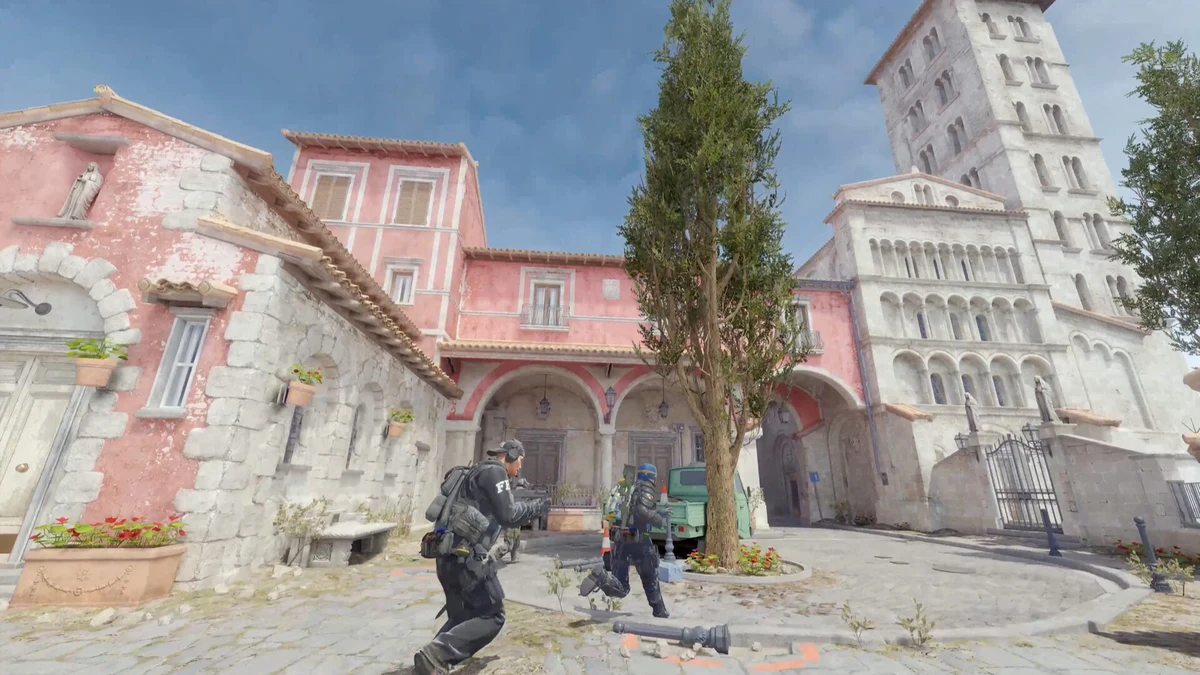
Knowing a map’s layout is the difference between reacting to CS2 and actually playing it. Every competitive round is a negotiation over space — who controls mid, who holds an angle, where the smoke lands — and none of that makes sense until you understand the maps themselves. This guide breaks down the current active duty map pool, the basic identity of each map, and the callout and strategy fundamentals that apply across all of them.
If you’re brand new to the game, it’s worth reading our CS2 beginner’s guide first for the mechanics that make map knowledge actually useful — utility usage, buy phase decisions, and basic positioning. And for the complete picture of CS2 beyond the map pool, check out our complete CS2 guide.
The Current CS2 Active Duty Map Pool
Valve rotates the Active Duty pool periodically, swapping maps in and out based on competitive balance, community feedback, and pro-scene data. As of the current rotation, the seven-map Active Duty pool used in Premier and major competitive play is:
| Map | Bomb Sites | Map Identity |
|---|---|---|
| Mirage | A and B | Balanced, mid-controlled, the most universally learned map in the pool |
| Inferno | A and B | Tight corridors, close-quarters fighting, heavy utility usage around Banana and Apps |
| Dust II | A and B | Long sightlines, open mid, one of the most recognizable maps in FPS history |
| Ancient | A and B | Jungle-themed, vertical elements, utility-heavy site executes |
| Anubis | A and B | Egyptian-themed, wide open mid and site areas, strong CT utility control |
| Nuke | A and B (vertically stacked) | Multi-level, tight verticality, one of the most unique map layouts in competitive shooters |
| Overpass | A and B | Water hazard mid, high walls, strong for aggressive CT utility plays |
Outside of Premier’s Active Duty rotation, Competitive, Casual, and Deathmatch draw from a wider pool that has also included Cache in recent rotations, giving players more variety outside the strict competitive format. Because Valve periodically reshuffles which maps count as “Active Duty,” it’s worth checking in-game before a big tournament or ranked push to confirm the current lineup hasn’t changed since you last checked.
Map Breakdown: Callouts and Strategy Basics
Mirage
Mirage is the map most new players learn first, and for good reason — its layout is intuitive, with a central mid connecting both bomb sites and clear, commonly used callouts like Palace, Ramp, Connector, Apartments, and Jungle. The core strategic tension is mid control: whichever team owns mid early can rotate utility and players to either site far more easily than the team stuck defending both from the flanks.
Common strats: A-site executes typically flow through Palace and Ramp with smoke cover on Stairs and CT spawn; B-site executes usually push through Apartments with utility to block the connector rotation from mid.
Inferno
Inferno is defined by tight spaces and long, narrow chokepoints — Banana leading to B site is one of the most iconic and heavily contested areas in the game. Utility usage matters enormously here because so many engagements happen at close range in confined corridors.
Common strats: B-site executes almost always involve a molotov or smoke to control Banana before committing players, since it’s a natural chokepoint for CT-side crossfires. A-site executes typically split between the main Arch entrance and a Second Mid/Apartments flank to split defender attention.
Dust II
Arguably the most famous map in FPS history, Dust II rewards long-range gunfights and clean crosshair placement, with Mid and Long A serving as key areas of contested space. Callouts like Catwalk, Xbox, Goose, and Pit are recognizable to nearly any FPS player, even outside CS2’s own community.
Common strats: A-site executes commonly split pressure between Long A and Catwalk to prevent CTs from stacking one entry point; B-site executes usually push through Tunnels with a flash or smoke to deny the Tunnel guard’s initial pick.
Ancient
A jungle-themed map added during the CS:GO era and carried into CS2’s Active Duty pool, Ancient has a more vertical, utility-dependent layout than the classic maps. Both sites require careful utility usage to execute cleanly due to elevated CT positions and tight chokepoints.
Common strats: A-site executes lean on smoking off the elevated Donut/Ramp area to neutralize the height advantage; B-site pushes typically use a flash or molotov to clear Cave before committing to the site itself.
Anubis
Anubis brings an open, Egyptian-themed layout with wide mid control and strong defensive setups for CT-side utility. It rewards teams that can coordinate multi-utility executes rather than relying on individual mechanical skill alone.
Common strats: Because mid is so open, teams often use mid control as a springboard for fast site executes on both A and B, using smokes to block the long sightlines the map’s openness creates.
Nuke
Nuke’s defining feature is verticality — bomb sites stacked on top of each other across multiple levels, connected by tight stairwells and a distinctive outdoor “Heaven” and “Vents” area. It’s widely considered one of the hardest maps to learn because so much of the map exists on different vertical planes simultaneously.
Common strats: Outside executes onto A commonly use Heaven control to deny CT rotations, while B-site pushes often rely on Hut and Garage smokes to block sightlines from the Secret/Vents area.
Overpass
Overpass centers on a water-filled canal running through mid, with high walls and elevation changes throughout. It’s a strong map for aggressive CT utility plays given the number of tight chokepoints leading into each site.
Common strats: A-site executes typically use smokes on Bathrooms and Connector to isolate defenders, while B-site pushes often flash over the wall from Long/Fountain before committing players through the choke.
Common Strats and Bomb Site Fundamentals
Across every map in the pool, a few strategic principles hold true regardless of layout:
- Executes need utility before players. Smoking off key sightlines and flashing common defensive positions before your team commits to a site dramatically increases the odds of a clean take.
- Split executes beat single-point pushes. Attacking a site from two directions at once forces defenders to split attention, which is almost always better than five players funneling through one chokepoint.
- Post-plant positioning matters as much as the plant itself. Where your team stands after planting the bomb determines whether a defuse attempt succeeds — cover the bomb from multiple angles rather than stacking in one spot.
- CT-side setups should rotate based on information, not habit. Holding a default position until you hear or see rotation information, rather than reacting purely on instinct, is what separates strong CT rounds from predictable ones.
- Learn a few lineups per map rather than none. You don’t need to memorize every smoke and flash on every map immediately — three or four reliable executes per map, learned properly, will carry you further than a shallow understanding of all of them.
Frequently Asked Questions
Q: How many maps are in the current CS2 Active Duty pool? The current Premier Active Duty pool includes seven maps: Mirage, Inferno, Dust II, Ancient, Anubis, Nuke, and Overpass. Valve periodically rotates maps in and out, so it’s worth confirming the current pool in-game before a ranked push.
Q: What’s the easiest CS2 map to learn for beginners? Mirage and Dust II are generally considered the most beginner-friendly, thanks to intuitive layouts, widely available guides, and callouts that are commonly known throughout the community.
Q: Why does Valve rotate the map pool? Map rotations keep competitive play balanced and fresh, allow Valve to test reworked or updated versions of maps, and respond to feedback from both the pro scene and the broader player base.
Q: Do I need to memorize every callout on every map? Not immediately. Start with the most commonly used callouts for major areas (mid, each bomb site, key chokepoints) and build from there as you play more matches on each map.
Q: What’s the difference between Active Duty and the full map pool? Active Duty is the specific rotation used in Premier and most competitive play. The broader map pool, used in Casual, Deathmatch, and other modes, is generally larger and includes maps not currently in competitive rotation.
The Bottom Line
Map knowledge compounds with everything else you learn in CS2 — utility lineups, crosshair placement, and strategic calls all depend on understanding the space you’re playing in. Spend focused time in each Active Duty map, learn a handful of reliable executes per site, and the rest of your game will start to click into place. For more on getting the fundamentals right, revisit our CS2 beginner’s guide, and once your setup is dialed in for competitive play, our guide to the best CS2 crosshair and settings is worth a look. For the full picture of everything CS2, start with our complete CS2 guide.