
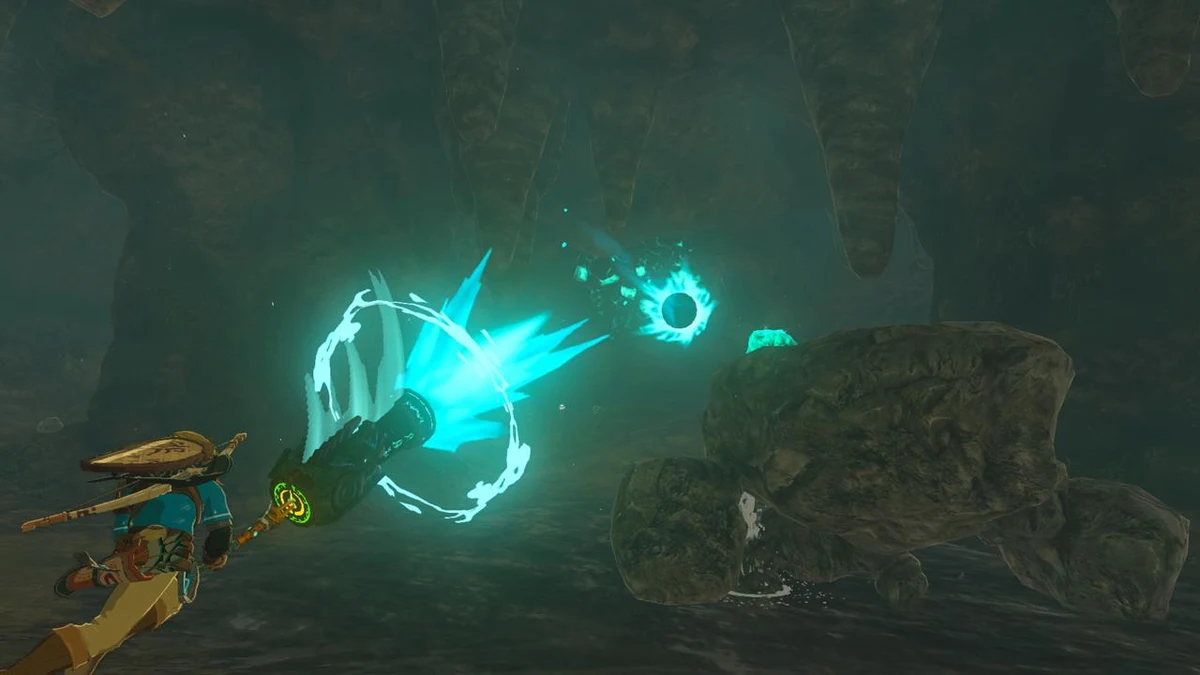
Tears of the Kingdom expands Hyrule vertically as much as it does horizontally, adding two entirely new layers to explore above and below the familiar surface map: the Sky Islands floating overhead and the Depths, a vast underground mirror of Hyrule shrouded in darkness. Both regions have their own hazards, rewards, and traversal logic that differ significantly from surface exploration. This guide covers how to get into each region, what to watch out for, and what’s worth prioritizing once you’re there.
What Is the Depths and How Do You Get There
The Depths is a massive underground cavern system that sits beneath the surface of Hyrule and mirrors its layout in reverse, so a location’s general position on the surface map corresponds to roughly the same position underground. There’s no light source in the Depths beyond what Link brings with him or activates, since it’s far enough underground that sunlight can’t reach it. You can enter the Depths through chasms, which are large dark pits found across the surface, including a very accessible one at the Great Sky Island where most players first descend. Because the region is pitch black by default, having a light source ready before you drop in makes the difference between a smooth first exploration and getting lost immediately.
Lightroots and How to Navigate the Darkness
Scattered throughout the Depths are 120 Lightroots, glowing plant-like structures that, once activated, illuminate a large surrounding area and function as fast travel points. Every Lightroot shares the same X and Y coordinates as a corresponding surface shrine, which makes them useful reference points for orienting yourself if you’re familiar with the surface map above. Beyond fast travel, Lightroots reveal terrain, enemies, and points of interest hidden in the gloom the moment they’re lit, so prioritizing the nearest unlit Lightroot when you arrive in a new area of the Depths is generally the fastest way to make the region navigable. Finding every Lightroot in the game rewards a Dispelling Darkness Medal, a nice bonus for players aiming for full completion.
Gloom, Health Damage, and How to Cure It
The defining hazard of the Depths is Gloom, a dark substance that pools across the floor in patches and coats certain enemy weapons. Standing in Gloom or being hit by a Gloom-coated attack doesn’t just deal normal damage, it can permanently reduce Link’s maximum heart count until the effect is cured. The only reliable cures are eating a dish made with Sundelion, a rare glowing plant found in the Depths itself, or returning to direct sunlight on the surface, which slowly restores lost hearts over time. Because of this risk, it’s worth avoiding unnecessary Gloom patches when possible and keeping a Sundelion dish in reserve before any extended trip into deeper, more dangerous parts of the Depths.
What to Find in the Depths (Zonaite, Poes, and Yiga Hideouts)
The Depths is also the primary source of several resources that are scarce or entirely absent on the surface. Zonaite, a mineral used to upgrade the Zonai Energy Cell that powers Autobuild, is concentrated in Depths mining sites far more heavily than anywhere above ground. Poe spirits collected in the Depths can be traded at Bargainer Statues scattered throughout the region for unique rewards not available elsewhere. The Depths also hides numerous Yiga Clan hideouts, which resemble abandoned mines and often contain a Yiga Captain guarding supplies alongside a Schematic, a blueprint that can be used with Autobuild once it’s unlocked. The Autobuild ability itself is found at the Great Abandoned Central Mine, one of the more significant landmarks in the entire underground region.
What Are the Sky Islands and How to Reach Them
Floating high above Hyrule, the Sky Islands are clusters of landmasses connected loosely into regional archipelagos, including groupings like the Tabantha Frontier Sky, the Akkala Highlands Sky, the Lanayru Great Spring Sky, and the North Hyrule Sky Archipelago, which contains Bravery Island. These islands carry over the stone Zonai architecture seen in Breath of the Wild’s shrines and towers, but expand on it with new structures like stone bridges, inverted pillars, and imagery not seen in the earlier game. Reaching the Sky Islands generally requires launching upward using Zonai devices such as updrafts, Ultrahand-built rockets and hot air balloons, or towers on the surface that shoot Link into the sky, since there’s no direct climbing path from the ground.
Great Sky Island and the Four Starting Shrines
The Great Sky Island is the largest of all the floating landmasses and serves as the game’s opening area, home to four shrines that grant Link his base Zonai abilities directly from Rauru. At the island’s northern end sits the Temple of Time, a recognizable landmark for players familiar with earlier Zelda games. Completing all four shrines here and finishing the opening sequence is a prerequisite for descending to the main surface of Hyrule, making the Great Sky Island effectively a self-contained tutorial region before the rest of the game opens up.
Tips for Efficient Sky and Depths Exploration
Because both regions reward vertical thinking rather than the horizontal travel used on the surface, it helps to treat exploration goals differently in each. In the Depths, prioritize lighting Lightroots methodically rather than wandering blindly, since a lit map makes every subsequent trip faster. In the Sky Islands, look for towers and updrafts as anchor points for reaching nearby islands rather than trying to build a single vehicle capable of crossing the entire sky at once. Bringing brightbloom seeds or other portable light sources into the Depths, and keeping an eye on stamina before jumping between distant Sky Islands, will save you from most of the avoidable setbacks new explorers run into in these regions. For the full story context connecting the surface, sky, and underground, check out our complete Tears of the Kingdom guide.


[…] Exploring the Depths and Sky Islands in TOTK (ESRB E10+) Fortnite Beginner’s Guide (2026): Chapter 7 Basics (ESRB T) Rivage System Requirements: Can Your PC Run It? Harvest Moon: Echoes of Teradea System Requirements: Can Your PC Run It? […]
[…] Exploring the Depths and Sky Islands in TOTK (ESRB E10+) Ultrahand and Fuse Guide: Best Beginner Builds in TOTK (ESRB E10+) Kingdom Come: Deliverance II Review (ESRB M) TOTK Shrine and Puzzle-Solving Tips Guide (ESRB E10+) […]