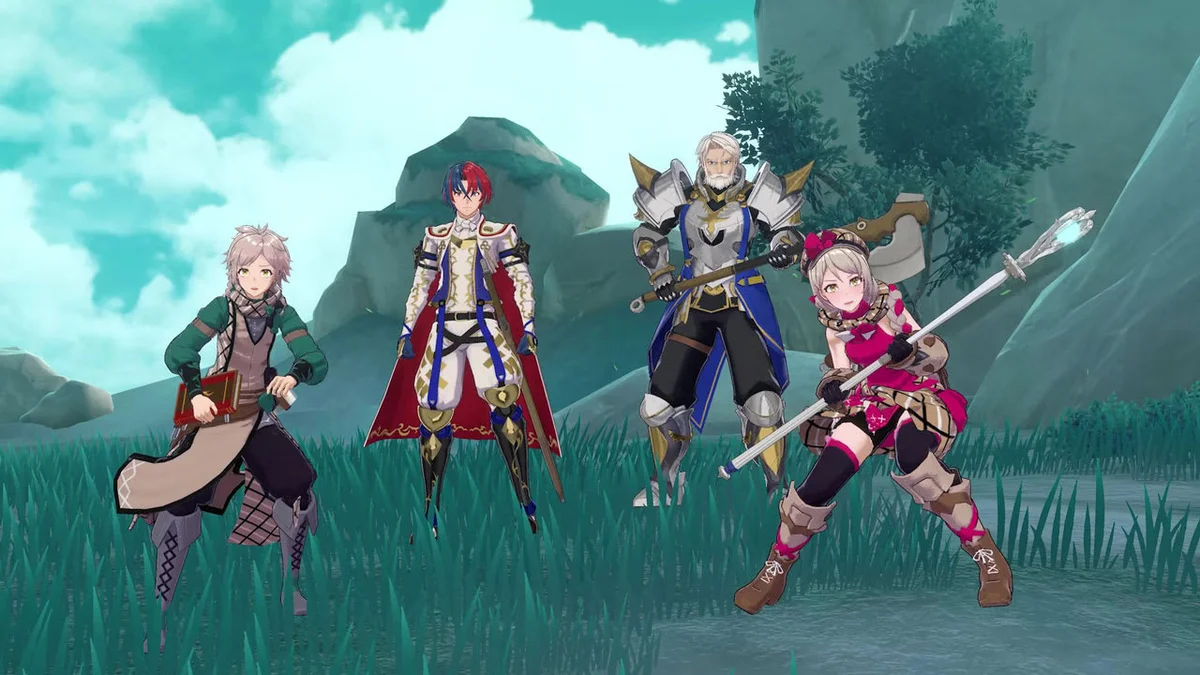
Nintendo rarely hands an entire broadcast slot to a single game, so when a twenty-minute Direct went live on August 4 built entirely around Fire Emblem: Fortune’s Weave, it told fans almost as much about Nintendo’s confidence in the project as the footage itself did. The strategy RPG had already been confirmed for a September 17 release on Switch 2, but this focused showcase was the first real look at how its story, cast, and combat systems fit together, and it left longtime series followers with plenty to dissect before launch.
A Kingdom’s Fall and a Second Chance
The narrative hook driving Fortune’s Weave sends players to Dagda, a continent situated far to the southwest of Fódlan, the setting fans will recognize from Three Houses. The opening act depicts the collapse of the Dagdan Empire at the hands of a resurrected demon god named Balor, a bleak starting point that quickly pivots into the game’s central conceit. The goddess Sothis intervenes, casting the player’s soul five years into the past with the chance to alter the fates of four warriors who vanish from history in the original timeline. That time-loop structure gives the writers room to build tension around choices that ripple forward, and it echoes the branching, consequence-driven storytelling the series has leaned into since Three Houses reshaped expectations for the franchise.
Four Heroes, Four Paths
Rather than centering on a single protagonist, Fortune’s Weave splits its perspective across four playable leads, each entering the story through a tournament called the Heroic Games, where competitors fight for the chance to have a single wish granted. Cai enters hoping to free his imprisoned father, Dietrich is chasing a worthy rival to test his strength against, Theodora carries the weight of her kingdom’s ambitions on her shoulders, and Leda is driven by a need for revenge. The Direct made clear that each character anchors their own individual route through the campaign, a structural choice that invites comparisons to the house system from Three Houses while promising a narrower, more personal framing for each playthrough.
Combat Built on a Familiar Foundation
On the battlefield, Fortune’s Weave keeps the grid-based, turn-based skirmishes that have defined Fire Emblem for decades, but the showcase spent considerable time on what the development team is calling a dynamic battle system, an evolution of the mechanics introduced in Three Houses. Positioning, terrain, and unit synergy all appeared to play a larger role in the footage shown, suggesting Intelligent Systems is aiming to deepen tactical decision-making rather than reinvent the wheel entirely. Combined with the game’s new setting and cast, the systems on display suggest a title that wants to feel familiar to series veterans while still carving out its own identity within the franchise’s growing catalog on Switch 2.
With a special edition already confirmed alongside the standard release, Fire Emblem: Fortune’s Weave is shaping up to be one of the more significant original entries the series has produced in years, arriving at a moment when Switch 2 owners are hungry for substantial single-player RPGs. Fans now have just over a month to speculate about which of the four heroes they’ll commit to first, and whether Sothis’s intervention will be enough to spare Dagda from the fate that opens the story.