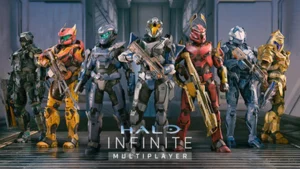
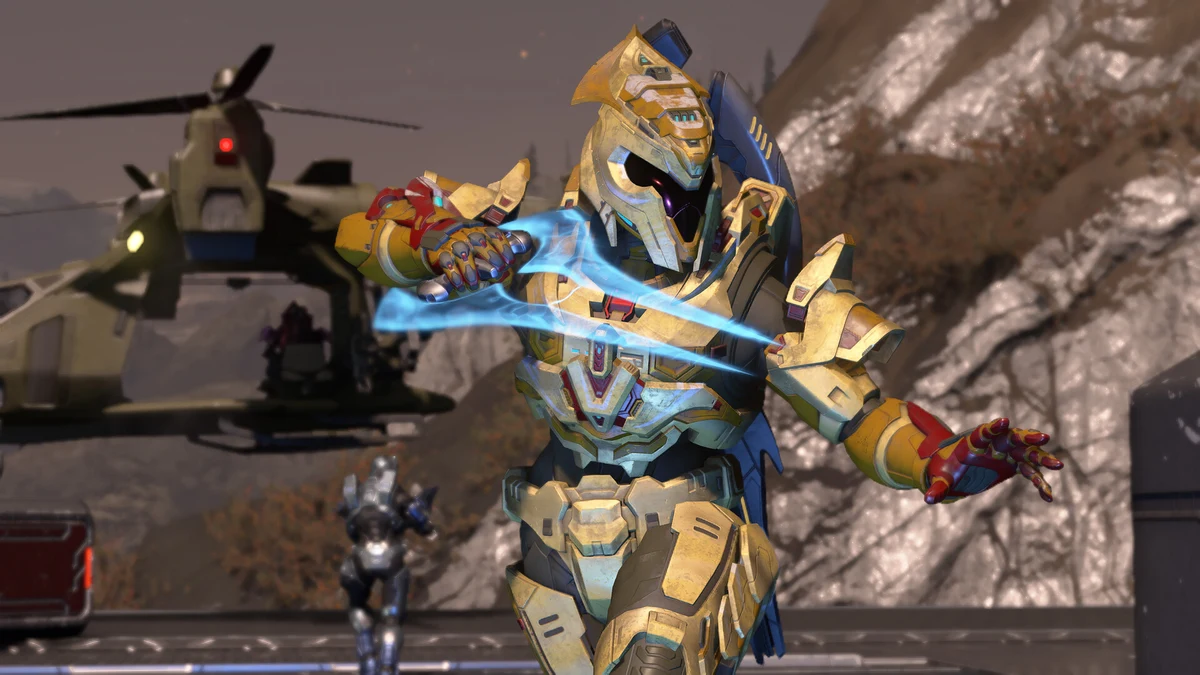
Halo Infinite’s multiplayer is free-to-play, which means anyone with an Xbox console or a PC can drop into a match without buying the game at all. That accessibility is great for the franchise, but it also means new players are thrown into a sandbox with more than two decades of Halo history behind it. This guide breaks down the modes, ranks, and basic weapon knowledge you need to stop feeling lost in your first few sessions. If you want the full picture of the game beyond multiplayer, check out our complete Halo Infinite guide for campaign, Forge, and progression details.
Getting Started: Menus, Battle Pass, and Matchmaking
When you launch Halo Infinite multiplayer for the first time, you land on a hub menu split into a few key tabs: Multiplayer (matchmaking and playlists), Academy (training and customization), and Community (custom games and Forge content). The Academy is worth visiting before your first ranked match. It includes a firing range and Bot Bootcamp, where you can practice against AI opponents to get a feel for weapon recoil, grenade arcs, and movement without the pressure of human opponents.
Halo Infinite’s progression system runs on a Battle Pass rather than a traditional XP-per-match model. Matches earn you points toward challenges, and challenges unlock ranks in the current season’s pass. None of this affects your competitive skill rating, so new players shouldn’t feel like they need to “catch up” on cosmetics before jumping into ranked or social playlists.
Arena vs. Big Team Battle: The Two Core Categories
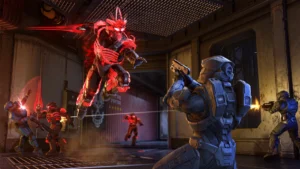
Every mode in Halo Infinite multiplayer falls into one of two broad categories. Arena is the traditional 4-versus-4 competitive format played on smaller, symmetrical maps designed around close and mid-range weapon duels. This is where most of the game’s classic objective modes live, including Slayer, Capture the Flag, Oddball, King of the Hill, and Strongholds.
Big Team Battle, commonly shortened to BTB, scales things up dramatically. These matches support up to 24 players split into two teams of 12, played on much larger maps that bring vehicles like the Warthog, Scorpion tank, and Banshee into play. BTB modes include Slayer, Total Control (a zone-capture mode), and Stockpile (a resource-collection mode built around gathering power seeds and banking them at your base). If Arena is about precise gunfights, BTB is about map control, vehicle play, and coordinating with a much larger squad.
Ranked Arena: Playlists, CSR, and Tiers
Once you’re comfortable with the basics, Ranked Arena is where Halo Infinite’s competitive depth shows up. The main ranked option is a mixed Arena playlist rotating through Slayer, Capture the Flag, Oddball, King of the Hill, and Strongholds. There is also a dedicated Ranked Team Slayer playlist that plays with competitive settings, including friendly fire, and a 2v2 playlist covering Slayer, King of the Hill, and Capture the Flag for players who want a tighter, more personal competitive experience.
Your rank is tracked through a Competitive Skill Rating, or CSR. New players need to complete 10 placement matches in a ranked playlist before receiving an initial rank. From there, Halo Infinite uses six tiers: Bronze, Silver, Gold, Platinum, Diamond, and Onyx. The first five tiers each have six sub-ranks (I through VI), giving you a clear sense of incremental progress as you climb. Onyx works differently: instead of sub-ranks, it displays your actual CSR number once you cross the 1500-point threshold, and there is no ceiling above it. CSR resets at the start of every new competitive season, which generally runs for a few months, so even experienced players re-climb periodically.
If you’re just starting out in ranked, don’t stress about your placement matches. The system is designed to correct itself over your first several games, and playing your normal style consistently gets you to an accurate rank faster than trying to game the outcome.
The Weapon Sandbox: What New Players Need to Know
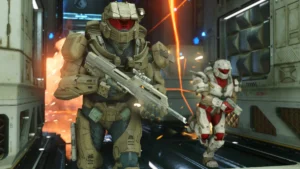
Halo Infinite’s sandbox is built around a split between starting weapons and power weapons. Starting weapons are what you spawn with or pick up commonly on the map: the MA40 Assault Rifle, the BR75 Battle Rifle, the Sidekick sidearm, and the VK78 Commando are the ones you’ll see most often in Arena. These are balanced against each other so no starting loadout feels overwhelming on its own, but each rewards a different range and playstyle, so it’s worth trying all of them in the Academy or a few social matches.
Power weapons are the map’s high-value pickups that spawn on a timer in fixed locations. Learning these spawn timers is one of the biggest skill jumps between a new player and an intermediate one. Weapons like the Sniper Rifle, Rocket Launcher, Energy Sword, and Gravity Hammer can swing a match instantly, and knowing when and where they appear lets you plan routes and fights around controlling them. Early on, just focus on picking them up when you see them and learning which weapons counter which situations; the timing knowledge comes with repetition.
Equipment and Movement Basics
Equipment is a returning Halo staple that Infinite brings back after a long absence from the core sandbox. There are seven pieces in multiplayer: the Grappleshot, Repulsor, Threat Sensor, Drop Wall, Thruster, Overshield, and Active Camo. The Grappleshot in particular is central to how Halo Infinite plays, letting you pull yourself to high ground, snag weapons from a distance, or grapple into an enemy for a melee strike. Spend time in a social match or the Academy just grappling around a map to build the muscle memory, since it affects rotations far more than most new players expect.
The Repulsor is a defensive tool that reflects incoming grenades, rockets, and even vehicles back at whoever fired them, while the Threat Sensor and Drop Wall support more tactical, positional play. Overshield and Active Camo are classic power-up style equipment that briefly make you tougher or harder to see. None of these are mandatory to use well immediately, but knowing what they do when an opponent uses them against you is just as important as using them yourself.
Tips for New and Returning Players
Start in social playlists like Quick Play before jumping into Ranked Arena. It lets you learn map layouts and weapon timing without CSR on the line. Pay attention to your team’s callouts and try to learn a handful of map names and locations, since Halo’s community leans heavily on that shorthand in voice chat.
Don’t neglect BTB if Arena feels overwhelming at first. The larger team size means individual mistakes matter less, and vehicle combat is a genuinely different skill set that can be more approachable for players coming from other shooters. Whichever mode you land on, Halo Infinite’s multiplayer rewards patience over button-mashing aggression, so take the time to learn one system at a time rather than trying to master ranked, Forge-made custom games, and BTB vehicle combat all in the same week.
Crossplay and Cross-Progression
Halo Infinite supports crossplay between Xbox consoles and PC, and progression, cosmetics, and Battle Pass unlocks carry across both platforms through your linked account. This matters for new players deciding where to jump in: friends on different platforms can still squad up together in the same matches, and there’s no need to pick one platform over another to avoid losing progress if you switch later. Console players can also choose whether to be matched with mouse-and-keyboard PC players in certain playlists, which is worth checking in the settings menu if you’d prefer to stick to controller-only lobbies while you’re still learning the basics.
Sources
Guide to Halo Infinite Game Modes (Halo Support), Halo Infinite Multiplayer Playlists (Halo Support), Closer Look: Halo Infinite’s Ranked Experience (Halo Waypoint), Halo Infinite Equipment Guide (Windows Central).