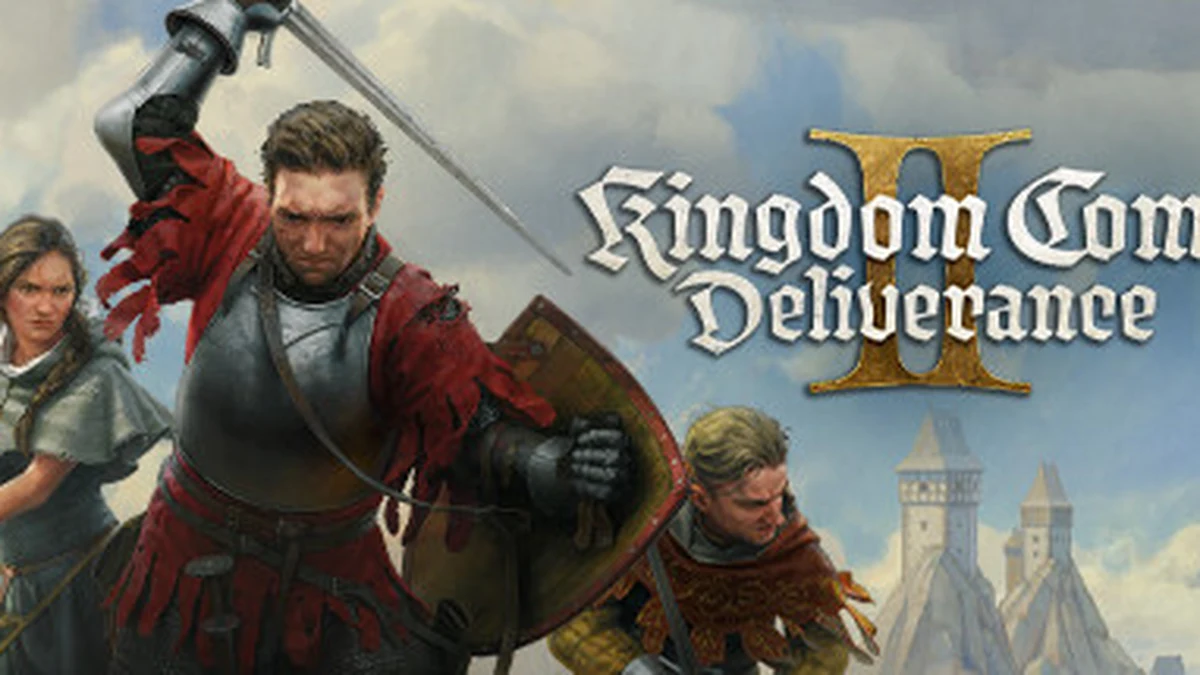
Warhorse Studios built its reputation on a simple but stubborn idea: what if a role-playing game had no magic, no dragons, and no fantasy shortcuts, just a brutally researched slice of 15th-century Bohemia and a protagonist who has to earn every skill through repetition and failure? Kingdom Come: Deliverance II takes that pitch and executes it with dramatically more polish, and the result is one of the strongest RPGs released in 2025 — provided you’re the kind of player this design philosophy was built for.
Story and Setting
The sequel picks up directly where the first game left off, following Henry of Skalitz, a blacksmith’s son turned reluctant adventurer, as his quest for justice pulls him deeper into the political machinery of a kingdom on the edge of civil war. His relationship with Hans Capon, the pompous but increasingly sympathetic young nobleman from the first game, is expanded into a genuine emotional throughline, and it’s one of the better-written companion dynamics in recent RPG memory. Warhorse’s script for this entry runs into the millions of words, and it shows: side quests routinely have the density and moral complexity of main-story missions, NPCs remember what you’ve done, and the game rarely resorts to fantasy tropes to generate stakes. It earns its comparisons to prestige historical drama more than almost any RPG in the genre. Beyond the main plot, the game’s supporting cast — from bathhouse keepers to corrupt clergy to fellow soldiers on the road — are written with an eye for period-accurate texture rather than modern sensibilities dressed in medieval clothing, and that commitment is a large part of why the world holds together as well as it does.
Gameplay and Combat
Combat is built around a directional “star” system — five angles of attack plus a stab, executed and defended against in real time — and master strikes, a perfect-block-into-counter mechanic that becomes essential once enemies stop attacking in predictable single strikes. It is a genuinely deep, skill-based system, but it’s also unforgiving early on, and newcomers frequently die in embarrassing ways before the timing clicks. Beyond combat, the game leans harder than ever into systemic immersion: alchemy has been expanded, a firearms system has been added for the first time in the series, and your hygiene, clothing, and reputation now visibly affect how NPCs treat you in ways that ripple through dialogue, prices, and quest options. None of this is streamlined for convenience — saving still largely runs through in-game items and rest, and the game expects you to plan your time rather than quicksave through consequences. The open world itself is dense with activities beyond the main quest: horse racing, dice games, hunting, blacksmithing, and a full crime-and-punishment system all layer on top of the core story, and unlike many open-world RPGs, most of it feels purposefully connected to Henry’s growth rather than bolted on for padding.
Visuals, Sound, and Performance
Technically, this is a significant leap over the original game, with markedly better draw distances, drastically reduced texture pop-in, and an open world that finally looks as dense and lived-in as the writing suggests it should be. Voice acting is a clear highlight — one of the better-performed casts in any RPG this year — and the environmental and musical work reinforces the sense of a specific time and place rather than a generic fantasy backdrop. Performance is strong on capable hardware, and console versions run more consistently than the notoriously rocky original did at launch. It isn’t flawless: frame-rate hitches and the odd physics or scripting quirk still crop up, particularly during dense town scenes, and players with older systems will need to compromise on settings.
Value for Money
Kingdom Come: Deliverance II launched at $59.99 on PC and $69.99 on consoles, a full-price tag that’s justified by sheer content volume — a main story that stretches well past 40 hours before touching side content, plus a script reported to run into the millions of words. Compared to other open-world RPGs at the same price point, this is a game that rewards replay: choices in quests ripple outward in ways that genuinely change future content, so a second playthrough with a different approach to Henry’s morality doesn’t feel like retreading old ground. For players willing to invest the time the game demands, it’s one of the better value propositions in the genre this year, even if the asking price is steep for anyone unsure the systemic, slow-paced design is for them.
What Works
Deep, reactive systems that treat player choices as genuinely consequential, one of the best-written casts in a modern RPG, and a combat system that rewards mastery rather than gear-checking. The reputation and social systems make the world feel like it’s actually paying attention to you, and the historical setting is rendered with a level of care that few open-world RPGs attempt. Quest design deserves particular credit — multiple viable solutions to problems, from stealth to persuasion to brute force, are baked in rather than tacked on, and the game rarely punishes creative problem-solving.
What Doesn’t
The demanding, unhurried pace that defines the series is also its biggest barrier to entry — this is not a game that respects your time in the conventional sense, and players looking for fast-travel convenience or forgiving combat will bounce off hard in the opening hours. Technical hitches, while less severe than in the first game, haven’t been fully eliminated, and the sheer density of systems can be overwhelming without patience for the game’s teaching curve. The tutorialization is also inconsistent — several deeper systems, particularly around alchemy and reputation, are explained once and then left for the player to rediscover through trial and error.
Verdict
Kingdom Come: Deliverance II is a genuine achievement in historical RPG design and one of the year’s most complete role-playing experiences, but it is not for everyone, and it isn’t trying to be. If you want a slow-burn RPG that rewards patience, punishes carelessness, and treats every social interaction and swordfight as a system worth mastering, this is essential. If you want fast combat, forgiving pacing, or a world that bends around your convenience, this will frustrate you before it wins you over. For genre fans willing to meet it on its own terms, it’s one of the best RPGs of 2025.