
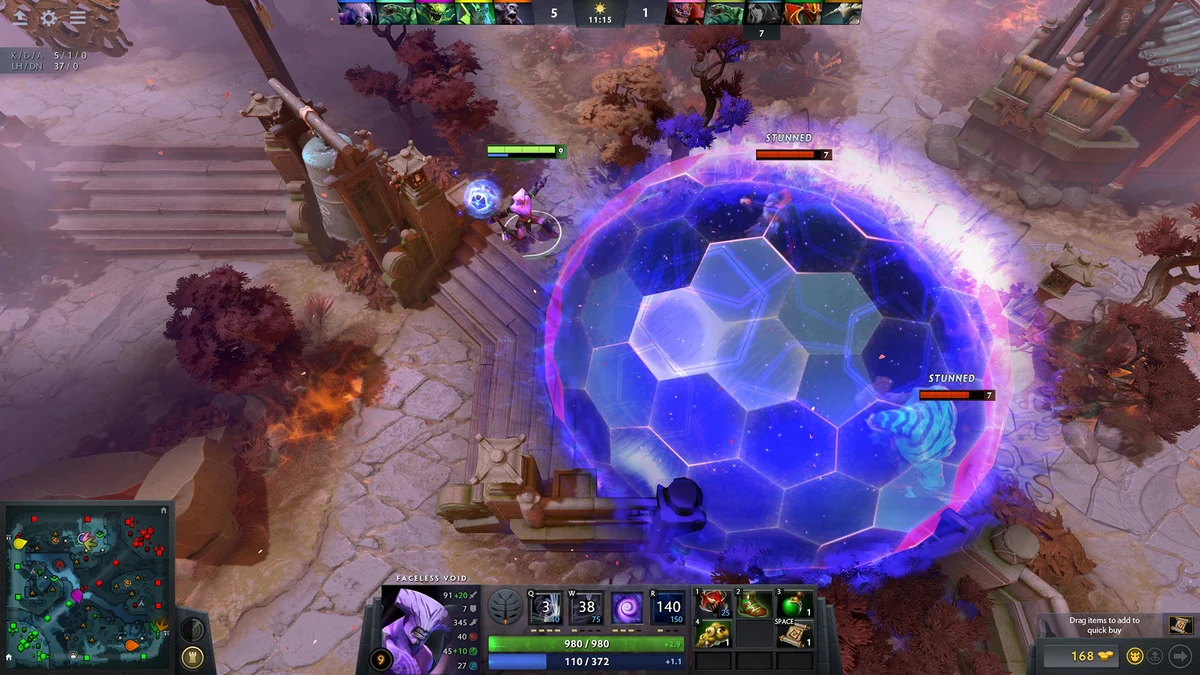
Dota 2 has a reputation, and it’s earned. Ask around and you’ll hear the same warning: it’s one of the hardest competitive games to pick up, with a UI that throws numbers at you from every direction and a community that won’t always be patient while you figure it out. That reputation is also why the people who stick with it tend to stick around for years. Once the fog clears, Dota 2 is one of the most rewarding strategy games ever made.
This guide strips the game down to what actually matters in your first ten hours: how the map works, what creeps and towers are for, what Roshan actually does, and how a match unfolds from the first thirty seconds to the final push. For a broader overview of the game, its heroes, and its history, check out our complete Dota 2 guide, which ties all of GameHux’s Dota 2 coverage together.
What Makes Dota 2 Different (and Why the Learning Curve Is Real)
Dota 2 is a MOBA — two teams of five, one map, one goal: destroy the enemy Ancient before they destroy yours. What sets it apart from more streamlined games in the genre is the sheer amount of systemic depth underneath that simple goal. There are well over 120 heroes, each with distinct abilities and item synergies. Gold and experience are earned individually, which means your mistakes are visible and your farm matters. Denying (more on that below), stacking neutral camps, warding vision, and itemizing around what the enemy team is building are all expected knowledge, not optional extras.
None of that is meant to scare you off. It’s meant to set expectations. Your first twenty games will feel chaotic. That’s normal, and it happens to everyone, including the professionals you might watch on Twitch. The goal early on isn’t to win — it’s to understand what’s happening on your screen.
The Map: Lanes, Sides, and Objectives
The Dota 2 map is a mirrored square split diagonally by a river, with two bases sitting in opposite corners: the Radiant base in the southwest and the Dire base in the northeast. Three lanes connect the two bases:
- Top lane — generally favors the Radiant’s defense and the Dire’s offense.
- Mid lane — the shortest, most contested lane, usually played one-on-one.
- Bottom lane — generally favors the Dire’s defense and the Radiant’s offense.
Between the lanes sits the jungle, home to neutral creep camps, and the river, which holds runes that spawn on a timer and grant temporary buffs like haste, invisibility, or bonus regeneration. Controlling river runes, especially the more powerful ones that spawn later in the game, is a small but constant tug-of-war throughout a match.
Understanding Creeps
Creeps are the non-hero units that make up most of what you’ll actually be fighting and farming in the early game.
Lane Creeps
Every 30 seconds, each team’s base spawns a wave of lane creeps that march down each of the three lanes and fight whatever they meet. Killing enemy lane creeps gives you gold and experience — this is called “last hitting,” and it is arguably the single most important mechanical skill in the game. Good last hitting is what separates a hero who’s ahead by the ten-minute mark from one who’s already behind.
Neutral Creeps
Neutral camps live in the jungle and respawn every minute, offering an alternate source of gold and experience away from the lane. Some heroes, especially offlaners and certain supports, rely heavily on jungling or camp-stacking (pulling extra camps together for a bigger payout) to scale into the late game.
Denying
Here’s the mechanic that trips up almost every new player: in Dota 2, you can attack your own low-health creeps and heroes to deny the enemy team gold and experience from killing them. It feels backwards the first time you try it, but denying your own creeps under 50% health (and denying your own low-health teammates in a pinch) is a core, expected skill, especially in the laning phase.
Towers, Barracks, and the Ancient
Each lane is defended by three towers per side, followed by two barracks (melee and ranged) near each base, and finally the Ancient itself — the structure that ends the game when destroyed. Towers deal serious damage and gain bonus armor when creeps aren’t nearby to tank hits for you, so diving a tower without creep support is usually a fast way to lose your hero. Destroying a full set of barracks in a lane causes that lane’s creeps to become permanently stronger “mega creeps,” which is often the tipping point that ends a close match.
Roshan and the Aegis of the Immortal
Roshan is a powerful neutral boss that lives in a pit on the map, with his exact location shifting between the top and bottom pit depending on the time of day under the current patch. Killing Roshan is a full five-person team effort in most games and rewards a huge gold bounty plus the Aegis of the Immortal, an item that revives the hero holding it once they die. Roshan also drops other valuable items on later kills, and controlling Roshan timing is one of the biggest strategic decisions in the mid-to-late game. As a new player, don’t worry about contesting Roshan yourself early on — just understand that when your team says “let’s do Roshan,” it’s a big commitment that needs vision and numbers.
How a Match Actually Flows
A typical Dota 2 match moves through recognizable phases, even if no two games play out the same way.
| Phase | Roughly When | What’s Happening |
|---|---|---|
| Draft | Pre-game | Both teams pick heroes, often around 15-25 minutes with ranked pick/ban rules |
| Laning phase | 0-10 minutes | Heroes farm their assigned lanes, last hit and deny, avoid early deaths |
| Early-mid game | 10-20 minutes | Lanes start to break, heroes rotate for kills, jungle and neutral items matter more |
| Mid game | 20-35 minutes | Team fights around objectives, Roshan attempts begin, core heroes hit key items |
| Late game | 35+ minutes | High-impact team fights, Aegis and Roshan control, pushes toward the Ancient |
Not every game reaches the late game — plenty end in the 20-30 minute range if one side snowballs a lead. That’s normal too.
Roles: The Five Positions
Every match has five roles, numbered by how much of the team’s farm they’re expected to take.
| Position | Role Name | Job |
|---|---|---|
| 1 | Carry | Farms safely early, becomes the team’s main damage in the late game |
| 2 | Midlaner | Solo lanes for fast experience, often the first hero to gain a big item lead |
| 3 | Offlaner | Soaks pressure in a tough lane, sets up fights rather than farming cleanly |
| 4 | Soft support | Roams, gets early kills, helps the offlaner and carry survive |
| 5 | Hard support | Buys wards and support items, sacrifices personal farm for the team |
If you’re brand new, positions 4 and 5 are often the most forgiving place to start, since your mistakes cost less gold and your job — vision, healing, peeling for teammates — is more about awareness than mechanical precision. Our guide to the best heroes for beginners breaks down specific picks for every role if you want a head start.
Practical Tips for New Players
- Play against bots first. A handful of games against AI will get your camera control, hotkeys, and item usage comfortable before real opponents punish every mistake.
- Turn on the tutorial and hero demo mode. Testing a hero’s abilities on a practice dummy before your first real game with them saves a lot of confusion.
- Focus on last hitting before anything else. Farm efficiency matters more than flashy plays in your first month.
- Buy wards even if you’re not support. Vision wins games, and it’s everyone’s job to help pay for it.
- Mute all chat if it gets toxic. You lose nothing by muting; there’s no penalty, and your mental game matters more than reading insults.
- Watch your minimap constantly. Most avoidable deaths in Dota 2 come from not noticing a missing enemy hero.
- Don’t tilt over one bad game. Rank and skill build over hundreds of games, not ten.
Once the basics click, spend some time with our items guide for beginners and our rank system explained article to understand what you’re working toward as you keep playing.
Frequently Asked Questions
Q: How long does a Dota 2 match take? Most matches run 30-45 minutes, though games can end faster with a big early lead or stretch past an hour in an even match.
Q: Is Dota 2 harder to learn than League of Legends? Most experienced players agree Dota 2 has a steeper initial curve due to mechanics like denying, item-based active abilities, and a larger item shop, though both games take years to fully master.
Q: Should I play ranked as a new player? No — play unranked or with bots until you’re comfortable with your camera, item shop, and at least a couple of heroes per role. Dota 2 requires a certain number of games and level before ranked even unlocks.
Q: What’s the fastest way to learn my role? Watch pro or high-rank replays of your specific role and hero, and review your own matches afterward to see where gold and time were lost.
Q: Do I need to memorize every hero to start playing well? No. Focus on knowing the handful of heroes you play plus recognizing what the most common enemy heroes do — full hero knowledge comes naturally with time.
The Bottom Line
Dota 2’s learning curve is real, but it’s also finite — every single mechanic in this guide becomes second nature within a few dozen games. Start with bots, focus on last hitting and map awareness, pick a couple of forgiving heroes, and give yourself permission to lose while you learn. For the full picture on heroes, items, and ranks, head back to our complete Dota 2 guide and keep building from there.

[…] Dota 2 Heroes for Beginners: Top Picks by Role (ESRB T) Dota 2 Beginner’s Guide: Lanes, Creeps & Match Flow (ESRB T) Dota 2 Rank System Explained: Herald to Immortal (ESRB T) Dota 2 Complete Guide 2026: Heroes, […]
[…] EA Sports FC 27 Preview: Release Date, The Grounds, and Everything New (ESRB E) EA Sports FC 27 System Requirements: Can Your PC Run It? Dota 2 Items Guide: Beginner Itemization Explained (ESRB T) Dota 2 Beginner’s Guide: Lanes, Creeps & Match Flow (ESRB T) […]