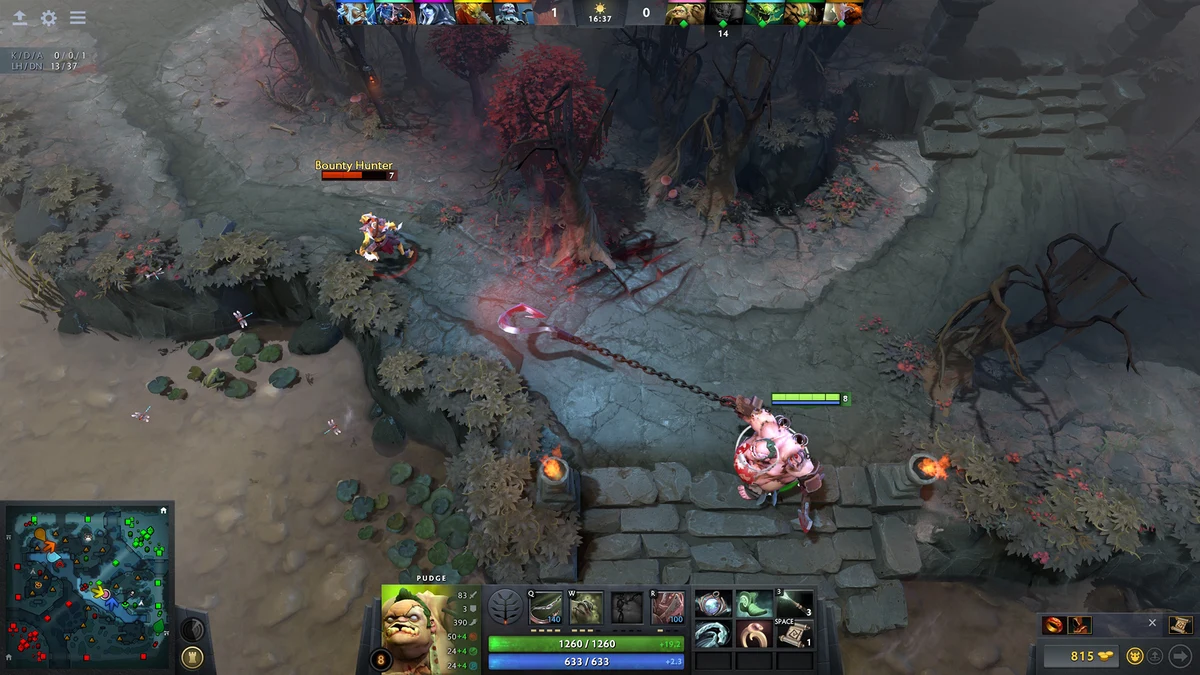
With well over 120 heroes in the current pool, picking your first handful in Dota 2 can feel like choosing a language to learn from a shelf of dictionaries. The good news is that a small group of heroes has stayed genuinely beginner-friendly patch after patch, because their power comes from simple, readable abilities rather than tricky combos or precise skill-shots.
This list focuses on heroes that are forgiving when you misplay, easy to understand at a glance, and still useful in real games — not heroes that are only “easy” because nobody in low ranks knows how to punish them. If you haven’t already, it’s worth reading our beginner’s guide to lanes, creeps, and match flow first, since knowing your role changes which of these picks makes sense for you.
What Makes a Hero “Beginner-Friendly”
A few traits show up again and again in heroes that new players succeed with:
- Simple ability combos. One or two abilities do most of the work, without needing precise skill-shot aim or complex item timing to function.
- Forgiving mistakes. The hero survives positioning errors or bad fights better than a squishy, all-or-nothing hero would.
- Clear win conditions. You always know roughly what you’re trying to do — farm, disable, heal — without needing to read the whole game state.
- Useful even when played imperfectly. The hero still contributes to the team even if your mechanics aren’t sharp yet.
Best Beginner Carries (Position 1)
The carry role asks you to farm efficiently early and become your team’s main damage threat later. These three keep that job simple.
Wraith King is often the first carry recommended to new players for good reason: his kit is almost entirely passive and point-and-click. Right-click auto-attacks deal the damage, his ultimate gives him a literal second life on death, and there’s no tricky positioning required to be effective. You farm, you fight, you respawn if it goes wrong.
Juggernaut teaches good habits without punishing you too hard for bad ones. His Blade Fury makes him nearly untouchable during a critical early skirmish, and his ultimate is a simple point-and-click spin that deals big damage. He rewards good last hitting and itemization, which makes him a great hero to grow with.
Phantom Assassin is slightly higher-risk but extremely rewarding to learn, since her evasion and critical strikes let a single well-timed fight snowball a whole game. She teaches you to farm quickly and pick fights at the right moment.
Best Beginner Mid Heroes (Position 2)
Midlane is a solo lane, which means less coordination but more personal responsibility for your farm and rotations.
Zeus is arguably the easiest midlaner in the game to understand: Arc Lightning clears creep waves for you, Lightning Bolt is a reliable point-and-click nuke, and his ultimate deals damage to every enemy hero on the map regardless of where they are. There’s no skill-shot aiming required for any of it.
Viper offers a similar point-and-click simplicity with strong lane dominance through poison damage and a slow that makes it hard for enemies to escape. He’s tanky enough to survive early mistakes and scales acceptably even without a perfect item build.
Best Beginner Offlaners (Position 3)
The offlane is a tough, often outnumbered lane, so durability matters more than damage output here.
Dragon Knight is a textbook beginner offlaner: high base armor, a damage-and-armor-reduction breath attack, and an ultimate that turns him into a tankier, ranged dragon form. Every ability is point-and-click, and he’s difficult to kill outright even when played defensively.
Tidehunter brings a simple game plan — farm safely, survive the lane, then land a huge team fight-winning ultimate later. Ravage is an area stun that doesn’t require precise aim within its radius, making it one of the most forgiving ultimates in the game to land in a chaotic fight.
Best Beginner Soft Supports (Position 4)
Position 4 roams and looks for kills, so heroes with reliable disables are ideal.
Ogre Magi is famous for being effective even when played badly — his stun has a chance to proc twice, his passive randomly buffs a nearby ally’s damage, and his ultimate provides team-wide magic resistance. Very little about his kit requires precision.
Lion teaches disable-based support play with a straightforward toolkit: a stun, a mana drain, and a devastating point-and-click finishing spell in Finger of Death. He’s squishy, so positioning matters, but his impact on fights is easy to understand.
Best Beginner Hard Supports (Position 5)
Position 5 sacrifices personal farm for wards, healing, and utility, so heroes that keep the team alive are the best starting point.
Crystal Maiden is a support staple because her passive gives the whole team mana regeneration just by being nearby, and her slow and stun are both simple point-and-click spells. She’s fragile, but her presence alone makes every ally play better.
Jakiro offers area damage and a strong slow with no skill-shot targeting required, plus enough durability to survive early ganks better than most support heroes.
Abaddon rounds out the list as one of the most forgiving supports in the game — his shield and healing abilities are self-triggering or point-and-click, and his ultimate punishes enemies for focusing him down, which covers for aggressive or careless positioning.
A Simple Starter Pool
If you want one table to reference before your next few games, here’s a condensed starting pool covering all five roles.
| Role | Hero | Why It Works for Beginners |
|---|---|---|
| Carry (1) | Wraith King | Point-and-click damage, built-in second life |
| Carry (1) | Juggernaut | Forgiving early fights, rewards good farming |
| Mid (2) | Zeus | No skill-shots, clears waves easily, global ultimate |
| Offlane (3) | Dragon Knight | High durability, simple point-and-click kit |
| Soft support (4) | Ogre Magi | Effective even when misplayed |
| Hard support (5) | Crystal Maiden | Passive team utility, simple disables |
Heroes to Avoid Early On
It’s just as useful to know what to skip for now. Heroes built around precise skill-shots (Mirana, Storm Spirit), heroes with complex illusion or positioning mechanics (Naga Siren, Chaos Knight), and heroes with steep mechanical execution requirements (Meepo, Invoker, Chen) are all strong picks eventually — but they’ll teach you bad habits or leave you frustrated before you’ve built the fundamentals these easier heroes reinforce. Save them for after your first fifty games or so.
How to Actually Practice a New Hero
Picking an easy hero is only half the battle — how you practice it matters just as much. Before taking a hero into a real match, spend ten minutes in Hero Demo mode testing ability ranges, cooldowns, and combos against a stationary dummy. From there, a few bot matches let you rehearse full item builds and skill orders without the pressure of a live opponent punishing every hesitation. Once you’re in real games, resist the urge to switch heroes every match — playing the same two or three picks across ten or fifteen games teaches you far more about timing windows, matchups, and itemization than hopping between a dozen different heroes ever will. Consistency early on is what turns a “beginner-friendly” hero into a genuinely strong pick in your hands.
Frequently Asked Questions
Q: Should I main just one hero as a beginner? It’s fine to lean on one or two heroes per role while you learn, but try to keep at least one comfortable pick in each of the five roles — you won’t always get your preferred role in matchmaking.
Q: Are beginner-friendly heroes bad in higher ranks? No. Heroes like Dragon Knight, Zeus, and Tidehunter see play at every rank, including professional Dota. Simple doesn’t mean weak.
Q: How many heroes should I know before playing ranked? There’s no fixed number, but being comfortable with at least two or three heroes per role gives you flexibility when your preferred pick gets taken or banned.
Q: Do beginner heroes get harder to play well at higher MMR? Somewhat — opponents punish mistakes more precisely at higher ranks, but the core simplicity of these heroes’ kits still makes them reliable picks all the way up.
Q: What’s the best single hero to learn first overall? Most coaches point to a position 4 or 5 support like Crystal Maiden or Ogre Magi, since the role carries less pressure to perform mechanically while you learn the game’s map and pacing.
The Bottom Line
The fastest way to enjoy Dota 2 early on isn’t to chase whatever’s trending — it’s to pick heroes whose kits forgive your mistakes while you learn the game underneath them. Start with one or two picks from this list per role, get comfortable, and expand your pool naturally from there. For more on how those roles fit into an actual match, revisit our beginner’s guide, and when you’re ready to gear those heroes up properly, our items guide for beginners is the natural next stop. For the complete picture, our complete Dota 2 guide ties everything together.