Table of Contents
- What Is Animal Crossing: New Horizons?
- Getting Started: Tom Nook’s Loan and Island Setup
- Terraforming and Island Design
- Villagers and Relationships
- Seasonal Events and the Real-Time Calendar
- Nook Miles and Nook Shopping
- DIY Crafting and Recipes
- The Museum and Blathers
- Multiplayer: Visiting Islands Locally and Online
- Happy Home Paradise DLC
- Free Updates and Ongoing Support
- Platforms and How to Play
- Critical Reception and Sales
- Tips for New Players
- Who Animal Crossing: New Horizons Is For
- FAQ
- Conclusion
- External Authority Sources
When Animal Crossing: New Horizons launched on the Nintendo Switch on March 20, 2020, it arrived at a strange and specific moment: a global pandemic had just pushed much of the world indoors, and a game about escaping to a deserted island, chatting with anthropomorphic animal neighbors, and slowly building a home from nothing became an unlikely cultural phenomenon. But the game’s staying power was never just about timing. Six years after release, New Horizons remains one of the best-selling entries in Nintendo’s catalog and a defining example of the life-simulation genre. It has no combat, no fail states, and no traditional win condition. Instead, it offers a persistent, real-time world where players catch bugs, plant flowers, decorate homes, chat with villagers, and reshape entire islands to their liking, one shovel swing at a time. This guide breaks down everything a new or returning player needs to understand about the game: how it begins, how its core systems work, what content has been added since launch, and practical advice for getting the most out of island life. Whether you are considering picking it up for the first time or want a refresher on features added through years of free updates and the Happy Home Paradise expansion, this is a complete, accurate overview of what Animal Crossing: New Horizons actually offers.
What Is Animal Crossing: New Horizons?
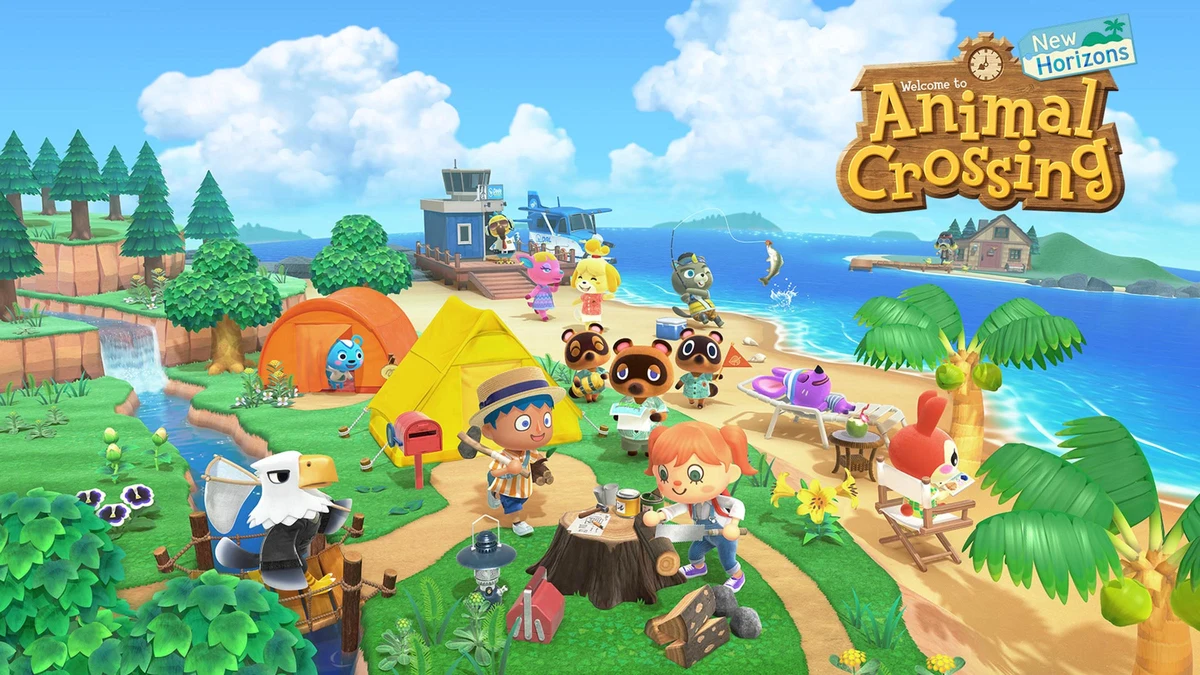
Animal Crossing: New Horizons is a life-simulation game developed and published by Nintendo for the Nintendo Switch. It is the fifth main entry in the Animal Crossing series, following Animal Crossing: New Leaf on the Nintendo 3DS. The premise is simple: the player purchases a “Deserted Island Getaway Package” from Tom Nook, a raccoon entrepreneur, and relocates to an uninhabited island with two other new residents chosen at random from the game’s roster of animal villagers. From there, the game has no scripted plot to follow. Players furnish tents, catch fish and bugs, harvest fruit, craft tools and furniture, and gradually transform their island into whatever they want it to be, whether that is a tidy suburban town, a dense tropical jungle, a minimalist art gallery, or a faithful recreation of a favorite fictional setting.
The game runs on a real-time clock synced to the Nintendo Switch’s internal calendar, meaning the season, weather, time of day, and available creatures in the world mirror the real world (with a Southern Hemisphere option for players below the equator). This real-time structure is central to the experience: certain fish, bugs, and sea creatures only appear during specific months and hours, seasonal events only run on their corresponding real-world dates, and shops open and close on a daily schedule. This design choice slows the pace of the game dramatically compared to most video games, encouraging short, regular visits rather than marathon sessions, and it is one of the primary reasons the game has sustained a large, consistent player base for years after release.
New Horizons distinguishes itself from earlier Animal Crossing titles primarily through two additions: crafting and terraforming. Previous games placed players into pre-built towns with fixed layouts; New Horizons instead drops players onto a mostly untouched island and gives them DIY crafting tools and, eventually, full landscape-editing tools to build the environment from the ground up.
Getting Started: Tom Nook’s Loan and Island Setup
Every New Horizons save begins the same way. During character creation, players choose their avatar’s appearance, name, hometown, and nickname before boarding a flight operated by Nook Inc., the raccoon-run company run by Tom Nook and his nephews, Timmy and Tommy. Two other villagers travel on the same flight and become the island’s first residents alongside the player.
The trip is not free. Players start the game in debt via the Nook Inc. “Deserted Island Getaway Package,” an interest-free loan of 49,800 Bells (the in-game currency) that covers the flight, a starter tent, and basic supplies. Critically, Tom Nook places no deadline on repayment and charges no interest, so there is never pressure to pay quickly. Players can repay the loan with Bells earned by selling fish, bugs, fruit, and other items to Timmy and Tommy at the Resident Services tent, or by converting Nook Miles (see the Nook Miles section below) directly into Bells payments. Once the initial loan is settled, Tom Nook offers an upgrade from a tent to a proper house for a second loan of 98,000 Bells, and subsequent home expansions carry their own loans as the player progresses.
The early hours of the game revolve around this loop of earning currency, exploring the island’s five starting areas, and unlocking new tools and recipes via the NookPhone, an in-game smartphone that becomes the player’s primary interface. Early priorities typically include crafting a fishing rod and net, meeting the island’s first villagers, and starting the museum by donating fish, bugs, and fossils to Blathers the owl. Because Nook’s loans never accrue interest and never come due, new players can move at their own pace without financial risk, which is one of the clearest examples of the low-pressure design philosophy that runs through the entire game.
Terraforming and Island Design
The single biggest structural change New Horizons made to the Animal Crossing formula is terraforming: the ability to permanently reshape the island’s terrain using in-game tools. This includes raising or lowering cliffs, digging or filling in rivers and ponds, laying custom paths, and placing waterfalls. Combined with an unlimited undo/redo-friendly workflow (since changes can always be dug up and redone), terraforming turns island design into something closer to a landscaping and interior-design sandbox than a traditional game system.
Terraforming is not available from the start. Players must unlock the Island Designer app on the NookPhone by meeting several milestones: upgrading Resident Services to its permanent building (which requires constructing a museum and Nook’s Cranny shop and inviting at least three villagers to move in), reaching a three-star island rating from Isabelle’s evaluations, and hosting a concert from series mascot musician K.K. Slider. Once Tom Nook grants access to the Island Designer app, players can purchase path permits (2,000 Nook Miles each) and cliff and waterscaping permits (6,000 Nook Miles each) from the Nook Stop terminal, then begin reshaping the land freely.
Beyond terrain, island design also covers exterior decorating: placing furniture, fencing, and custom-pattern paths outdoors; landscaping with flowers, trees, and hedges; and arranging bridges and inclines to connect different elevations. This system is what enabled the wave of elaborately themed islands that circulated widely on social media after launch, from recreations of real cities to designs based on movies, anime, and other games. Island design also directly affects the island’s star rating, which in turn affects which villagers may ask to move in and what visual “vibe” rating the island projects, a subtler cosmetic system introduced in a later update.
Villagers and Relationships
Villagers are the animal neighbors who populate a player’s island, and building relationships with them is one of the core, long-term draws of the game. New Horizons features over 400 possible villagers spanning 35 animal species, from typical choices like cats, dogs, and rabbits to more unusual species such as octopuses, kangaroos, and even coelacanths (a “living fossil” fish). Each villager has a randomly generated personality type (there are eight: Lazy, Jock, Cranky, Snooty, Normal, Peppy, Smug, and Sisterly), a unique catchphrase, hobby, home interior style, and dialogue that reflects their assigned personality.
An island starts with two villagers and can eventually house up to ten. New villagers arrive either by moving into a vacant plot after receiving an invitation via a campsite visitor, appearing on Nook Miles+ tasks, migrating in randomly once the population allows, or being invited over from another player’s island (a common practice in the community, often called “villager trading” or adopting from “villager giveaways”). Conversely, villagers can also choose to move out, either on their own after living on the island for a while or by player request, which opens up a plot for someone new.
Relationships with villagers deepen through regular interaction: daily conversations, gift-giving, completing small requests (fetching items, delivering packages between villagers), and simply spending time near them. Villagers remember interactions to a degree, react to the player’s clothing and actions, celebrate the player’s birthday, and can become sick, prompting the player to deliver medicine. Photos featuring a villager’s picture can eventually be earned as a high-friendship milestone. Because personalities and dialogue are pulled from a shared pool per personality type rather than being fully unique to each individual villager, some repetition exists across playthroughs, but visual design, species, and specific quirks still make many villagers distinct fan favorites, with certain characters like Raymond, a smug cat villager with heterochromia introduced in New Horizons, becoming especially sought-after within the community.
Seasonal Events and the Real-Time Calendar
Because New Horizons runs on real-world time, its calendar of seasonal events is one of the most important systems shaping how the game feels throughout the year. Nintendo has steadily expanded this calendar through free updates, and by the game’s full 2.0 update in late 2021, it included a rich lineup of recurring holidays and festivals.
Notable recurring events include:
- Bunny Day, a springtime egg-hunting event hosted by Zipper T. Bunny, generally held around Easter.
- May Day, a puzzle-maze event on a special island reached via a Nook Miles ticket.
- International Museum Day in May, offering free museum tours from Blathers.
- Wedding Season in June, centered on Reese and Cyrus and their Harmonious Chamber.
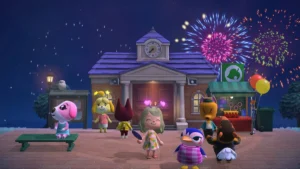
- The Fireworks Show, held on Sunday evenings throughout August, hosted by Redd, with players able to launch their own fireworks or watch villagers’ displays.
- Halloween, held on October 31, featuring Jack and trick-or-treating villagers.
- Turkey Day, a Thanksgiving-inspired cooking event hosted by Franklin in late November.
- Toy Day, a Christmas-inspired gift-giving event on December 24 featuring Jingle.
- New Year’s Eve and New Year’s Day celebrations.
- Nature-based seasonal changes such as cherry blossom season, snowfall, fall leaves, and the Northern Lights, which affect the island’s visuals and available crafting materials month to month.
Seasonal fish, bugs, and sea creatures rotate throughout the year and by hemisphere, meaning the same calendar date offers different available creatures depending on whether the player’s island is set to Northern or Southern Hemisphere. This real-time design is a defining, sometimes divisive feature: it rewards long-term, low-intensity engagement over binge play, and it means an island genuinely looks and feels different in January than it does in July. Nintendo has also periodically run limited-time crossover events, such as collaborations tied to Sanrio characters and Super Mario-themed items and courses, which appeared as free content updates rather than paid DLC.
Nook Miles and Nook Shopping
New Horizons introduced Nook Miles, a secondary currency earned by completing achievement-style tasks tracked through the Nook Mileage Program on the NookPhone. Nook Miles are awarded for a huge range of actions, from catching a first fish or bug, to selling items, crafting a set number of tools, talking to villagers, or reaching long-term milestones like paying off a home loan or accumulating a certain number of total Bells earned. Because nearly every normal in-game action generates some Nook Miles, the system functions as a built-in to-do list that naturally introduces new players to available features.
Nook Miles have several major uses. They can be redeemed for Nook Miles Tickets, which send the player to randomly generated deserted mystery islands used for gathering resources, finding new villagers for the campsite, or simply exploring varied terrain types. They also purchase terraforming permits, certain exclusive furniture and clothing items unavailable through normal shopping, and can be converted directly into Bells to help pay off Tom Nook’s loans. A related feature, Nook Miles+, lets players select specific everyday tasks (like catching five fish or watering flowers) to earn miles more efficiently once unlocked.
Nook Shopping is the game’s separate retail catalog system, accessed via the NookPhone or in-person terminals at Nook’s Cranny and Resident Services. It allows players to order furniture, clothing, wallpaper, flooring, and other customization items for delivery, browsing a catalog that expands as players discover new items, unlock new store tiers, or receive DIY recipes. Nook Shopping effectively replaces the traditional catalog-ordering system from earlier Animal Crossing games with a more streamlined, always-accessible digital storefront, and it works alongside the physical Nook’s Cranny shop, which sells rotating daily stock of furniture, tools, and seasonal items in person.
DIY Crafting and Recipes
Crafting is the other pillar of New Horizons that separates it from prior series entries. Using a workbench (or the portable DIY Workbench app, unlocked later), players combine raw materials, such as wood, stone, iron nuggets, clay, and various collected items, according to DIY recipes to create furniture, tools, and decorative items. Recipes are learned in a variety of ways: found in message bottles washed up on the beach, obtained from balloon presents floating overhead, given by villagers, purchased from shops, earned through Nook Miles+ tasks, or unlocked from crafting other related items.
Tools are central to crafting’s early game loop. Players start with basic tools (a flimsy fishing rod, net, shovel, and axe) crafted from simple recipes, and these degrade with use, eventually breaking and requiring replacement or repair. Higher-tier tools, such as golden or silver variants, are stronger, more durable, or provide special abilities, like the golden axe’s ability to chop down trees in a single hit. Recipes for furniture range from purely functional (storage, lighting, seating) to elaborate thematic sets tied to specific aesthetics, such as the mermaid, ironwood, or imperial furniture lines, many of which are event-exclusive or seasonal.
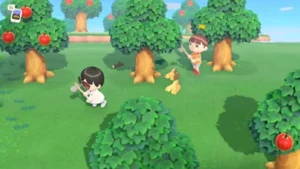
The crafting system ties directly into the resource-gathering loop that structures daily play: hitting rocks and trees for materials, digging up clay and stone, harvesting bamboo and hardwood, and fishing or catching bugs not just for museum donations or sale, but as raw material inputs for recipes. Later free updates expanded crafting further by adding cooking recipes, which use fruit, vegetables, fish, and other ingredients gathered on the island to create food items with their own uses and display value.
The Museum and Blathers
The museum, curated by Blathers, a knowledgeable but famously insect-averse owl, is one of the longest-running institutions in the Animal Crossing series and a major structural and completionist pillar of New Horizons. Players donate fish, bugs, sea creatures, and fossils they collect around the island, and Blathers builds out permanent exhibit wings that display these donations to be walked through and admired, complete with his in-character commentary on each specimen.
The museum opens early in the game once the player donates their first specimens and Blathers agrees to establish it as a permanent building (initially a tent, later upgraded to a full building). It is organized into distinct wings: a Fish wing, an Insects (Bugs) wing, a Fossils wing (which requires players to bring dug-up fossils to Blathers for identification before donation), and an Art wing, which was added later and is stocked through purchases from the traveling art dealer Redd rather than direct donation. The 2.0 update further expanded the museum with Brewster’s Roost, a café located inside the museum where Brewster serves coffee and, eventually, allows amiibo-based invitations of special guest characters.
Completing the museum is a significant long-term goal for many players, since the game features hundreds of collectible fish, bug, and sea creature species that rotate by season, time of day, weather, and location (ocean, river, pond, cliff-top water, or the mystery islands reached via Nook Miles Tickets), meaning full collection realistically takes many months of real-time play across a full calendar year, particularly for creatures exclusive to one hemisphere. The Art wing adds an additional wrinkle: some paintings and sculptures Redd sells are forgeries, and players must learn to distinguish real works from fakes before donating, a mechanic carried over from earlier Animal Crossing titles.
Multiplayer: Visiting Islands Locally and Online
New Horizons is designed primarily as a single-player experience but includes robust local and online multiplayer options for visiting other islands, an experience the community generally just calls “visiting.”
Local play allows up to four players to explore the same island simultaneously using a single Nintendo Switch console and one copy of the game, using additional controllers passed among household members. Local wireless play also lets players connect multiple nearby Switch consoles without an internet connection.
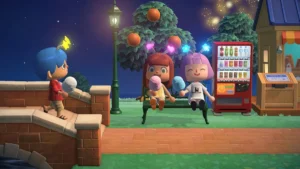
Online play requires a paid Nintendo Switch Online membership and allows up to eight players total to gather on one island at a time, whether connecting via the internet or local wireless. Players use the in-game airport, run by Orville and Wilbur (Dodo Airlines), to open their island to visitors by generating a Dodo Code, a five-character code shared with friends (or, historically, posted publicly online or on social media to invite strangers) that lets others fly in. Visiting another island lets players shop at that island’s stores, interact with its villagers, trade items, and see design choices they may not have access to on their own island, such as different fruit types or exclusive seasonal shops.
A best friend list and separate “Best Friends” online mode also exist, offering expanded permissions (like the ability to dig holes freely or use tools on a visited island) once two players formally add each other as best friends. Local co-op (“Party Play”) lets multiple players on the same island split into groups and use the map to teleport near one another, useful for group activities like digging up fossils or catching bugs together.
Happy Home Paradise DLC
Happy Home Paradise is New Horizons’ sole paid expansion, released alongside the free 2.0 update on November 5, 2021. It is priced at $24.99 as a standalone purchase from the Nintendo eShop, or included as part of a Nintendo Switch Online + Expansion Pack membership at $49.99 per year.
In Happy Home Paradise, the player is recruited by Lottie to work for Paradise Planning, a vacation-home design service operating out of an office on a tropical archipelago separate from the player’s own island. Villagers who wish to have a vacation home request one, and the player designs both the exterior and interior to match the villager’s personality and requests, using an expansive built-in inventory of furniture and materials that is not limited by the player’s own item collection, unlike home decorating on the main island. As players complete more vacation homes and earn Poki (a currency exclusive to the DLC), they unlock additional customization tools, including the ability to design facilities like schools, hospitals, and restaurants for use by multiple villagers, and eventually the option to renovate their own Resident Services building’s interior.
Two other characters assist throughout the DLC: Niko, an over-enthusiastic mole who evaluates completed homes, and Wardell, a soft-spoken bear sculptor. While purchasing Happy Home Paradise is required to access the Paradise Planning archipelago and its unique design tools, most furniture and items unlocked through the DLC also become available to non-DLC owners through in-game trading and, later, direct purchase once unlocked by a DLC-owning friend, softening the divide between players who own it and those who do not.
Free Updates and Ongoing Support
Unlike many live-service games, New Horizons was supported almost entirely through free content updates rather than a stream of paid add-ons, with Happy Home Paradise as the single exception. Nintendo released a steady cadence of free updates from launch through late 2021, each typically timed to a seasonal event or holiday and adding new characters, items, and features.
Major free content added over time includes the Museum’s Art wing and Redd’s ship, the Able Sisters tailor shop upgrade, group stretching with Isabelle, seasonal DIY recipes and clothing, swimming and diving (letting players collect sea creatures by swimming into the ocean), Gyroids, cooking recipes, and Harv’s Island, a customizable plaza area accessed via a special ticket that lets players build out a photo studio and shopping plaza featuring returning series characters like Katrina, Katie, and Saharah.
The culmination of this support arrived with version 2.0 on November 5, 2021, which Nintendo explicitly described as the final major content update. Version 2.0 added the character Brewster and his Roost café inside the museum, Kapp’n’s boat tours to new mystery islands (including gyroid-fragment islands), full cooking functionality, ordinances that let the island’s Resident Representative apply island-wide rules (such as bell-boosting or nocturnal villager schedules), expanded storage and Nook’s Cranny stock, new furniture and clothing, and quality-of-life features like reactions and better group activities. Since the 2.0 update, Nintendo has continued smaller patches primarily for bug fixes, seasonal item rotations, and occasional crossover promotions, but has not returned to the pace of major feature updates seen in the game’s first two years.
Platforms and How to Play
Animal Crossing: New Horizons is exclusive to the Nintendo Switch family of consoles, including the original Switch, Switch Lite, and Switch OLED model, and it plays identically across all three, aside from screen size and handheld-only limitations on the Switch Lite (which lacks detachable Joy-Con controllers and HD rumble, both largely non-essential for this game). It is not available on other platforms such as PC, PlayStation, Xbox, or mobile devices.
The game can be purchased physically as a cartridge or digitally through the Nintendo eShop. Each purchased copy is tied to one island per Nintendo Switch console (not per user profile), meaning up to eight Nintendo Account user profiles on a single console can all be residents of the same shared island, but a genuinely separate island generally requires a second physical console, since only one island save exists per game copy per console. This “one island per console” design was a notable point of criticism at launch, discussed further below.
An internet connection and paid Nintendo Switch Online subscription are required for online multiplayer visiting, cloud data backup (available at higher subscription tiers), and access to Happy Home Paradise if bundled through the Expansion Pack tier. Local, single-player play requires no subscription or internet connection at all.
Critical Reception and Sales
Animal Crossing: New Horizons was both a critical and commercial success. On review aggregator Metacritic, the game holds a score of 83 out of 100 based on more than 30 critic reviews, reflecting broadly positive coverage that praised its creative freedom, relaxing pace, and expanded crafting and terraforming systems as a meaningful evolution for the series, with some outlets comparing its significance for the Animal Crossing franchise to how Breath of the Wild and Super Mario Odyssey reshaped their respective series. User reception was also strong overall, though more divided; frequent points of criticism from the community included the one-island-per-console limitation, a lack of certain quality-of-life features present in earlier games (particularly at launch), and the slow, seasonal rollout of features that some players felt should have shipped with the base game.
Commercially, New Horizons became a phenomenon. It sold roughly 11 million digital and physical copies in its first 11 days on sale, benefiting significantly from a launch window that coincided with COVID-19 lockdowns in many regions, which drove both general Switch hardware sales and demand for a low-pressure, social game people could play from home. Sales continued strongly in the following years; by June 30, 2026, Nintendo’s own figures put the game’s lifetime sales at approximately 50.29 million units worldwide, making it the best-selling entry in the Animal Crossing franchise by a wide margin and the second best-selling Nintendo Switch game overall, trailing only Mario Kart 8 Deluxe.
Tips for New Players
New Horizons has very few explicit tutorials past the opening hours, and its slow, real-time pace can be disorienting for players used to more directive games. A few practical pointers help smooth the early experience:
- Prioritize paying off the first loan with Nook Miles rather than Bells. The initial 49,800-Bell debt can alternatively be settled with 5,000 Nook Miles, which most players accumulate naturally within the first day simply by exploring, catching creatures, and talking to villagers.
- Check the money rock and floating balloons daily. One rock per day is a “money rock” that yields Bells instead of resources when hit repeatedly within a short window, and shooting down yellow balloons in the sky can award a one-time Bells prize, both useful sources of early income.
- Don’t rush terraforming decisions. Because full terrain editing unlocks a few days into play (after meeting the Resident Services, three-star rating, and K.K. Slider concert requirements), it’s worth waiting to make major, permanent placement decisions like where to put bridges and inclines until the Island Designer app is available, since those structures can be relocated freely at that point.
- Visit the island daily rather than for long sessions. Because of the real-time clock, shops restock daily, DIY recipes rotate, and seasonal creatures and events only appear on their real-world dates, so shorter, frequent visits generally yield more content over time than infrequent long sessions.
- Diversify villager plot placement early. Later villager plots are placed based on existing terrain and structures, so being deliberate about the first few plots (and terraforming decisions around them) makes long-term island design easier.
- Use Nook Miles+ once unlocked. This feature turns everyday actions into trackable objectives and is one of the more efficient ways to keep earning Nook Miles for tickets and permits after the initial achievement list is exhausted.
- Don’t feel pressured to complete the museum quickly. Full collections of fish, bugs, and sea creatures require a full calendar year of play due to seasonal rotation, and this is by design rather than an oversight.
Who Animal Crossing: New Horizons Is For
New Horizons is best suited to players who enjoy open-ended, low-stakes creative goals over structured challenges, and who are comfortable with a game that unfolds gradually across real-world months rather than being finished in a single sitting. Its lack of combat, time pressure, or failure states makes it broadly accessible to players of nearly any age, and it has a long track record as a game families and groups of friends play together, in part because of its cross-console visiting features and shared-island support for multiple household members.
Players who prefer clear objectives, fast progression, or competitive multiplayer are likely to find the pace frustrating, since so much of the game (event availability, museum completion, certain shop stock) is deliberately gated behind real-world time rather than player skill or effort. Conversely, players drawn to interior design, landscaping, collecting, or social simulation genres, as well as anyone looking for a game that rewards a few minutes of daily attention rather than long uninterrupted sessions, tend to get the most lasting value from it. Its status as a Switch exclusive with no PC or other console release is also a practical consideration for anyone deciding whether to invest in the hardware specifically to play it.
FAQ
Is Animal Crossing: New Horizons a good game for kids? Yes. It contains no combat, violence, or explicit content, has no fail states, and includes parental control options through the Nintendo Switch system settings that can restrict online communication features and screen time. Many families play on a shared island using separate user profiles on the same console.
Do I need Nintendo Switch Online to play Animal Crossing: New Horizons? No, a subscription is not required for single-player play or local multiplayer with people in the same room. It is required only for online visiting between islands over the internet and for cloud save backups.
Can I play Animal Crossing: New Horizons on PC or other consoles? No. The game is exclusive to the Nintendo Switch family of consoles (original Switch, Switch Lite, and Switch OLED) and has not been released on PC, PlayStation, Xbox, or mobile platforms.
How long does it take to pay off Tom Nook’s loans? The first loan of 49,800 Bells can realistically be paid off within the first day or two of play, and can also be settled instantly with 5,000 Nook Miles, which most players accumulate quickly through normal early exploration. Subsequent home loans are larger but Tom Nook charges no interest and sets no repayment deadline, so pacing is entirely up to the player.
Is Happy Home Paradise required to enjoy the full game? No. Happy Home Paradise is an optional paid expansion focused specifically on designing vacation homes for villagers on a separate archipelago. The core island-life gameplay, crafting, terraforming, museum, and multiplayer features are all part of the base game and the free 2.0 update, independent of the DLC.
Can multiple people have their own separate islands on one Nintendo Switch? Not on the same game copy. Each copy of Animal Crossing: New Horizons supports one island per console, shared among up to eight Nintendo Account user profiles who can all live on that same island. A genuinely separate island generally requires a second copy of the game paired with a second console.
Conclusion
Animal Crossing: New Horizons succeeded by refining a formula the series had built over nearly two decades and then handing players unprecedented creative control over it, through terraforming, expansive crafting, and a steady stream of free content that kept the game evolving for more than a year and a half after launch. Its combination of a real-time calendar, deep customization, and genuinely low-pressure pacing set it apart from most other major releases of its era, and its sales performance, tens of millions of units and counting, reflects how broadly that approach resonated. Six years on, with the paid Happy Home Paradise expansion and the substantial 2.0 free update rounding out its content, New Horizons stands as a complete, mature entry in the life-simulation genre: not a game built around a finish line, but one designed to be lived in, a little bit at a time, for as long as a player wants to keep visiting.
External Authority Sources
- Animal Crossing: New Horizons – Nintendo Official Site
- Animal Crossing: New Horizons Critic Reviews – Metacritic
- Animal Crossing: New Horizons – Nookipedia, the Animal Crossing Wiki
- How to Start a Local or Online Multiplayer Game – Nintendo Support