With 27 playable Legends now in the roster, picking who to main is one of the first big decisions a new Apex Legends player has to make — and it’s easy to get it wrong. Some Legends look flashy in trailers but demand precise ability usage and game sense to actually be effective. Others have simple, forgiving kits that are genuinely strong even when you’re still learning to aim and rotate. This guide focuses entirely on the second category: Legends that are easy to pick up, hard to mess up badly, and still viable once you start climbing ranked. If you haven’t read it yet, our Apex Legends beginner’s guide covers the movement and match-flow basics that pair well with everything below, and our complete Apex Legends guide has the full roster breakdown if you want to explore further down the line.
What Makes a Legend Beginner-Friendly
Before recommending specific picks, it helps to know what to look for. A beginner-friendly Legend usually has:
- A low-execution-risk tactical ability — something you can use reactively without needing frame-perfect timing or advanced map knowledge.
- Forgiving mistakes — abilities that still provide value even when used at a slightly wrong moment, rather than kits that punish misuse severely.
- A clear, single job — Legends whose kit tells you exactly what you’re supposed to be doing (healing, scanning, holding an angle) are easier to learn than ones with open-ended, high-skill-ceiling kits.
- Class perks that reward good habits rather than advanced mechanics — since Season 21’s class overhaul, every Legend belongs to one of five classes (Assault, Skirmisher, Recon, Controller, or Support), each with a passive perk shared across the whole class.
Best Beginner Legends by Class
| Legend | Class | Why They’re Beginner-Friendly |
|---|---|---|
| Bangalore | Assault | Straightforward kit built around a speed boost when shot at and a smoke grenade that covers mistakes and bad positioning alike |
| Octane | Skirmisher | One-button speed boost and a jump pad; no aiming or timing required to get value, and the passive health regen forgives early mistakes |
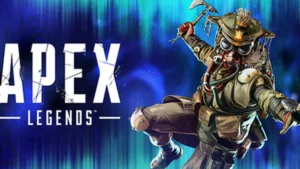
| Bloodhound | Recon | A scan ability that reveals enemies through walls for a few seconds — about as close to “point and get information” as Apex gets |
| Gibraltar | Controller | A deployable dome shield and a gun shield on aim-down-sights give new players a built-in safety net during fights and revives |
| Lifeline | Support | An automated healing drone and a care package ability make her nearly impossible to play badly; you mostly just need to stand near your team |
Bangalore (Assault)
Bangalore is often the recommended starting Legend, and for good reason. Her passive triggers automatically whenever you take fire at range, giving you a speed boost to reach cover without any input from you. Her tactical smoke grenade is forgiving too — even a poorly aimed smoke can buy a revive or cover a retreat. There’s no precise ability combo to learn, which makes her an easy Legend to feel competent on almost immediately.
Octane (Skirmisher)
If you want a Legend that rewards aggression without demanding precision, Octane is the pick. His tactical ability costs a small chunk of health for a big speed boost, and his passive regenerates health over time, which softens that cost considerably. His ultimate launch pad is genuinely simple to use — drop it, jump on it, and you’re airborne toward the next fight. There’s very little Octane-specific game knowledge required to get value out of his kit.
Bloodhound (Recon)
Bloodhound’s tactical scan reveals enemy positions through walls and highlights their footprints, giving you information without requiring any mechanical skill to use. It’s an ability you’ll use reflexively — hit it before pushing a building, before a fight, or when you hear footsteps nearby — and it consistently pays off even when your positioning isn’t perfect yet. Recon’s class perk of using Survey Beacons for map-wide intel makes the whole class a great fit for players still learning to read fights.
Gibraltar (Controller)
Gibraltar’s dome shield blocks incoming damage and healing interruptions inside its radius, which is an enormous safety net for new players who are still learning when it’s safe to heal or revive a teammate. His gun shield, active any time he’s aiming down sights, also softens the damage penalty of peeking an angle incorrectly — a mistake every new player makes constantly. He’s slower and more deliberate than Skirmisher Legends, which suits players who prefer a steadier pace.
Lifeline (Support)
Lifeline remains one of the most beginner-friendly Support Legends because her value doesn’t depend on precise ability usage. Her drone automatically heals nearby teammates, and her care package ultimate pulls in better loot for the whole squad. Support’s class perk of faster Replicator crafting and bonus care package contents rewards simply staying alive and playing near your team — exactly the habits a new player should be building anyway.
A Sample Squad for New Players
If you’re queueing with two other beginner friends, building a squad composition around the Legends above is an easy way to cover your bases without overthinking synergy. A trio of Bangalore, Lifeline, and Bloodhound, for example, gives you a well-rounded mid-range fighter, a dedicated healer who keeps the squad topped up automatically, and a scout who provides information before every fight. None of these three Legends require precise combo timing with each other — you’re not relying on a perfectly synced ultimate push or a complex setup, which makes the squad forgiving even when communication between strangers is limited. As you get more comfortable, you can swap in a Skirmisher like Octane for extra mobility, or a second Controller like Gibraltar if you find your squad struggling to hold ground in fights. The goal early on isn’t a “meta” composition — it’s a squad where every player understands their own job well enough to execute it consistently, which matters far more at a beginner level than theoretical synergy.
Legends to Learn After You’re Comfortable
Once the fundamentals from our beginner’s guide feel natural and you’ve put in a few dozen hours on the Legends above, it’s worth branching out. Wraith remains one of the most popular picks in the game thanks to her tactical’s ability to dodge damage entirely, but she rewards precise timing and map knowledge far more than the Legends listed here, which is why she’s usually recommended as a second or third Legend rather than a first. Similarly, movement-heavy Legends like Pathfinder and Horizon offer some of the best individual mobility in the game, but getting real value out of that mobility takes reps most new players haven’t put in yet. Newer additions like Sparrow, a Recon Legend built around aggressive, high-mobility scouting, are also worth trying once you’ve got a feel for the pace of fights — his kit is simple to understand but genuinely hard to use to its full potential in ranked play.
A good way to gauge readiness for a harder Legend is your comfort level in the firing range and casual matches. If you can consistently land shots while moving and you’re no longer thinking hard about basic rotations covered in our beginner’s guide, that’s usually a sign you’ve outgrown the safety net a beginner-friendly kit provides — and that a higher-skill-ceiling Legend will start paying off rather than holding you back.
Frequently Asked Questions
Q: Do I need to buy Legends, or are some free from the start? New accounts have a handful of Legends available immediately, with the rest unlockable using Legend Tokens earned through normal play, or purchased directly with Apex Coins. You don’t need to spend money to unlock every Legend eventually.
Q: Is it bad to switch Legends often as a beginner? Not at all — trying different Legends early is a great way to figure out which class and playstyle suits you. Just try to spend at least a few matches on each one before judging it, since some kits take a little longer to click than others.
Q: Which class should a beginner focus on learning first? There’s no wrong answer, but Support and Assault Legends tend to have the most forgiving kits since their abilities are less dependent on split-second timing than Skirmisher or Controller Legends.
Q: Are beginner-friendly Legends viable in ranked play? Yes. Bangalore, Gibraltar, and Lifeline in particular see regular play at high ranks. Being easy to learn doesn’t mean a Legend is weak — it just means the skill ceiling doesn’t require mechanical mastery to reach.
Q: How many Legends are in Apex Legends right now? The roster sits at 27 playable Legends as of Season 29, spread across five classes: Assault, Skirmisher, Recon, Controller, and Support.
The Bottom Line
There’s no single “correct” first Legend in Apex Legends, but starting with a forgiving kit makes the early learning curve dramatically less frustrating. Bangalore, Octane, Bloodhound, Gibraltar, and Lifeline each offer a clear, low-risk role that still holds up as you improve. Pair whichever one you pick with solid fundamentals from our beginner’s guide, and once you’re ready to round out your loadout, check our breakdown of the best weapons and loadouts right now. For everything else Apex Legends has to offer, our complete Apex Legends guide is the best next stop.