Table of Contents
- What Is Ghost of Tsushima?
- The Story: Jin Sakai and the Mongol Invasion of 1274
- Samurai vs. Ghost: The Combat and Stance System
- Ghost Weapons, Tools, and Stealth
- Exploration and Open World Design
- Iki Island: The Director’s Cut Expansion
- Ghost of Tsushima: Legends Multiplayer
- Platforms: PS4, PS5, and the 2024 PC Release
- Critical Reception and Legacy
- Tips for New Players
- Who Is Ghost of Tsushima For?
- FAQ
- Conclusion
- External Authority Sources
There is a moment early in Ghost of Tsushima when Jin Sakai kneels in a field of pampas grass, sword drawn, waiting for a Mongol patrol to notice him. He could vanish into the reeds. He could stand and fight with the honor his uncle taught him. Sucker Punch Productions built an entire game around that single decision, and it is the reason Ghost of Tsushima has become one of the defining PlayStation exclusives of its generation. Released in July 2020 and later expanded with a Director’s Cut and a 2024 PC port, the game reimagines 13th-century Japan as an open world stripped of clutter, where a compass is replaced by wind and a quest log is replaced by curiosity. This guide covers everything a player needs to know: the historical story of the Mongol invasion of Tsushima Island, the samurai-versus-Ghost combat philosophy that defines Jin’s journey, the stance and stealth systems, the Iki Island expansion, the four-player Legends co-op mode, every platform the game runs on, and what critics and players have said about it since launch. Whether you are deciding whether to buy it in 2026 or want a refresher before jumping into Iki Island, this is the single resource to bookmark, covering the historical backdrop, the mechanical philosophy behind every system, and the practical details a new or returning player actually needs.
What Is Ghost of Tsushima
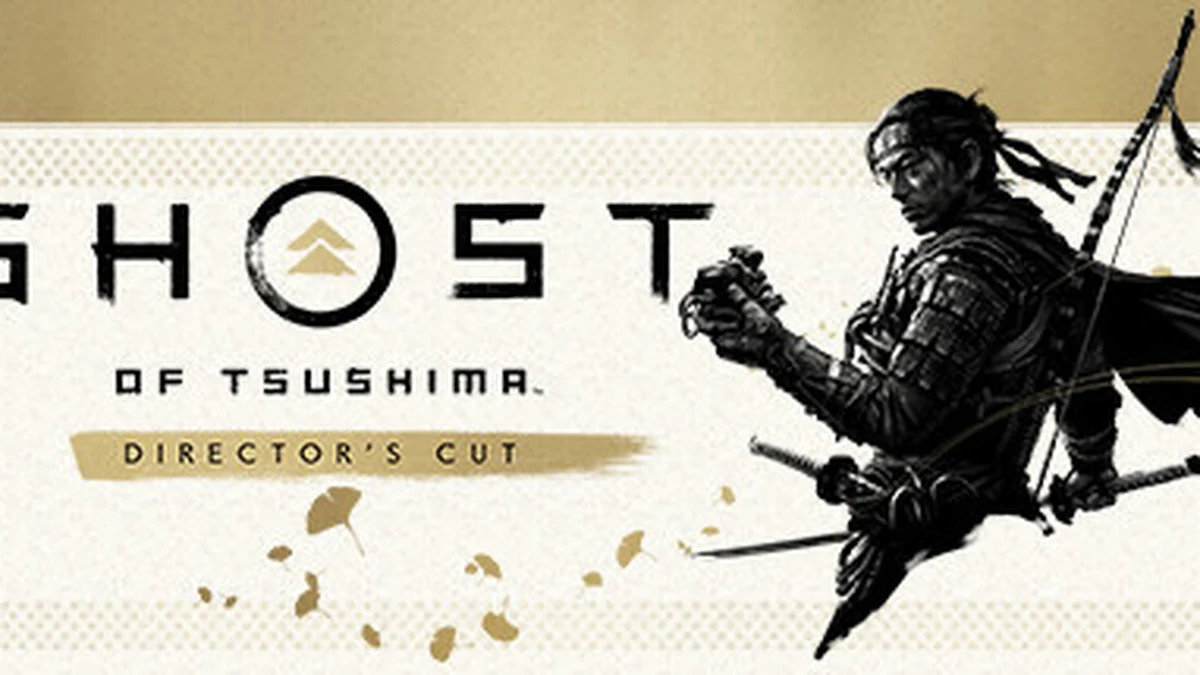
Ghost of Tsushima is an open-world action-adventure game developed by Sucker Punch Productions and published by Sony Interactive Entertainment. It launched on PlayStation 4 on July 17, 2020, and was later remastered as Ghost of Tsushima Director’s Cut for PS4 and PS5 in August 2021, before arriving on PC via Steam and the Epic Games Store on May 16, 2024. The game is set on the real island of Tsushima, located in the strait between Japan and Korea, during the first Mongol invasion of Japan in 1274.
Players control Jin Sakai, a samurai who survives a catastrophic battle against the invading Mongol army and must adapt his fighting style to save his homeland. Structurally, the game blends third-person swordplay, stealth infiltration, and open-world exploration, all wrapped in a visual presentation that deliberately evokes classic Japanese cinema, particularly the samurai films of Akira Kurosawa. Sucker Punch even built a dedicated “Kurosawa Mode,” which renders the game in black and white with film grain and a cinematic aspect ratio, along with Japanese voice acting and lip-sync options for players who want the most authentic presentation.
Unlike many open-world action games of its era, Ghost of Tsushima was designed around restraint. There is no traditional HUD clutter, no constant stream of map icons, and a combat system built on a small number of deeply readable moves rather than an ever-expanding skill tree. That design philosophy runs through every system in the game, from how players navigate the island to how they fight.
The Story: Jin Sakai and the Mongol Invasion of 1274
Ghost of Tsushima is set during a real historical event: the Mongol Empire’s invasion of Japan in 1274, ordered by Kublai Khan. Historical accounts describe an invasion force of roughly 15,000 to 40,000 soldiers transported aboard hundreds of ships, one of the largest amphibious military operations attempted up to that point in history. Tsushima Island, sitting in the strait between the Korean peninsula and mainland Japan, was the first point of contact for the invasion fleet before it moved on to Hakata Bay on the Japanese mainland.
The game’s protagonist, Jin Sakai, is a fictional character created specifically for the story, as is his uncle and mentor, Lord Shimura, the samurai ruler of Tsushima. The narrative opens with the invasion’s opening assault: Jin is one of roughly eighty samurai who ride out to meet the Mongol army at Komoda Beach in a last stand meant to slow the invasion. The battle is a massacre. Jin is grievously wounded and left for dead, and Shimura is captured by the invading general, Khotun Khan. Jin is found and nursed back to health by Yuna, a thief who has no patience for samurai codes of honor and who pushes Jin toward tactics his warrior training forbids: ambushes, poison, and killing from the shadows.
That rescue sets the tone for the entire game. Jin spends the story traveling across Tsushima’s three regions, gathering allies, liberating villages and farms from Mongol occupation, and searching for a way to free his uncle and drive Khotun Khan’s forces off the island. Along the way he is forced again and again to choose between the rigid, honorable combat his samurai upbringing demands and the underhanded methods that actually work against an enemy willing to use terror, hostages, and overwhelming numbers. Sucker Punch takes real historical texture, the Mongol invasion, Tsushima’s geography, period armor and architecture, and dramatizes it into a personal story of identity and duty. The developers have been explicit that the plot and characters are fictionalized for narrative purposes even though the setting and invasion are drawn from history.
The wider cast reinforces this central conflict rather than sitting outside it. Yuna and her younger brother Taka represent the island’s common people, who have far less patience for samurai formality than Jin’s own family. Lord Shimura, once freed, becomes an increasingly rigid counterpoint to Jin as the story progresses, a man who would rather see Tsushima fall in accordance with the samurai code than see it saved through methods he considers dishonorable. Other allies, including the sword-master Sensei Ishikawa, the monk Norio, and the actress Masako, each have their own reasons for joining Jin’s growing resistance and their own perspectives on what he is becoming. By the time the campaign reaches its final act, the story has fully shifted from a war narrative into a character study of what it costs to become “the Ghost,” and the ending forces players to confront the consequences of that transformation directly rather than resolving it neatly. Sucker Punch structured the campaign around three acts, each corresponding to a region of the island, so narrative escalation and geographic progression move in lockstep, a design choice that keeps the open world tied tightly to the plot rather than feeling like a separate layer bolted on top of it.
Samurai vs. Ghost: The Combat and Stance System
The central tension of Ghost of Tsushima, both narratively and mechanically, is the conflict between fighting as a samurai and fighting as “the Ghost.” Early in the game, Jin duels enemies in direct, honorable one-on-one combat, the kind sanctioned by the samurai code he was raised to follow. As the story progresses and Jin realizes that code cannot defeat an army willing to burn villages and execute prisoners, he begins adopting stealth, poison, and assassination, tactics that earn him the fearful nickname “the Ghost” among Mongol soldiers and the suspicion of some of his own countrymen.
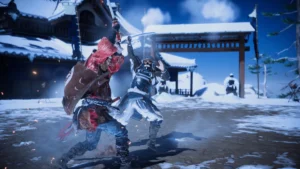
This philosophical split is reflected directly in the game’s menu structure, which separates Jin’s abilities into Samurai techniques, Ghost techniques, and combat stances. The stance system is the backbone of swordplay: Jin can shift between four fighting stances, each tuned to counter a specific enemy archetype.
- Stone Stance is effective against sword-wielding enemies and is the first stance players unlock.
- Water Stance is designed to break through shield-carrying enemies.
- Wind Stance counters spear-wielding opponents.
- Moon Stance is built for dealing with large, heavily armored brutes.
Each stance carries its own heavy-attack combo capable of staggering the enemy type it counters, and switching stances mid-fight, reading an enemy’s weapon and reacting instantly, is the skill the combat system is built to reward. A later addition, the Ghost Stance, unlocks in the second half of the game after Jin kills enough Mongol leaders and commanders; it is less a combat stance in the traditional sense and more a terror mechanic, an aura that panics nearby enemies and can cause them to break and flee rather than fight.
Standoffs are the game’s signature set piece: Jin can walk directly up to a group of enemies and challenge their leader to single combat, a tense, one-hit-kill duel that rewards precise timing over button mashing. It is the closest the game comes to letting players fully embody the “honorable samurai” side of Jin’s identity, in direct contrast to the stealth-driven Ghost playstyle available everywhere else on the map.
Beyond stances and standoffs, Jin’s combat kit deepens gradually through a technique tree tied to Resolve, a meter earned through successful strikes and parries that fuels both offensive Heavenly Strike techniques and defensive or healing Ghost techniques. This dual-purpose resource forces players to make in-the-moment decisions about whether to spend Resolve pressing an advantage or stabilizing a losing fight, adding another layer of tactical weight to encounters beyond simply picking the correct stance. Legendary and Mythic armor sets, unlocked through Mythic Tales side quests, further let players lean into a preferred playstyle, whether that means armor that rewards aggressive melee pressure, armor that extends stealth detection windows, or armor built around ranged bow combat. The result is a progression system that never forces a single build, letting a player’s Jin end the game looking and playing meaningfully differently from someone else’s.
Ghost Weapons, Tools, and Stealth
Where the stance system governs open combat, the Ghost toolkit governs everything Jin does to avoid open combat altogether. As Jin adopts unconventional warfare, he gains access to a set of throwable and deployable tools collectively referred to as Ghost weapons, most of which players unlock by liberating Mongol-held camps, forts, and outposts scattered across the island.
The core stealth kit includes kunai, which can interrupt enemy attacks or finish off already-weakened targets; smoke bombs, which break enemy line of sight and open windows for chain assassinations; sticky bombs and black powder bombs for area damage; and distraction tools like wind chimes and firecrackers that lure guards away from their patrol routes. Combined with a grappling hook for vertical traversal and the ability to use terrain, tall grass, rooftops, water, for cover, these tools let players clear an entire Mongol encampment without ever being seen.
Stealth is not a secondary option bolted onto the combat system, it is mechanically rewarded. Clearing an outpost undetected grants extra progress toward unlocking new stance techniques compared to fighting through it in the open, which nudges players toward experimenting with the Ghost playstyle rather than defaulting to the sword. That said, the game is built to accommodate both extremes and everything in between: players can approach the exact same fort as a lone swordsman cutting a path through the front gate, or as a shadow picking off patrols one by one from the rooftops. Few open-world action games give both approaches this level of mechanical depth simultaneously.
Exploration and Open World Design
Ghost of Tsushima is best known, outside of its combat, for how deliberately it avoids the open-world formula that dominated the genre by 2020: towers to climb, maps saturated with icons, and quest markers dictating every move. Sucker Punch instead built what the studio described as a more organic, diegetic navigation system.
The centerpiece of that system is the Guiding Wind. Rather than opening a map and following a waypoint, players swipe a finger, or press a button on controller, and a gust of wind sweeps across the island, visually bending the grass and trees in the direction of the player’s currently tracked objective. It replaces a UI element with an in-world weather effect, and it became one of the most widely praised design choices in the game.
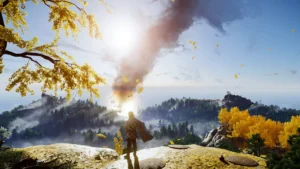
Wind is only part of the system. Small golden birds periodically appear and can be followed to points of interest, acting as informal quest-givers without a single line of dialogue or a marker popping onto the screen. Foxes serve a similar function but specifically guide players to Inari shrines, hidden shrines tucked into the island’s forests and cliffs that reward Jin with charm slots for his equipment. Beyond animals, the environment itself communicates: columns of smoke on the horizon signal villages under attack or points of interest worth investigating, while torii gates, hot springs, bamboo strikes, and haiku locations dot the island as optional detours that reward exploration with cosmetic gear and combat techniques rather than experience points.
The result is a map players are meant to read rather than a checklist players are meant to clear. Tsushima itself is divided into three regions, each tied to an act of the story, and each rendered with distinct color palettes and terrain that shift from golden fields and maple forests to volcanic highlands, reinforcing the sense that the island’s geography and the story’s progression are moving together.
The Izuhara region, the game’s starting area, is defined by open farmland, rivers, and the pampas grass fields that became one of the game’s most recognizable visual signatures. Toyotama, the second region, trades that openness for dense forest and swampland, giving the middle act of the campaign a more oppressive, closed-in feel that mirrors the story’s darkening tone. Kamiagata, the northernmost and final region, shifts again into volcanic rock, hot springs, and rugged coastline, visually setting the stage for the campaign’s climax. Horseback traversal ties these regions together; Jin’s horse can be summoned at will and automatically follows terrain-appropriate paths, and simply riding across the island while the game’s dynamic weather and lighting shift overhead is, for many players, as memorable as any individual mission. Sucker Punch’s art team has spoken about designing the island as a series of postcard compositions meant to be discovered on foot or on horseback rather than fast-traveled past, which is part of why the game includes a built-in Photo Mode robust enough to have developed its own dedicated community around composing and sharing in-game screenshots.
Iki Island: The Director’s Cut Expansion
Iki Island is a story expansion bundled with Ghost of Tsushima Director’s Cut, which launched on PS4 and PS5 on August 20, 2021, and later came included with the PC version in 2024. It sends Jin away from Tsushima proper to the neighboring island of Iki after he hears rumors of a new Mongol presence there.
The expansion introduces Ankhsar Khatun, a Mongol shaman known to her followers as “the Eagle,” who becomes Iki Island’s central antagonist. Her presence forces Jin to confront traumatic memories from his childhood tied to the island, giving the expansion a more personal, psychological throughline than the main campaign’s broader war narrative. Players can access Iki Island after completing Act 1 of the base game, specifically after finishing the mission “Shadow of the Samurai.”
Beyond several hours of new story content, Iki Island adds a new region to explore with its own visual identity, additional side activities and mini-games, new enemy types, new techniques, unique armor for both Jin and his horse, and more animals for players to interact with. It functions as a self-contained expansion rather than a required continuation of the main plot, but it is widely regarded as a meaningful narrative and mechanical addition to the base game, and its inclusion is one of the clearest reasons to pick up the Director’s Cut over the original 2020 release.
Ghost of Tsushima: Legends Multiplayer
Ghost of Tsushima: Legends is the game’s cooperative multiplayer mode, released as a free update to all owners of the base game on October 16, 2020, several months after launch. It is entirely separate from Jin’s single-player campaign, built around Japanese folklore and supernatural threats rather than the historical Mongol invasion, though some unlocks in Legends are tied to progress made in the main story.
Legends supports up to four players online and lets each player choose from four distinct classes: Samurai, a balanced melee fighter; Hunter, a ranged specialist; Ronin, built around area-of-effect and crowd control; and Assassin, focused on stealth and burst damage. Each class has its own skill tree and playstyle, giving the mode meaningfully different mechanics from the solo campaign despite sharing the same combat foundation.
The mode offers three main formats: two-player co-op Story missions that follow a folklore-inspired narrative arc, four-player wave-based Survival missions that scale in difficulty, and four-player Raids, the mode’s most demanding content, designed around coordinated team strategy. Legends proved popular enough that Sucker Punch later positioned it as a semi-standalone offering, and with the 2024 PC release, Legends supports full cross-play, meaning PC players can team up with PS4 and PS5 players in the same lobby.
Platforms: PS4, PS5, and the 2024 PC Release
Ghost of Tsushima has had a phased platform rollout since its original 2020 debut, and knowing which version to buy matters for anyone approaching the game today.
- PlayStation 4 — The original release, launched July 17, 2020.
- PlayStation 5 — Ghost of Tsushima Director’s Cut launched on PS5 alongside PS4 on August 20, 2021, with improved load times, higher resolution and frame rate options, and 3D audio support, along with the new Iki Island expansion.
- PC (Windows) — Ghost of Tsushima Director’s Cut arrived on PC via Steam and the Epic Games Store on May 16, 2024, ported by Nixxes Software, the same studio behind several other well-regarded PlayStation-to-PC ports.
The PC version is a full-featured release rather than a stripped-down port. It ships with the complete base game, the Iki Island expansion, and the Legends multiplayer mode included. Nixxes built in unlocked frame rates, an extensive graphics settings menu, and fully remappable mouse-and-keyboard controls. The game supports ultrawide 21:9 and super-ultrawide 32:9 resolutions, and even accommodates 48:9 triple-monitor configurations. Upscaling and frame generation are supported across the board, with NVIDIA DLSS 3, AMD FSR 3, and Intel XeSS all available, giving PC players significant flexibility to balance visual fidelity against performance regardless of GPU vendor.
Notably, Ghost of Tsushima has not been released on Xbox consoles or Nintendo Switch. It remains a PlayStation-published title available only on PlayStation hardware and PC.
Critical Reception and Legacy
Ghost of Tsushima launched to generally favorable reviews, landing in the low-to-mid 80s on Metacritic for its original PS4 release. Critics consistently praised the game’s art direction and its recreation of feudal Japan, with many singling out the island’s environmental design and the Kurosawa-inspired presentation as standout achievements. The game went on to win Best Art Direction at The Game Awards 2020, a recognition widely seen as validating Sucker Punch’s visual approach.
Criticism at launch centered less on any single broken system and more on genre fatigue: some reviewers, including a three-star review from The Guardian, argued the game still leaned on open-world conventions, side content, collectibles, repeated outpost clearing, that could feel padded despite the more elegant navigation systems layered on top. The consensus among most critics, however, was that the strength of the combat, the stance system, and the atmosphere outweighed those structural concerns.
The Director’s Cut and subsequent PC release were received even more warmly, with review scores climbing into the high 80s, reflecting both the added Iki Island content and the technical polish Nixxes brought to the PC port. Commercially, the game was a significant success for Sony: it became the fastest-selling first-party PlayStation 4 original in history at launch, selling 2.4 million units in its first three days, and had surpassed 13 million copies sold worldwide across all platforms and editions by August 2024. That commercial and critical performance helped establish Ghost of Tsushima as one of Sucker Punch’s flagship franchises and paved the way for a feature film adaptation in development and a 2025 sequel, Ghost of Yotei, set in a different era and region of Japan.
Player reception has proven just as durable as critical reception. Years after launch, Ghost of Tsushima consistently appears in “best PlayStation exclusives” and “best samurai games” community discussions, and its Photo Mode output remains a recurring presence across gaming social media, a testament to how much of the game’s identity rests on its visual design rather than any single mechanical innovation. The success of the sequel, which Sony has stated exceeded Ghost of Tsushima’s own sales pace in a comparable window after launch, speaks to how effectively the original built a loyal audience rather than a one-time novelty. For a game that launched in the twilight months of the PS4 generation, against a genre many critics considered oversaturated, its continued relevance years on says as much about its design choices as any individual review score could.
Tips for New Players
- Play in whichever stance the enemy type demands, and switch mid-fight. Stone counters swords, Water counters shields, Wind counters spears, and Moon counters brutes. Trying to fight every enemy in one stance makes even mid-game encounters harder than they need to be.
- Lean into stealth early, especially at Mongol camps. Clearing an outpost undetected grants bonus progress toward new techniques, and the smoke bomb and kunai combination can clear entire bases without triggering an alarm.
- Follow the wind, not a checklist. The Guiding Wind and the golden birds are meant to be followed on impulse. Resist the urge to fast-travel everywhere; much of the game’s best content, hot springs, bamboo strikes, fox dens, is found by wandering rather than pathing directly to objectives.
- Upgrade charms through Inari shrines and Mythic Tales. These optional activities, found via fox trails and distinct golden-outlined quest icons respectively, provide some of the best passive buffs and unique techniques in the game and are easy to miss if players rush the main story.
- Save Standoffs for when you’re confident. Duels are a single clean kill if timed correctly but can also end a fight badly if mistimed. They reward patience and pattern recognition over reflexes alone.
- If picking up the game now, get Director’s Cut. It includes Iki Island, Legends, and the technical improvements of PS5 or PC over the base 2020 release at little to no extra cost over buying the original separately.
Who Is Ghost of Tsushima For?
Ghost of Tsushima is aimed squarely at players who want a slower, more atmospheric open world alongside genuinely skill-based combat. Fans of samurai cinema and Japanese historical settings will find the presentation, right down to the optional black-and-white Kurosawa Mode and Japanese voice acting, unusually committed for a big-budget action game. Players who enjoyed stealth-action hybrids like the Assassin’s Creed series but wanted tighter, more deliberate swordplay will find the stance system rewarding, and those who prefer confrontation over stealth are equally well served by the standoff and dueling mechanics.
It is less suited to players who dislike open-world side content entirely, even with its lighter-touch navigation design, Ghost of Tsushima still features a substantial map of camps, shrines, and collectibles to clear. Players looking for a short, tightly linear campaign may find the roughly 25 to 30 hour main story, extended further by Iki Island and Legends, longer than they want. But for anyone drawn to a strong sense of place, meaningful combat choices, and a story about identity under pressure, it remains one of the most complete packages in the PlayStation action-adventure library. Players coming from Sucker Punch’s earlier work, including the Sly Cooper and inFamous series, will notice a studio applying the same instinct for tight, readable traversal and combat systems to a completely different genre and tone, a shift that paid off critically and commercially.
FAQ
Is Ghost of Tsushima based on a true story? The setting is real: the Mongol Empire under Kublai Khan invaded Tsushima Island in 1274 as the opening phase of its attempted conquest of Japan. However, the protagonist Jin Sakai, his uncle Lord Shimura, and the specific plot events are fictional, created by Sucker Punch for the game. The developers have been open that while the historical backdrop is grounded in fact, character and story details are dramatized.
What is the difference between Ghost of Tsushima and the Director’s Cut? Director’s Cut adds the Iki Island expansion, a several-hours-long story addition set on a neighboring island, along with technical upgrades on PS5 and, later, PC, including faster load times, higher resolution and frame rate targets, and 3D audio. It also includes the Legends multiplayer mode, which was originally released as a free update to the base game.
Can I play Ghost of Tsushima on PC? Yes. Ghost of Tsushima Director’s Cut released on PC via Steam and the Epic Games Store on May 16, 2024, ported by Nixxes Software. It includes the full base game, Iki Island, and Legends multiplayer, with extensive graphics options, ultrawide monitor support, and upscaling technologies from NVIDIA, AMD, and Intel.
Is Ghost of Tsushima available on Xbox or Nintendo Switch? No. As of 2026, Ghost of Tsushima remains exclusive to PlayStation consoles (PS4 and PS5) and PC. It has not been released on Xbox platforms or Nintendo Switch.
What is Ghost of Tsushima: Legends? Legends is a free cooperative multiplayer mode for up to four players, separate from the single-player story. Players choose from four classes, Samurai, Hunter, Ronin, or Assassin, and take on co-op Story missions, Survival waves, or four-player Raids based on Japanese folklore rather than the historical Mongol invasion depicted in the main game.
How long does it take to complete Ghost of Tsushima? The main story takes most players roughly 25 to 30 hours to complete. Fully exploring the island’s side content, shrines, Mythic Tales, and collectibles, along with the Iki Island expansion, can extend total playtime well beyond 40 hours, not including the separate Legends multiplayer mode.
Conclusion
Ghost of Tsushima earned its place among the PlayStation platform’s most acclaimed exclusives by refusing to take the easiest path through a crowded genre. Sucker Punch grounded a fictional story in a real, dramatic moment of Japanese history, built a combat system around a genuine philosophical tension between honor and survival, and replaced the open-world genre’s reliance on map icons with wind, foxes, and birds. The result held up well enough to justify a Director’s Cut, a full PC port with modern technical features, a popular co-op mode in Legends, and, ultimately, a sequel. Whether a player’s priority is precise stance-based swordplay, patient stealth infiltration, or simply wandering an unusually beautiful rendition of feudal Japan, Ghost of Tsushima remains one of the most complete and well-crafted action-adventure experiences available on PlayStation and PC today.
External Authority Sources
- Ghost of Tsushima Director’s Cut is coming to PC on May 16 – PlayStation.Blog
- Ghost of Tsushima Reviews – Metacritic
- Ghost of Tsushima’s Historical Timeline Explained – Game Rant
- Ghost of Tsushima: Legends – Ghost Franchise Wiki