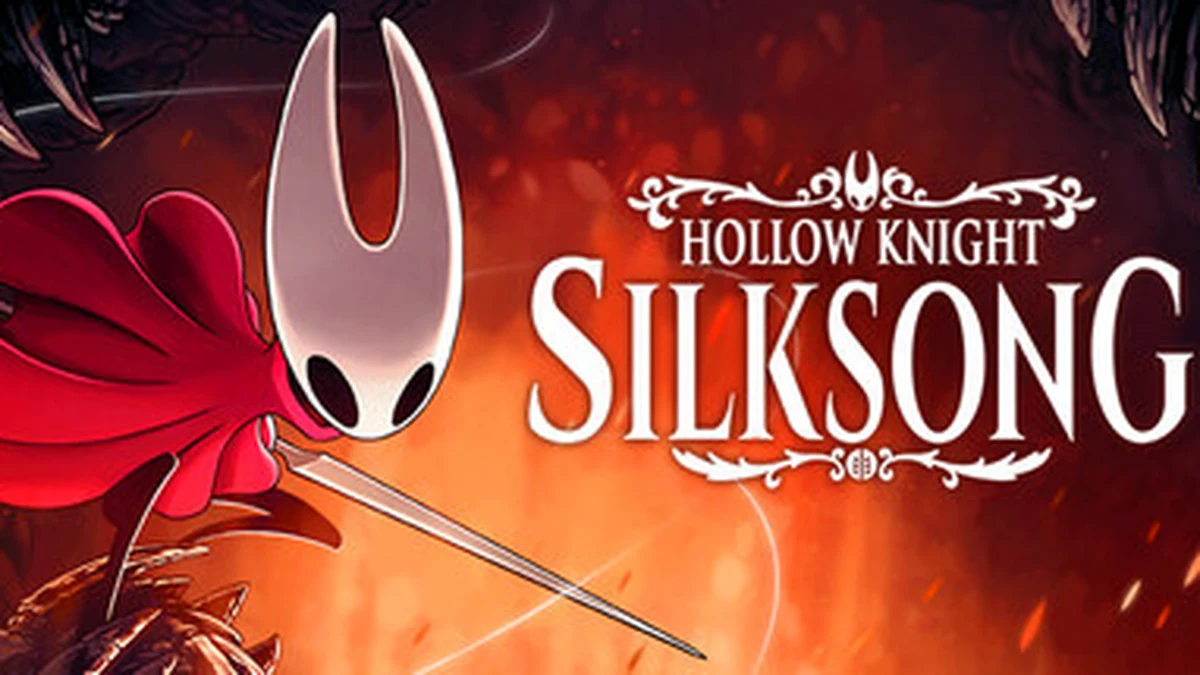
Few games in recent memory carried the weight of expectation that Hollow Knight: Silksong did. Announced in 2019 as a follow-up to one of the most beloved metroidvanias ever made, it spent years as a running joke about vaporware before finally releasing in September 2025. The good news is that Team Cherry didn’t just meet the moment — Silksong is a bigger, more mechanically ambitious game than its predecessor in almost every respect. The complicated news is that it’s also considerably harder, and that difficulty has become the defining conversation around the game since launch.
Story and Setting
This time you play as Hornet, the sharp, agile secondary character from the original game, who is captured and dragged against her will into Pharloom, a new kingdom described as haunted by silk and song. The story sends her climbing toward a distant Citadel at the kingdom’s peak, encountering a cast of insect-kingdom factions, cults, and rulers along the way. As with the first game, the plot is delivered obliquely, through environmental detail, item descriptions, and sparse dialogue rather than exposition, and it rewards the same kind of patient, curious players who pieced together Hallownest’s history in the original. Pharloom feels distinct from Hallownest in tone — more vertical, more ornate, and thematically preoccupied with faith, pilgrimage, and inherited kingship — while still clearly part of the same universe. Longtime fans hunting for connective tissue between the two games will find plenty of subtle callbacks, but Silksong never leans on nostalgia as a crutch; Pharloom is confident enough as its own setting that newcomers to the series can follow along without having finished the original.
Gameplay and Combat
Hornet plays fundamentally differently from the Knight. She’s faster and more acrobatic, and her needle-and-thread moveset emphasizes directional strikes, bounce and ricochet interactions off enemies and terrain, and aggressive aerial chaining. Instead of the original’s Soul system tied to a spellcasting mechanic, Silksong introduces Silk, a resource generated through active, successful combat that fuels a suite of new tools and abilities. The result is a game that wants you moving and attacking constantly rather than playing cautiously from range, and when it clicks, traversal and combat blend into some of the best platforming-combat fusion the genre has seen.
The map is at least as large as the original’s, and by most measures larger, with a correspondingly huge collection of upgrades, tools, and optional bosses to track down. A focused main-quest run lands around 20-plus hours, while a full completionist clear stretches toward 60. The catch is difficulty: Silksong is meaningfully harder than Hollow Knight, and the single most common complaint across player and critical discussion is the prevalence of enemies dealing “two-mask” damage — hits that take a disproportionate chunk of your health bar, turning routine encounters into precision tests and late bosses into some of the toughest fights in the genre. It’s not broken or unfair by design, but it is a steep, sometimes punishing curve that will not suit everyone, even players who handled the original comfortably. Boss fights in particular ask for multi-phase pattern recognition on a level closer to a character-action game than a typical metroidvania, and while checkpoints before major fights are generous, the walk back into an arena after a death can wear thin during the toughest attempts.
Visuals, Sound, and Performance
Team Cherry’s hand-drawn art has only gotten more detailed, with Pharloom’s biomes ranging from crumbling bell-towers to fungal wastes rendered with the same painterly care that made the original a visual standout. The score matches the original’s quality, shifting between mournful and ferocious as the setting demands. Technically, this is one of the best-optimized releases of the year: the PC version runs smoothly even on modest hardware, and on Steam Deck it holds a locked 90Hz with strong battery life, a notable achievement for a game of this visual density. Load times are minimal across the board, fast travel via the Bellway network is quick and reliable, and in the months since launch Team Cherry has continued shipping patches that tune specific enemy encounters flagged as excessive by the community, a sign the studio is actively listening to the difficulty conversation rather than treating the initial release as final.
Value for Money
At $20 across every platform, Silksong is priced well below what a game of this scope would typically command, and it’s arguably the strongest value proposition of any major release in 2025. A completionist clear pushing toward 60 hours, with dozens of bosses, an enormous interconnected map, and a soundtrack and art package that would be a highlight at triple the price, makes the cost of entry almost a non-factor in the buying decision. The only caveat is that value depends on your tolerance for its difficulty — a player who bounces off it in the first few hours gets less mileage than one who sees the challenge through, but even a partial playthrough delivers far more polished content than the asking price would suggest.
What Works
Hornet’s moveset is a genuine evolution of the series’ combat, the level design and interconnected map are as thoughtfully constructed as anything Team Cherry has made, and the game’s scale — in content, bosses, and world size — comfortably justifies the wait. Performance across every platform, including Steam Deck, is excellent, and the $20 launch price is remarkably generous for a game of this size and polish.
What Doesn’t
The difficulty spikes, particularly the frequency of heavy “two-mask” damage hits, push some encounters from challenging into frustrating, and the game is noticeably less forgiving to newcomers than the original was. Aggregate review and user scores, while still very positive, sit a step below the original’s near-universal acclaim, largely tied to this difficulty conversation. Players sensitive to steep difficulty curves or who bounced off tough sections of the first game should go in with clear expectations.
Verdict
Hollow Knight: Silksong delivers on seven years of hype in almost every category that matters: scale, art, music, and moment-to-moment combat design are all a clear step up from an already-excellent original. It is, however, a harder, less forgiving game, and that difficulty is a real dividing line rather than a footnote — series veterans who loved a tough fight will find plenty to love, while players who want a gentler reintroduction to Pharloom’s world should expect a rockier ride than Hallownest offered. At its price point, it’s an easy recommendation for metroidvania fans with the patience to match its ambition.