
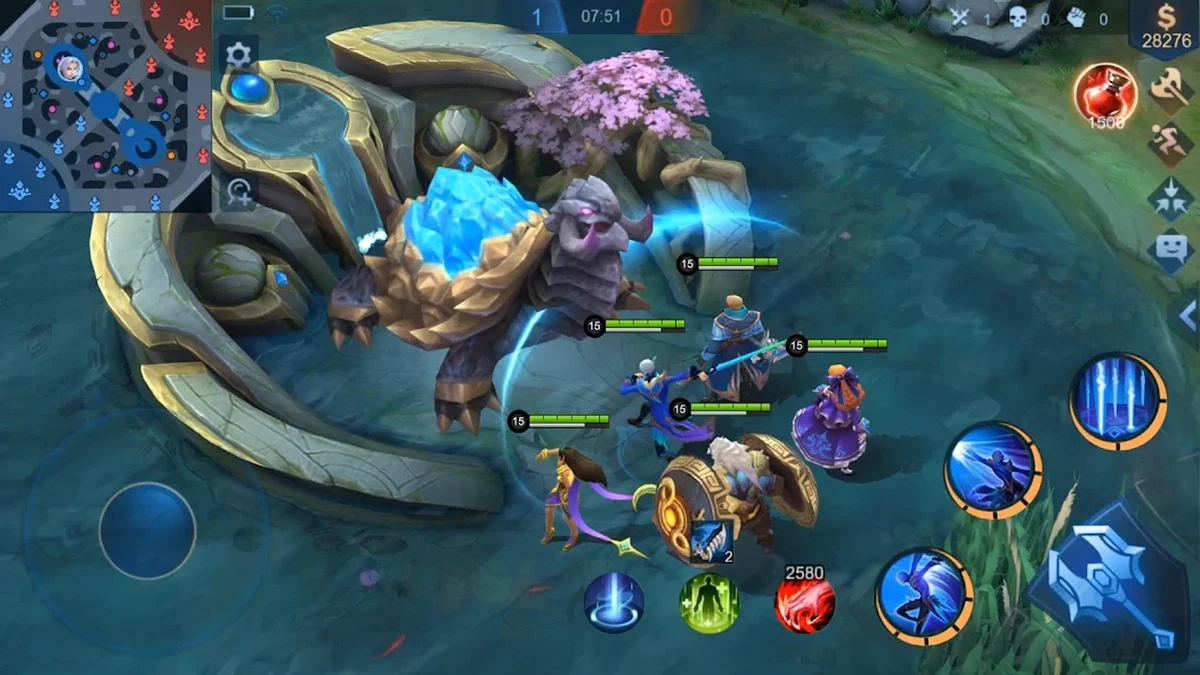
Every ranked match of Mobile Legends: Bang Bang starts the same way: five players, five roles, and five lanes that need to be covered before the clock even hits zero. New players often pick heroes because they look cool or hit hard, then wonder why their team keeps losing lane pressure or falling behind in gold. Understanding what each role is supposed to do, and where it belongs on the map, is the fastest way to stop feeding kills and start contributing to wins. This guide breaks down all six hero roles and matches them to the five lanes so you know exactly where to stand from the moment the game loads in.
Why Roles and Lanes Matter in Every Match
Mobile Legends is a 5v5 MOBA played across three lanes, a jungle, and a river that connects them. Each role is built around a specific job: some heroes are meant to solo a lane and snowball experience, others are meant to farm gold safely until the late game, and others exist purely to protect teammates. When five players each take a different lane and role, the map gets covered efficiently and no single side of the map is left undefended. When two players fight over the same lane or nobody roams to protect the jungle, one team gains a structural advantage before a single teamfight happens. Lane discipline in the first ten minutes usually decides who is ahead at the fifteen-minute mark.
EXP Lane: Fighters and Solo Growth
The EXP lane, sometimes called the “exp lane” or top lane depending on your side of the map, is typically soloed by a Fighter. Fighters are durable, high-damage hybrids that can hold a lane alone, trade with enemy heroes, and scale into a secondary frontline role once teamfights start. Because the EXP laner farms without splitting minion waves with anyone else, this lane produces one of the fastest levelling curves on the map. A good EXP laner uses that level lead to roam to the mid lane or river early, helping secure priority elsewhere. Fighters are considered one of the most beginner-friendly classes because they combine forgiving durability with straightforward combos, which makes the EXP lane a solid starting point for new players.
Mid Lane: Mages and Rotation Power
The mid lane sits at the center of the map and is almost always taken by a Mage. Mages deal magic damage and typically carry crowd control tools such as stuns, slows, or knockbacks that set up kills for the rest of the team. Because the mid lane is short, Mages hit their early levels quickly and are expected to rotate out of lane to help the gold lane or jungle secure early kills once they have their first two abilities unlocked. This rotation habit is what separates a strong mid laner from a passive one: staying in lane the entire early game wastes a mage’s biggest advantage, which is mobility around a compact map.
Gold Lane: Marksmen and Late-Game Carries
The gold lane, positioned near the bottom turret closest to the river, is built around the Marksman. Marksmen are primarily basic-attack damage dealers that start weak but scale into the strongest single-target damage in the game once they collect enough items. Because gold and last hits matter so much for a Marksman’s item timings, this hero is usually paired with a Support or Tank who clears the lane of enemy pressure and guards against ganks. A Marksman who is left alone to farm safely in the early game typically becomes the deciding factor in teamfights from the fifteen-minute mark onward, which is why protecting the gold lane is a team-wide priority, not just the marksman’s job.
Jungle: Assassins and the Retribution Playstyle
The jungle is not a lane in the traditional sense; it is the space between lanes filled with neutral monster camps that grant bonus gold and experience. This area is typically claimed by an Assassin, a high-mobility hero built to burst down priority targets and then escape before the enemy team can retaliate. Junglers rely on the Retribution battle spell to clear monster camps faster and to secure contested objectives like the turtle or Lord. Rather than staying in one lane, a jungler roams the map looking for isolated enemies to gank, using bushes and vision gaps to appear where the enemy least expects it. This role demands the most map awareness of any position, since a jungler who ganks blindly can lose a fight just as easily as they can win one.
Roam: Tanks and Supports Protecting the Team
The fifth position, known as the roam, is shared by Tank and Support heroes. Tanks are the most durable heroes in the game and are built to absorb damage, initiate fights, and use crowd control to lock down priority enemy targets. Supports lean more toward utility, offering heals, shields, and buffs that keep the team’s damage dealers alive longer in fights. Both subtypes give up personal farm in exchange for map-wide value: buying vision items, guarding the gold lane in the early game, and setting up kills through stuns or hooks. A roam player who wards river bushes and reacts to missing enemy heroes on the minimap often prevents more deaths than any amount of individual mechanical skill.
Choosing Your First Role as a Beginner
If you are new to Mobile Legends, Fighter and Tank roles tend to be the most forgiving starting points because they offer durability that covers for positioning mistakes while you learn the map. Marksman is a good second step once you understand farming patterns and item timings, since it teaches resource management under pressure. Mage and Assassin ask for more precise combos and map awareness, so many players pick those up after a few dozen matches in an easier role. Support is deceptively difficult despite looking simple, since it requires constant map reading rather than mechanical flashiness. Whichever role you choose first, sticking to one lane assignment for a few weeks builds the habits that carry over to every other role later. For a broader walkthrough covering heroes, items, and game modes from the ground up, check out our complete Mobile Legends guide.
The six roles and five lanes of Mobile Legends exist to divide responsibility across the map so that no single mistake sinks the whole team. Learning which lane belongs to which role, and why, turns a chaotic first few matches into a structured plan you can repeat and improve on every game. Once lane assignments feel automatic, the next step is understanding which heroes within each role are strongest in the current patch, and how to translate solid laning into consistent ranked wins.
Sources: – Hero roles | Mobile Legends: Bang Bang Wiki | Fandom – Every MLBB role and the heroes that define them – Understanding the 6 Hero Roles in MLBB – Mobile Legends Hero Roles & Positioning: Complete Guide