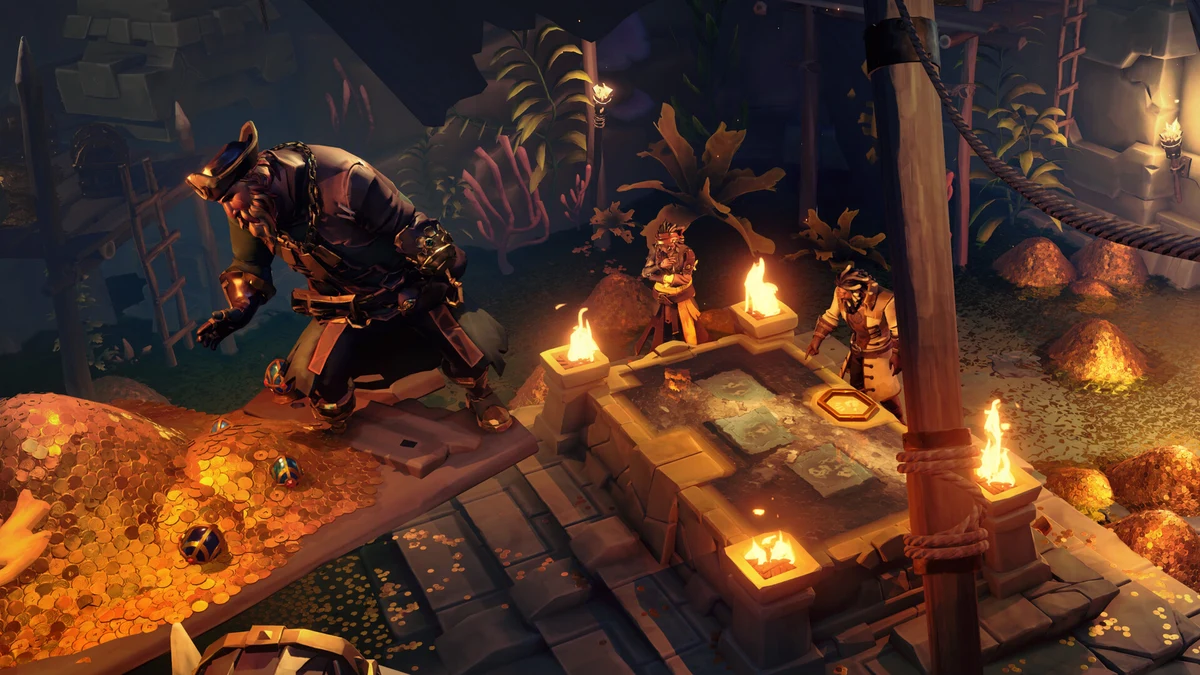
Sea of Thieves is a shared-world game, which means every session carries the possibility of running into another crew — sometimes friendly, often not. Whether you are raiding a Skeleton Fort while another ship circles for the loot, sailing under a Reaper’s Mark flag that broadcasts your position to the entire server, or simply crossing paths with a rival galleon on open water, knowing how to handle player-versus-player situations is essential once you move past the basics. This guide covers the main sources of PvP tension in the game and how to come out ahead, or at least survive with your loot intact.
Why PvP Happens in Sea of Thieves
Unlike games with dedicated PvP queues, Sea of Thieves blends PvE and PvP into the same open world by design. Skeleton forts, ocean-based world events, and treasure voyages are all visible or inferable by other crews, and loot you are carrying can be sunk and stolen by anyone who catches you. This shared-risk structure is intentional — it is what makes the game’s economy and tension work — but it means every voyage carries a baseline chance of conflict, especially near forts, outposts, or when you are flying an Emissary Flag.
Skeleton Forts: Fighting Skeletons While Watching Your Back
Skeleton Forts are large fortified islands that periodically become active, marked by a beam of light or smoke visible from a distance. Once active, they spawn waves of skeletons defending a vault of treasure inside. The problem is that the beacon is visible to every ship on the server, meaning multiple crews often race toward the same fort, either to fight the skeletons together, split the loot, or take it from each other once the vault is open.
A smart approach is to anchor your ship somewhere the fort’s cannons cannot target it, then move in to fight through the waves. Keep an eye on the horizon throughout — rival crews often wait until the fort is nearly cleared, letting the first crew do the work of clearing skeletons before swooping in to steal the treasure or engage in a ship fight over it. If you spot another ship approaching mid-raid, consider posting a lookout while the rest of the crew continues clearing waves, so you are not caught off guard mid-fight.
Fort of Fortune: The Harder Variant
Occasionally, when a Skeleton Fort activates, it appears as the more dangerous Fort of Fortune instead, identifiable by a skull with glowing red eyes hovering above it. This version throws far more waves at the crew — including powerful Skeleton Lords and an Ashen Lord in the final stages — and rewards significantly more loot than a standard fort. Because the payout is larger, Fort of Fortune events tend to draw more attention from other ships, so expect a higher chance of a PvP encounter on top of the increased PvE difficulty. Bringing extra supplies and being ready to defend your ship while your crew is still inside the fort is critical here.
Fort of the Damned: A Different Kind of Threat
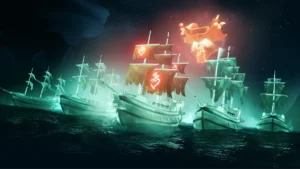
The Fort of the Damned is a separate, more ritualistic event centered on Old Boot Fort, activated by collecting a Ritual Skull and a set number of Flames of Fate rather than waiting for a random spawn. Because activating it requires deliberate effort and yields valuable rewards, crews that commit to it are often well-prepared, but that also makes it a target for other ships that notice the activation and want to intercept the reward without doing the setup themselves.
The Reaper’s Mark: Opting Into Open Conflict
If you want PvP rather than just risking it, raising the Reaper’s Bones Emissary Flag puts your ship under the Reaper’s Mark. This makes your ship’s location visible on every other crew’s map table for the rest of the session, essentially advertising a fight. In exchange, you earn Reaper’s Bones reputation and gold bonuses from any loot you are carrying, sellable only at Reaper’s Hideout. Because a Reaper’s Mark ship is a guaranteed magnet for other crews looking for confrontation or easy loot, sailing under this flag means treating every encounter as a probable fight rather than a chance one, and keeping your ship stocked with cannonballs, planks, and bananas becomes even more important than usual.
Reading and Avoiding Unwanted Encounters
Not every PvP encounter has to end in a fight. Spyglasses let you scout other ships from a distance before they notice you, and checking a ship’s flag can tell you what kind of crew you are dealing with — an Emissary Flag signals loot worth targeting, while no flag at all often (though not always) means a less committed crew. Changing course early, sailing through fog or storms to break line of sight, and avoiding straight-line routes near outposts and active forts are all simple ways to reduce unwanted attention when you would rather finish a voyage in peace.
Ship Combat Fundamentals for PvP
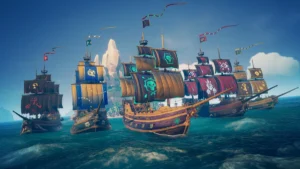
When a fight is unavoidable, ship-to-ship combat comes down to a few repeatable fundamentals: keep your broadside cannons facing the enemy rather than your bow or stern, aim at or below the waterline to cause flooding rather than just cosmetic damage, and never let repairs lapse — a ship that is fighting well but slowly filling with water below deck can still sink mid-battle. Boarding enemy ships to disrupt their repairs or steal their treasure directly is also a common tactic among experienced crews, though it leaves your own ship undermanned while you are away, so timing and communication matter.
If you are still building up the fundamentals of sailing and crew coordination before diving into PvP-heavy situations, check out our complete Sea of Thieves guide for the full picture of how the game’s systems fit together.
After the Fight: Securing or Recovering Loot
Winning a fight is only half the job. If you sink an enemy ship, their loot floats and despawns after a period of time, so moving in quickly to collect it is worth doing even if the fight is technically over. If you lose a fight, your own loot barrels may still be floating nearby, and it is sometimes possible to recover them before another crew claims what is left, provided you can survive long enough to try. Either way, staying alert in the minutes after a confrontation is just as important as the fight itself.