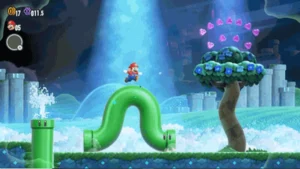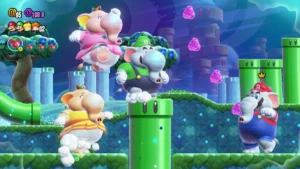

Super Mario Bros. Wonder is built around exploration just as much as platforming skill, and its core collectible, the Wonder Seed, is the thread that ties every course together. With 225 Wonder Seeds scattered across the Flower Kingdom, hunting them all is a serious undertaking, but the good news is that the game teaches you its own logic once you know what to look for. Rather than listing every single seed location, this guide focuses on the patterns and techniques that will help you find Wonder Seeds and hidden secrets on your own, in any course.
Understanding How Wonder Seeds Are Distributed
Every standard course in Super Mario Bros. Wonder contains at least two Wonder Seeds. The first is guaranteed simply for completing the level and rescuing the Poplin trapped at the end. The second comes from finding and activating the course’s Wonder Flower, then successfully completing the resulting Wonder Effect challenge. Courses that also contain a secret exit hide a third Wonder Seed, usually tied to whatever alternate path that exit leads to.
Knowing this structure changes how you approach a course. If you have cleared a level and collected its Wonder Seed but the seed count for that course does not yet feel complete, the missing seed is almost always behind a Wonder Flower you have not triggered yet, or a secret exit you have not found. This gives you a clear checklist for every level rather than requiring guesswork.
Spotting Wonder Flowers Before You Trigger Them
Wonder Flowers are usually visible from a distance, often glowing or standing apart from the rest of the course’s scenery, but they are not always on the main path. Many are tucked behind pipes, above platforms that require a well-timed jump, or past a small gap that looks like a dead end. If a section of a course seems oddly decorative or includes a path that does not obviously lead toward the flagpole, it is worth a detour, since level designers frequently use those side paths specifically to hide the Wonder Flower.
Once triggered, a Wonder Effect transforms the course in a significant way for a limited time, and completing whatever challenge that effect presents, whether it is collecting falling stars before a timer runs out or surviving a dramatic shift in level geometry, is what actually awards the Wonder Seed. If you fail partway through a Wonder Effect, you can typically retry the course and trigger the flower again, so there is little risk in experimenting.
Finding Secret Exits and Hidden Paths
Secret exits are the trickiest seeds to track down because the game rarely announces them outright. A few reliable signs to watch for: pipes that seem to lead nowhere obvious, gaps in the terrain that require a specific power-up like the Drill Mushroom to access, and areas that are visible on screen but seem unreachable with your current tools. If a course hands you an unusual power-up partway through, like an Elephant Fruit near a section with dry-looking plants, that is often a deliberate hint that the power-up’s special ability is the key to reaching a hidden area.
Badges can also help here. The Sensor Badge alerts you when you are near a 10-Flower Coin or a Wonder Seed, which is one of the most effective tools in the game for narrowing down where to search when you know something is nearby but cannot spot it visually. Equipping Sensor on a replay of a course you have not fully cleared is often faster than blind trial and error.
Using Flower Coins as a Clue System
Flower Coins, the game’s other major collectible, are frequently placed along the same paths that lead toward secret exits or Wonder Flowers, even though they are tracked separately from Wonder Seeds. If you notice a trail of Flower Coins veering off the obvious route, following it is usually worthwhile, since course designers tend to reward exploration consistently rather than scattering coins randomly. Treating visible Flower Coins as breadcrumbs rather than an end in themselves is one of the simplest ways to stumble onto hidden areas you might otherwise walk past.
Revisiting Courses With Different Power-Ups and Badges
Because certain secrets require specific tools, like the Drill Mushroom’s burrowing ability or the Elephant Fruit’s water-spraying trunk, it is worth revisiting courses you have already cleared once you have unlocked more of the game’s power-ups and Badges. A path that looked like a dead end on your first playthrough might open up entirely once you have access to a power-up that was not available in that section originally, or once you equip a Badge like Grappling Vine that lets you reach previously inaccessible platforms.
For players aiming for full completion, it is often more efficient to do a first pass through every course focused purely on reaching the flagpole, then a dedicated second pass per world using Sensor and whatever traversal Badges suit that world’s design, rather than trying to 100% every course on a single attempt.
General Tips for Efficient Seed Hunting
A few habits will speed up your search across the whole game. Always explore vertically as well as horizontally, since Wonder Flowers and secret paths are frequently placed above or below the main route rather than directly along it. Pay attention to any environmental object that reacts differently than expected, since unusual scenery is often a deliberate signal from the level designers. And do not hesitate to backtrack within a course immediately after finishing it if you sense you missed something, since most stages remain accessible to explore even after you have technically cleared them.
If you want a full breakdown of every world and course alongside these general strategies, check out our complete Super Mario Bros. Wonder guide, which covers the game’s structure in more detail.
Why the Hunt Is Worth It
Chasing every Wonder Seed is not just about the completion percentage. The design philosophy behind Super Mario Bros. Wonder rewards curiosity, hiding some of the game’s most creative and surprising moments behind secrets rather than putting them on the main path. Learning to recognize the game’s visual language, unusual scenery, oddly placed pipes, coin trails leading off course, is ultimately more valuable than memorizing a checklist, since that same instinct will help you find secrets in courses you have not even played yet.