Honor of Kings rarely tops mainstream gaming headlines outside China, yet it has repeatedly been ranked the single highest-grossing mobile game on the planet by market intelligence firms like Sensor Tower. Estimates place its lifetime in-app purchase revenue well into the tens of billions of dollars, and it has held the top spot on global mobile game revenue charts for multiple years running, including a first half of 2025 in which it topped worldwide mobile game revenue rankings. That kind of sustained dominance isn’t an accident of luck; it comes from a deliberate monetization model, a massive built-in player base, and an esports ecosystem that keeps players engaged for a decade and counting. Here’s what’s actually driving the numbers behind the world’s biggest mobile game business.
The Scale of Honor of Kings’ Revenue
Sensor Tower data has repeatedly named Honor of Kings the top-grossing mobile game globally on a monthly basis, and by early 2026 the game’s lifetime in-app purchase revenue estimates ran into the tens of billions of dollars. The game generated an estimated $2.3 billion in the first half of 2025 alone according to Sensor Tower’s global mobile game revenue report, reinforcing a run in which it has repeatedly been cited as the world’s top-earning mobile title in recent years. Those figures cover in-app purchases across the App Store, Google Play, and, in China, a large network of third-party Android app stores that most Western analytics firms only partially capture, meaning even the eye-popping public estimates likely understate total spend.
What makes these numbers particularly notable is their consistency. Rather than a single breakout year driven by a viral moment, Honor of Kings has posted top-of-chart monthly revenue figures repeatedly across multiple years, a pattern that points to a durable business model rather than a temporary spike in spending. Few mobile games manage to stay at or near the top of global revenue charts for more than a year or two before newer titles overtake them, which makes Honor of Kings’ multi-year run at the top an outlier even within an industry known for chart volatility.
A Cosmetic-First Monetization Model
Unlike many free-to-play games that sell power directly, Honor of Kings keeps monetization centered on cosmetics to avoid the pay-to-win backlash that can alienate competitive players. The game uses a paid premium currency, commonly referred to as Tokens, that players buy with real money and spend on new heroes, skins, and seasonal bundles, with individual purchases ranging from roughly $1 up to $89 for premium items. Because heroes themselves can typically be unlocked through gameplay over time, the purchases that actually drive revenue are cosmetic skins and battle pass content, which keeps the competitive playing field level while still giving spenders a reason to open their wallets.
This design choice matters commercially as much as it does for fairness: a cosmetic-only economy means the game can keep selling new content indefinitely without needing to introduce power creep that would eventually alienate its most dedicated players, giving the monetization system a much longer effective lifespan than pay-to-win alternatives.
The Power of Limited-Edition Skins
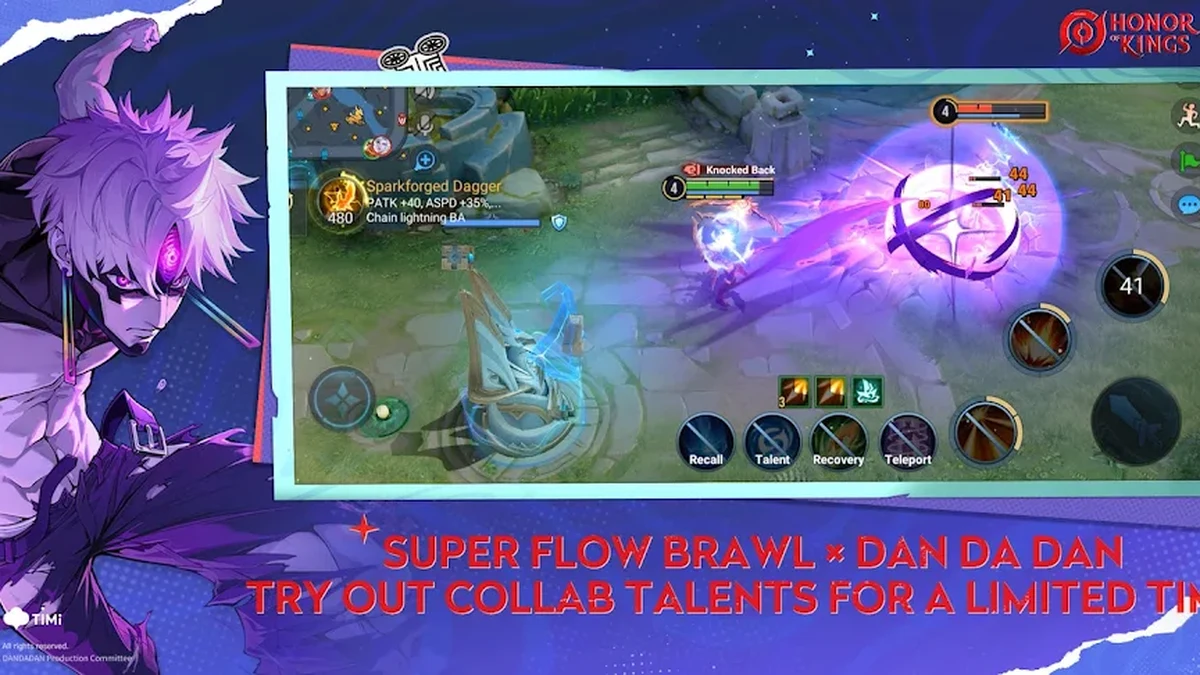
Skins are sold in tiered rarity levels, with Epic and Legendary skins commanding premium prices and limited-time releases driving concentrated purchasing spikes. The clearest example of this system’s earning power came from a limited-edition Zhao Yun skin, which reportedly brought in around $22 million in a single day of sales. That kind of single-item performance illustrates why skin releases are treated as major content events in Honor of Kings, complete with dedicated marketing pushes and often tied to collaborations or in-game lore moments that create urgency around limited availability.
These limited drops function similarly to product launches in other entertainment industries, generating anticipation well before release through teasers and previews, then converting that anticipation into a concentrated spending window that shows up clearly in monthly revenue charts.
The Honor Pass and Recurring Spend
Beyond individual skin drops, Honor of Kings runs a seasonal battle pass called the Honor Pass on roughly 90-day cycles, offering both free and premium reward tracks. Completing the premium pass typically returns a portion of spent currency back to the player, which effectively recycles tokens back into the purchasing ecosystem and encourages players to keep buying the next pass rather than walking away. TiMi Studios has also experimented with newer monetization formats in China, including an early access rental system that lets players pay a smaller recurring fee to use a skin for a month, with payments eventually counting toward full ownership, a model designed to lower the barrier to trying premium cosmetics and convert curious players into long-term spenders.
China’s Massive Player Base Is the Engine
None of this monetization would matter without an enormous, highly engaged player base, and Honor of Kings has one of the largest in gaming history. The game’s Chinese servers alone recorded a record 139 million daily active users as of late 2025, while global monthly active users have surpassed 260 million, a figure that includes the game’s international rollout under the Honor of Kings name. China’s mobile-first gaming culture, combined with Tencent’s dominant position in Chinese social platforms like WeChat and QQ, gives the game direct distribution to hundreds of millions of potential players, a scale advantage that few other mobile games can match anywhere in the world. Even a relatively small percentage of that player base converting into paying spenders translates into revenue figures most other studios never approach. Tencent’s broader ecosystem also plays a supporting role here, since payment infrastructure already embedded in WeChat and QQ removes much of the friction that normally slows down in-app purchases in other markets, making it easier for casual players to become occasional spenders without ever leaving the apps they already use every day.
Esports and the King Pro League Flywheel
Honor of Kings also benefits from one of the largest esports ecosystems in mobile gaming through the King Pro League, or KPL, which functions as a constant marketing engine that keeps the game culturally relevant in China well beyond casual play. International events like the Honor of Kings Invitational have offered multimillion-dollar prize pools, with the 2024 Midseason Invitational featuring a total prize pool of roughly $3.05 million and a $1 million payout to the winning team. That level of investment in competitive infrastructure reinforces the game’s status as a mainstream entertainment product rather than just a mobile app, which in turn supports continued spending from its player base. For a broader look at the game’s history, modes, and mechanics, check out our complete Honor of Kings guide.
Global Expansion Adds a New Growth Lever
While China remains the core of Honor of Kings’ revenue, the game’s global release in mid-2024 opened a new growth avenue outside its home market, with regional rollouts starting in February 2024 across the CIS, South Asia, Turkey, and the Middle East and North Africa before a wider June 2024 launch. International revenue is still a small fraction of the total compared to China, but it represents genuine incremental growth for a title that had already dominated its domestic market for close to a decade. Combined with continued esports investment and an evolving monetization toolkit, that global expansion is a key reason analysts expect Honor of Kings to keep contesting the top of mobile game revenue charts for the foreseeable future.


[…] Call of Duty: Mobile: The Complete 2026 Guide (ESRB T) PUBG Mobile Landing Spots: Beginner Survival Guide (ESRB T) Subway Surfers Review: Why the Most Downloaded Mobile Game Still Works (ESRB E10+) Why Honor of Kings Is the Top-Grossing Mobile Game (ESRB T) […]