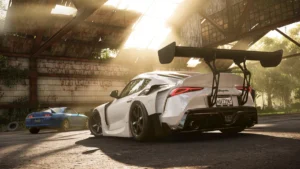

Forza Horizon 5 stays fresh years after launch largely because of its live-service structure, built around Forzathon challenges and a rotating Festival Playlist of seasonal events. New and returning players are often unsure how these systems fit together, what the weekly reset actually changes, and where rewards like Forza Points and seasonal cars come from. This guide walks through Forzathon, the Series and season structure, and the Horizon Life multiplayer mode so you know exactly what to log in for each week.
What Is Forzathon in Forza Horizon 5
Forzathon Events are a series of weekly and daily challenges that reward players with Forza Points, a currency that can be spent in the Horizon Forzathon Shop. The centerpiece is the Weekly Challenge, which is broken into four chapters, typically built around owning or driving a specific car, or a car within a specific category. Completing one chapter unlocks the next, so working through the Weekly Challenge is a structured, ongoing task rather than something you finish in a single sitting. These challenges are designed to be approachable for players jumping in for short sessions, since each chapter usually only takes a handful of races or activities to complete.
How the Festival Playlist and Series System Work
The Festival Playlist is the live-service backbone of the entire game, a rotating list of weekly challenges, Forzathon events, EventLab maps, and seasonal car rewards. It operates on two overlapping cycles: a weekly season that resets every Thursday, and a full Series that renews completely every four weeks. Both the weekly reset and the full Series changeover happen on Thursdays at 14:30 UTC, which is 07:30 Pacific, 09:30 Eastern, and 15:30 BST. As an example of how this plays out, Series 62 runs from July 16 to August 13, 2026, before rolling into Series 63 from August 13 through September 10, 2026. Each new Series typically introduces new seasonal reward cars and refreshed challenge content across the four weekly seasons it contains.
Weekly Challenges and Chapter Rewards Explained
Within each week, progress is tracked through a points system separate from the four-chapter Weekly Challenge itself. A weekly season caps out at 75 points, with meaningful rewards unlocking at the 20 and 40 point thresholds. Across the full four-week Series, the point cap rises to 300, reflecting the combined activity across all four weekly seasons. Points are typically earned by completing Forzathon objectives, seasonal PR Stunts, and other playlist activities, so consistent daily or weekly play adds up steadily toward these thresholds rather than requiring long single sessions.
Seasonal Events: Spring, Summer, Autumn, Winter
Each four-week Series cycles through the four seasons, Spring, Summer, Autumn, and Winter, with each week themed accordingly and tied to its own set of events, challenges, and rewards. The seasonal rotation changes more than just the weather and lighting across the Mexico map; it also shifts which events and PR Stunts are active, since certain routes and conditions suit different seasons better than others. This rotation is part of what keeps the Festival Playlist feeling different week to week even though the underlying map does not change, and it gives players a reason to revisit the same roads under different conditions.
What Fills Out the Festival Playlist Each Week
The Festival Playlist is organized into several distinct categories beyond the core Forzathon challenges, and understanding what each one offers helps you decide where to spend a limited play session. The Trial is a matchmade cooperative championship where you team up with other players against Unbeatable-rated Drivatars, rewarding coordinated racing over solo skill. The Eliminator is a battle royale style mode where players compete in head-to-head sprint races within a shrinking arena, with finishing in the top portion of the field enough to earn Season Points and credits even without winning outright. Championships offer three-race series that can be completed solo against the AI, in co-op, or in PvP, requiring a first-place finish in the overall standings. Playground Games is a matchmade best-of-three playoff between two teams built around objective-based mini-games rather than straight racing, EventLab surfaces custom player-made courses and modes directly in the playlist, and Horizon Arcade offers lighter, cooperative-style events out in the open world. Working through a mix of these categories each week is usually the fastest way to hit the weekly point thresholds, since some, like the Trial or Eliminator, award points for participation and placement rather than requiring an outright win.
Super7 and Bonus Community Challenges
Alongside the core Forzathon and seasonal structure, Super7 is a stunt-focused mini-mode that uses community-made cards submitted by players. Each Series introduces a new set of these cards, and players who complete seven full Series worth of Super7 cards, forty-nine cards in total, earn an exclusive Super7 truck reward. This mode adds a layer of community-driven content on top of the standard weekly and seasonal structure, and it rewards players who stay engaged with the Festival Playlist over a longer stretch of time rather than just a single Series.
Horizon Life vs Horizon Solo
Forza Horizon 5 gives players a choice between two ways of experiencing the open world: Horizon Life and Horizon Solo. In Horizon Life, other players are visible in your shared session and you can interact with them through Convoys, PvP and co-op events, and Forzathon Live events, which are live challenges that pop up in the shared world. In Co-Op specifically, you can team up with other players and head to Forzathon Live events together or invite them into ad-hoc co-op races. Horizon Solo, by contrast, keeps the world populated only by you and the AI, removing other real players from view entirely. Choosing between the two comes down to whether you want the social, drop-in energy of a shared festival world or a quieter space to focus on your own goals and challenges.
Spending Forza Points in the Horizon Forzathon Shop
Forza Points earned from Forzathon Events and other playlist activities are spent in the Horizon Forzathon Shop, a rotating storefront separate from the in-game credit economy. The shop typically offers cars, character customization items, and other cosmetic rewards that are not available through normal credit purchases, making Forza Points a valuable secondary currency to accumulate even if you are not actively chasing every Weekly Challenge chapter. Because the shop’s stock rotates, it is worth checking in regularly rather than saving points indefinitely, since items you want may not stay available forever.
Tips for Staying on Top of Weekly Content
Because the Festival Playlist resets every Thursday and the Weekly Challenge chapters build on each other, players who take short breaks can come back to find objectives they no longer have time to finish before the next reset. Checking the Festival Playlist menu at the start of each session, rather than only when you remember, helps you catch limited-time seasonal PR Stunts and Trial rotations before they disappear. It is also worth prioritizing whichever Weekly Challenge chapter is currently active over starting new side content, since chapters are sequential and cannot be completed out of order. For players short on time, focusing purely on Forzathon Events and the Weekly Challenge is usually enough to clear the 20 and 40 point weekly reward thresholds without needing to touch every category in the playlist. If you are still getting oriented with the game’s broader systems beyond the live events, check out our complete Forza Horizon 5 guide for a full overview of progression, cars, and the open world.