Table of Contents
- What Is Valorant
- Platforms and How to Play
- Agents Explained: Roles and Current Roster
- Maps in the Current Pool
- Competitive Ranks and How Ranked Works
- Economy and Buy Phase Basics
- Valorant for Beginners
- Best Agents for Beginners and Current Meta
- Esports: VCT and the Competitive Scene
- Best Settings and Crosshair Basics
- Hardware and Setup Tips
- Who Valorant Is Best For
- Frequently Asked Questions
- Conclusion
- External Authority Sources
Six years after its beta launched with ten agents and a promise to fuse Counter-Strike precision with hero-shooter flair, Valorant has grown into one of the biggest competitive shooters on the planet. As of August 2026, Riot Games’ tactical FPS sits in Season 2026, Act 4, running a 29-agent roster, a seven-map competitive pool, and an esports calendar that culminates in Valorant Champions in Shanghai this October. The game has also quietly become a multi-platform product — it’s no longer just a PC game with a cult following, but a title spanning PC, PlayStation 5, Xbox Series X|S, and, in China at least, mobile devices where it’s already logged more than 100 million registered accounts.
If you’re new to Valorant, coming back after a long break, or just trying to make sense of how much has changed since launch, this guide covers everything that matters right now: the current agent lineup and what each role actually does, the maps you’ll queue into, how ranked and RR work, the economy decisions that decide rounds, the esports scene worth following, and the settings and gear that actually move the needle. No filler, no stale 2023 screenshots passed off as current — just what’s true about Valorant today.
What Is Valorant
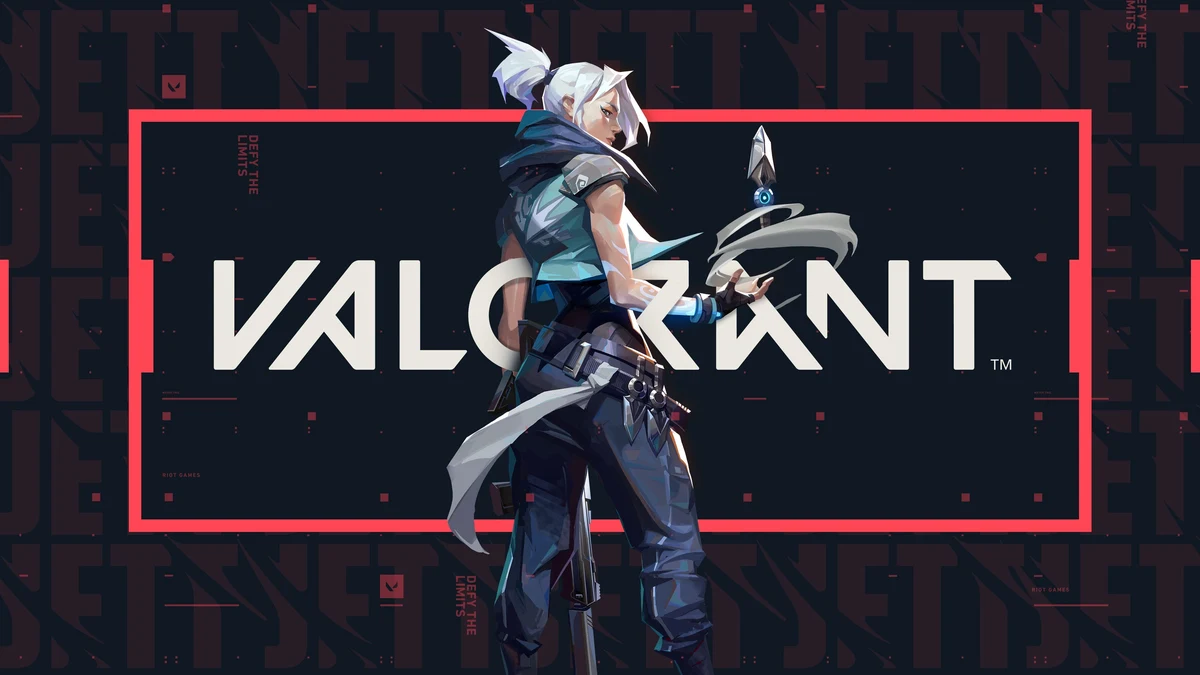
Valorant is a free-to-play, 5v5 tactical first-person shooter built by Riot Games, best described as Counter-Strike with character abilities bolted on. Two teams — attackers and defenders — fight over a bomb-plant objective called the Spike across rounds of one life each. Win a round by planting and detonating the Spike, defusing it, or eliminating the enemy team. There’s no respawning mid-round, which is exactly what makes every engagement carry weight: peek wrong, and you’re spectating for the next 30-plus seconds while your team plays four-on-five.
What separates Valorant from a pure gunfight simulator is its cast of agents. Every character brings a kit of unique abilities — smokes, flashes, recon tools, traps, healing, movement — purchased at the start of each round alongside guns and armor. Gunplay is still the foundation; Riot has been explicit that abilities are meant to set up duels, not replace them. A flawless Cypher trip-wire read means nothing if you can’t win the resulting one-tap. That balance between mechanical skill and tactical utility is the core of why Valorant has held a dedicated, growing audience since 2020.
Matches are best-of-25 rounds in unrated and competitive (first to 13 wins, teams swap sides at the halfway point), though shorter formats exist in modes like Spike Rush, Swiftplay, and the newer Retake mode added in Act 4. Riot updates the game roughly every two to three weeks, so the meta — which agents, guns, and strategies dominate — shifts constantly, and that constant tuning is a big part of why competitive Valorant hasn’t gone stale the way some shooters do after a few years.
Platforms and How to Play
PC
PC remains Valorant’s primary platform and the one nearly all competitive and esports play happens on. It’s free to download directly from playvalorant.com, runs on a relatively modest system spec compared to other modern shooters, and is capped at a competitive-friendly frame rate ceiling that rewards high-refresh monitors rather than punishing lower-end hardware.
Console
Valorant launched a limited beta on PlayStation 5 and Xbox Series X|S in June 2024 and moved to a full, open release on August 2, 2024. Nearly two years later, console Valorant is a mature, standalone experience with its own progression, its own battle pass claims, and cross-progression — your account, skins, agents, and currencies carry over if you play on both PC and console with the same Riot account.
Console and PC are not cross-play with each other. Riot keeps the two matchmaking pools separate to avoid mixing mouse-and-keyboard precision with controller aim assist, so console players queue only against other console players (PlayStation and Xbox share a pool). If even one PC player is in a party, that party can’t queue with a console player. This is a deliberate design choice, not a bug, and Riot hasn’t signaled any plan to merge the pools.
Mobile
Valorant Mobile is real, but it isn’t global yet. It launched in China in August 2025 through Tencent and has been a massive success there — over 10 million daily players by mid-2026 and past 100 million registered accounts by July 2026. Outside China, there’s no beta, no pre-registration, and no confirmed release window as of this writing. If a global rollout does happen, it’ll be announced on playvalorant.com and official app stores — treat any third-party “beta sign-up” site as a scam.
The Free-to-Play Model
Valorant makes its money entirely from cosmetics — weapon skins, the Battle Pass, bundles, and player cards — never from stat-boosting purchases. New accounts start with a handful of agents unlocked and earn the rest through Kingdom Credits, Agent Unlock Tokens from the starter contract, or direct purchase with Valorant Points. Newly released agents also get a limited-time recruitment event where you can unlock them for free by earning XP, which is worth timing your grinding around if a new agent drops while you’re active.
Anti-Cheat: Vanguard
Every Valorant match is protected by Riot Vanguard, a kernel-level anti-cheat that runs continuously in the background, not just while the game is open. It’s a genuine trade-off — Vanguard has deep system access most anti-cheat software doesn’t — but it’s also a major reason Valorant’s competitive integrity has held up better than most F2P shooters. Riot pushed a significant Vanguard update in May 2026 that enabled IOMMU protections against DMA-based cheat devices for flagged accounts, part of an ongoing arms race that’s made conventional kernel-level cheating in Valorant close to unsustainable for cheat developers.
Image suggestion: A side-by-side graphic showing the Valorant PC client, PS5 controller, and mobile phone icon under the heading “One Account, Every Platform.” Alt text: “Valorant cross-progression across PC, PlayStation, Xbox, and mobile in 2026.”
Agents Explained: Roles and Current Roster
Valorant currently has 29 playable agents, split across four roles: 8 Duelists, 7 Initiators, 7 Sentinels, and 7 Controllers. You’ll sometimes see “30 agents” quoted elsewhere — that’s counting Miks’ internal lore number (Agent 30) without accounting for the fact that Agent 08’s slot has never been filled or revealed as playable. Twenty-nine is the accurate, pickable number.
The Four Roles
- Duelists are your entry fraggers and space-takers. They’re built to win first contact, whether through raw movement, flash setups, or self-sufficiency.
- Initiators open sites before the fight starts, using recon and disruption tools — darts, flashes, tracking — to strip information and cover from the enemy team.
- Controllers manage sightlines with smokes and area-denial tools, slowing pushes and cutting off angles so their team can execute with less risk.
- Sentinels hold ground. They defend flanks, plant traps, gather intel passively, and in some cases heal or revive teammates.
Current Agent Roster by Role
| Role | Count | Agents |
|---|---|---|
| Duelist | 8 | Jett, Phoenix, Raze, Reyna, Yoru, Neon, Iso, Waylay |
| Initiator | 7 | Sova, Breach, Skye, KAY/O, Fade, Gekko, Tejo |
| Sentinel | 7 | Sage, Cypher, Killjoy, Chamber, Deadlock, Vyse, Veto |
| Controller | 7 | Brimstone, Viper, Omen, Astra, Harbor, Clove, Miks |
The Newest Agent: Miks
Miks, a Croatian sound-and-music-themed Controller, is the most recent addition to the roster, released March 18, 2026 during Season 2026 Act 2. He’s an unusual pick for the role: alongside smoke placement through Waveform, his kit includes Harmonize (a combat stim for himself and an ally) and M-pulse, a throwable that alternates between concussing enemies and healing teammates depending on how you set it. His ultimate, Bassquake, sends out a sonic blast that knocks back, deafens, and slows anyone caught in it. He’s the first Controller with a built-in healing tool, which has already nudged team compositions toward pairing him with aggressive duelists who can play riskier peeks knowing they can be topped up mid-round.
As of early August 2026, Riot has not announced or teased a 30th playable agent, and the official Valorant wiki states there’s no development information on Agent 08 beyond confirmation that the character will eventually appear. If you’re chasing rumors of an imminent new agent reveal, there’s currently nothing substantiated to back that up.
For a full breakdown of who’s strong right now and who’s worth learning first, our best agents tier list tracks the current meta pick by pick.
Image suggestion: A four-quadrant grid showing one representative agent portrait per role (e.g., Jett, Sova, Killjoy, Omen) labeled with role icons. Alt text: “Valorant’s four agent roles — Duelist, Initiator, Sentinel, Controller — represented by Jett, Sova, Killjoy, and Omen.”
Maps in the Current Pool
Riot rotates the competitive map pool roughly once per act, pulling maps out for rework or rest and bringing others back in. As of Season 2026 Act 4 (live June 24 through August 19, 2026), the seven-map competitive pool is:
- Ascent — A symmetrical, mid-heavy map with long sightlines that rewards clean crossfires and rifle control.
- Split — Tight, verticality-heavy corridors with two ropes connecting mid to the sites; among the most claustrophobic maps in the pool.
- Haven — Valorant’s only three-site map, which forces wider defensive setups and rewards initiators who can gather info across a bigger footprint.
- Lotus — Three sites again, but with rotating doors and destructible walls that create unpredictable rotation timings.
- Breeze — Wide open areas and long-range angles that favor Operators and long-distance duels over close-quarters aggression.
- Sunset — A mid-sized, two-site map with layered chokepoints that returned to the pool this act after a rest period.
- Summit — The newest addition, introduced alongside the Retake game mode in patch 13.00 (June 2026); still being read by the pro scene and ranked players alike.
Pearl, Fracture, and Bind rotated out when Act 4 began, which is standard practice — Riot keeps roughly seven maps active at a time and swaps a couple out each act to keep the pool from feeling stale, while also giving design teams room to rework maps that need it (Fracture and Pearl have both had significant retunes in past cycles).
Unrated and Spike Rush queues typically pull from a wider pool that can include maps outside the current competitive seven, so don’t be surprised if you see a map in casual play that isn’t ranked-legal this act.
Competitive Ranks and How Ranked Works
Valorant’s ranked ladder hasn’t changed its core structure in years, which says something about how well it works: Iron, Bronze, Silver, Gold, Platinum, Diamond, Ascendant, Immortal, and Radiant. Every tier except Radiant splits into three divisions (for example, Gold 1, Gold 2, Gold 3), giving 25 distinct ranks total.
| Rank Tier | Divisions | Who’s There |
|---|---|---|
| Iron | 1–3 | Brand-new or very casual players learning fundamentals |
| Bronze | 1–3 | Basic game sense forming, inconsistent utility usage |
| Silver | 1–3 | Comfortable with mechanics, still developing map/team sense |
| Gold | 1–3 | Solid all-around players; the largest population band |
| Platinum | 1–3 | Consistent aim and utility timing, better communication |
| Diamond | 1–3 | Strong individual mechanics and coordinated team play |
| Ascendant | 1–3 | Near-semi-pro fundamentals, sharp positioning and economy calls |
| Immortal | 1–3 | Elite; regional RR thresholds replace the standard 100-RR climb |
| Radiant | No divisions | Top 500 players per region, leaderboard-ranked |
From Iron through Ascendant 3, climbing works on a simple 0–100 Rank Rating (RR) bar per division — hit 100 RR and you promote, drop to 0 and you can demote. Immortal and Radiant abandon that system in favor of regional RR thresholds and outcome-based movement, since at that skill level raw win/loss and performance carry more signal than a fixed bar. Radiant itself isn’t really a rank so much as a live leaderboard — only the top 500 competitive players in each region hold it at any given time, and players can fall out of Radiant without ever losing a match if enough other players simply overtake them.
Placement into a rank happens after five placement matches at the start of each act, and Riot factors in your previous act’s rank alongside those results, so you won’t fall to Iron from Diamond just because of a rough placement run.
If you’re trying to figure out exactly what separates each tier or how RR gains and losses are actually calculated match to match, our full rank system breakdown goes deeper into the mechanics behind the ladder.
Image suggestion: A vertical ladder graphic showing all nine rank icons from Iron to Radiant with division markers. Alt text: “Valorant’s nine competitive ranks from Iron to Radiant, shown with division tiers.”
Economy and Buy Phase Basics
Valorant’s economy is arguably as important as its gunplay — misreading a buy round can lose you a match even if your aim is flawless. Every player manages an individual credit pool (not a team-shared one), earned through round wins, round losses, kills, and plants/defuses.
Core Weapon Prices
| Weapon | Cost (Credits) | Category |
|---|---|---|
| Classic | Free (default) | Sidearm |
| Ghost | 500 | Sidearm |
| Sheriff | 800 | Sidearm |
| Spectre | 1,600 | SMG |
| Bulldog | 2,050 | Rifle |
| Guardian | 2,250 | Rifle |
| Outlaw | 2,400 | Sniper |
| Vandal | 2,900 | Rifle |
| Phantom | 2,900 | Rifle |
| Odin | 3,200 | Heavy |
| Operator | 4,700 | Sniper |
A full buy — rifle, full shields, and utility — typically runs anywhere from 3,900 to 4,500+ credits depending on your agent’s ability costs, since abilities are purchased individually each round too.
The Basic Buy Logic
- Full buy: You and your team have enough for rifles, full armor, and utility. Play for map control and take standard duels.
- Force buy: You’re short on credits after a loss but buy anyway (often lighter weapons like Spectre or Bulldog plus partial shields), usually because staying on an eco round longer would cost you the following round’s buy too.
- Eco/save round: You deliberately buy little or nothing — maybe just a Classic and light shields — to bank credits for a guaranteed full buy the following round.
- Bonus round: After winning against an eco team, you’ll have a credit advantage; this is when picking up dropped enemy weapons and playing for map control (not just kills) sets up your next full buy.
Understanding these patterns matters more than most new players expect. A team that force-buys correctly on round 3 after losing the pistol can flip momentum; a team that force-buys blindly every round bleeds credits and loses the mid-game entirely. Watching your own and the enemy’s likely credit totals — not just your own — is a skill worth building deliberately, and it separates Gold-stuck players from players climbing toward Diamond.
Valorant for Beginners
Coming into Valorant fresh in 2026 is a genuinely different experience than it was at launch — there’s more to learn, but also more structured onboarding than there used to be, including a starter contract, tutorial range, and a bot-filled practice mode before you’re thrown into live matches.
The biggest early mistakes tend to be the same ones they always were: over-committing to a single duelist before understanding utility timing, peeking wide with no plan, and ignoring the mini-map. Spend real time in the shooting range dialing in recoil control on the Vandal and Phantom before worrying about agent abilities — Valorant lives and dies on gunfights, and no amount of clever utility saves a team that consistently loses 1v1s.
It’s also worth playing Unrated or Spike Rush for the first several hours rather than jumping into Competitive immediately. Unrated has no rank at stake, uses the same core ruleset, and lets you experiment with different agents and roles without tanking a placement match. Once you’re comfortable with buy phase logic, basic crosshair placement, and at least two or three agents across different roles, competitive queue becomes a lot less punishing.
Our dedicated beginner’s guide to Valorant walks through first-agent picks, practice routines, and the habits worth building in your first 20 hours if you want a more structured, step-by-step path than a single section here can cover.
Best Agents for Beginners and Current Meta
Not every agent is a good first pick, and the “best” agent in pro play isn’t necessarily the best one to learn on. Beginner-friendly agents tend to share a common thread: forgiving abilities that provide value even when used imperfectly, and kits that don’t require lineup memorization or tight team coordination to be useful.
Brimstone is frequently cited as the single best starting Controller — his smokes are placed on a simple minimap targeter rather than requiring a physical throw arc, so there’s no lineup to memorize, and his molly and stim beacon are both intuitive to use. Sage remains a strong beginner Sentinel thanks to a kit built around healing and a slow orb that buys time rather than demanding precise flick shots. Phoenix is a solid low-commitment Duelist since his self-heal forgives aggressive mistakes that would otherwise be fatal. Reyna, while mechanically demanding in high-level play, is popular with newer players because her kit is entirely self-sufficient — no coordination with teammates required to get value from her abilities.
As for the wider current meta: Clove and Sova have been standout performers through the middle of 2026, with Clove in particular posting strong win rates thanks to a Controller kit that includes a self-revive, making trades and space-taking far less risky for a role that’s traditionally passive. That said, meta agents shift with nearly every patch, and what’s dominant in ranked isn’t always what’s dominant in pro play, where team coordination changes an agent’s value dramatically.
For an actively maintained, patch-by-patch breakdown of who’s strong right now across every role, check our best agents tier list — it’s the resource to bookmark rather than relying on any single article’s snapshot, since Valorant’s balance patches roll out every two to three weeks.
Esports: VCT and the Competitive Scene
Valorant’s esports ecosystem, the Valorant Champions Tour (VCT), has grown into one of the largest competitive circuits outside of League of Legends and Counter-Strike, and 2026 marks a genuine turning point for its structure.
How VCT 2026 Is Organized
VCT runs across four regional leagues — Americas, EMEA, Pacific, and China — each with 12 team slots: 10 franchised partner teams plus two more that qualify annually through Ascension, a promotion system for top Challengers (Tier 2) organizations. That’s 48 franchised teams competing globally across the season.
The 2026 calendar opened with regional Kickoff events, followed by Masters Santiago in Chile after the Kickoff stage, then Masters London after Stage 1. The season closes with the 2026 Valorant Champions in Shanghai, China, running through October 18, 2026 — the marquee event of the year, crowning the world’s best team.
Notably, 2026 is confirmed as the final season of VCT’s fully franchised era. Starting in 2027, Riot is moving the tour back toward an open-qualifier system, a significant structural shift that’s been a major storyline in the scene throughout the year, since it changes how Tier 2 teams break into top-flight competition going forward.
Why It’s Worth Following
Even if you never play competitive ranked seriously, VCT is one of the better esports products to watch casually — matches are relatively short (best-of-three in groups, best-of-five in playoffs), commentary is accessible to newer viewers, and agent picks in pro play often preview which characters and strategies filter down into ranked a patch or two later. Following even a handful of VCT matches will teach you more about site executes, retake timing, and utility sequencing than dozens of solo ranked games will.
You can follow the full schedule, standings, and match VODs through Valorant Esports, Riot’s official hub for the tour.
Best Settings and Crosshair Basics
Your crosshair in Valorant isn’t cosmetic — it’s a functional tool, and getting it right matters more than most new players assume. A cluttered, overly large, or poorly colored crosshair can genuinely cost you target acquisition time in close-range duels.
A few starting principles that hold true across most competitive setups:
- Keep it small and static. Bloom or dynamic crosshairs that expand while moving or firing make precise recoil tracking harder to judge visually. Most high-level players run a tight, fixed crosshair.
- Pick a high-contrast color. Cyan, green, and white are common because they stand out against most map textures without blending into smoke or foliage. Avoid colors close to enemy skin tones or common map palettes.
- Turn off unnecessary elements. Outlines, center dots, and firing error lines all add visual noise. Many pro players run stripped-down crosshairs with just short lines and no center dot.
- Match sensitivity to your crosshair discipline, not the other way around. A lower sensitivity generally makes it easier to hold consistent crosshair placement at head level, which matters more for consistency than raw turn speed.
Settings menus in Valorant also include options worth adjusting early — display mode (fullscreen for the lowest input latency), raw input buffer, and antialiasing set low to prioritize frame rate over visual fidelity, since clarity and consistency matter far more than cinematic lighting in a competitive shooter.
If you want exact recommended crosshair codes, DPI/sensitivity pairings used by pro players, and a full settings walkthrough rather than the basics covered here, our best crosshair and settings guide covers it in depth, including copy-paste crosshair profiles.
Hardware and Setup Tips
Valorant is intentionally light on system requirements compared to most modern shooters — Riot built it to run well even on modest hardware, which is part of why it caters to such a broad global audience. But once your PC can comfortably hit high, stable frame rates, the next real performance gains come from your peripherals and display, not your GPU.
Monitor Refresh Rate
Valorant is a game where reaction time and target tracking genuinely benefit from higher refresh rates. Moving from 60Hz to 144Hz or higher isn’t a placebo — it reduces motion blur and shortens the time between an enemy appearing on screen and that frame actually rendering, which matters enormously in close-range duels decided by fractions of a second. If you’re shopping for a new display specifically for competitive play, our gaming monitor buying guide breaks down refresh rate, panel type, and resolution trade-offs so you’re not overpaying for specs that don’t actually help your aim.
Mouse Fit and Sensor Quality
Because Valorant lives and dies on crosshair placement and micro-adjustments, mouse fit matters more here than in most genres. A mouse that’s too heavy, too large for your grip style, or has an inconsistent sensor can undercut hours of aim training. This isn’t about chasing the most expensive option — it’s about finding a shape, weight, and sensor that actually match how you grip and move the mouse. Our guide to choosing a gaming mouse that fits your playstyle walks through grip styles, weight preferences, and sensor specs worth prioritizing if you’re upgrading specifically for a tactical shooter like this one.
Keyboard and Audio
A keyboard with reliable, consistent actuation matters more than flashy features for a game built around precise strafing and counter-strafing. Beyond that, invest in decent stereo or positional audio — footsteps and ability sound cues carry an enormous amount of information in Valorant, arguably more than in most other shooters, since abilities like Sova’s darts or Cypher’s traps often telegraph audibly before they’re visible.
Who Valorant Is Best For
Valorant isn’t the right fit for everyone, and it’s worth being honest about who gets the most out of it versus who might bounce off it.
Good fit if you: – Enjoy tactical, round-based shooters like Counter-Strike but want character abilities layered on top – Like the idea of a free-to-play title with no pay-to-win mechanics – Want a genuinely competitive ranked ladder with a real esports scene to watch and aspire toward – Are comfortable with one-life rounds and the tension that comes with no respawns – Play primarily on PC or don’t mind console’s separate, smaller matchmaking pool
Might not be for you if you: – Prefer respawn-based shooters with constant action rather than round-based tension – Get frustrated by teammates and want a more solo-friendly competitive experience (Valorant is heavily team-dependent) – Aren’t interested in a kernel-level anti-cheat running on your system – Want cross-platform play between PC and console, which Valorant doesn’t currently offer – Prefer shorter learning curves — a 29-agent roster with role-specific utility takes real time to internalize
Frequently Asked Questions
Is Valorant free to play? Yes. Valorant is entirely free to download and play on PC, PlayStation 5, and Xbox Series X|S. Riot monetizes through cosmetic skins, bundles, and the Battle Pass — none of which affect gameplay performance.
How many agents are in Valorant right now? There are 29 playable agents as of August 2026: 8 Duelists, 7 Initiators, 7 Sentinels, and 7 Controllers. The most recent addition is Miks, a Controller released in March 2026.
Is Valorant on console? Yes. Valorant fully launched on PS5 and Xbox Series X|S on August 2, 2024, after a limited beta. It supports cross-progression with PC but not cross-play — console and PC players are matched in separate pools.
Is Valorant coming to mobile? Valorant Mobile launched in China in August 2025 and has been extremely successful there, but there’s no confirmed global release date, beta, or pre-registration as of August 2026.
What is Vanguard in Valorant? Vanguard is Riot’s kernel-level anti-cheat system, running continuously in the background (not just during matches) to detect and prevent cheating. It’s mandatory to play Valorant on PC.
How does Valorant ranked work? Ranked uses nine tiers — Iron through Radiant — each with three divisions except Radiant. Players climb via Rank Rating (RR) earned from wins and performance, with Immortal and Radiant using regional thresholds and leaderboard placement instead of a standard RR bar.
What’s the best agent for beginners? Brimstone (Controller), Sage (Sentinel), and Phoenix (Duelist) are commonly recommended first picks because their kits are forgiving and don’t require precise lineups or heavy team coordination to be useful.
What is VCT? The Valorant Champions Tour is Riot’s global esports circuit, split into four regional leagues (Americas, EMEA, Pacific, China) with 48 franchised teams total, culminating annually in the Valorant Champions world championship — held in Shanghai in October 2026.
Conclusion
Valorant in August 2026 is a bigger, more mature game than the one that launched in 2020, but its core identity hasn’t drifted: it’s still a precision-first tactical shooter where a well-placed flash or a clutch one-tap can flip a round in an instant. What’s changed is the scale around that core — 29 agents instead of 10, a genuine multi-platform footprint, a franchised esports tour heading into its final season before a major structural shift, and a meta that keeps evolving patch after patch.
Whether you’re downloading Valorant for the first time, climbing back through ranked after a break, or just trying to keep up with what’s current before your next match, the fastest way to actually improve is to pair information with practice — learn one agent per role, dial in your crosshair, watch how VCT teams execute site takes, and put in range time on recoil control. Bookmark this guide, but don’t stop here: dive into our beginner’s guide, agent tier list, rank system breakdown, and crosshair settings guide for the deeper dives that turn this overview into real rank progress.
External Authority Sources
- PlayValorant Official Site — Patch Notes and Agent Updates
- Valorant Esports — Official VCT Hub and League Handbook
- Valorant Official Wiki — Agents