
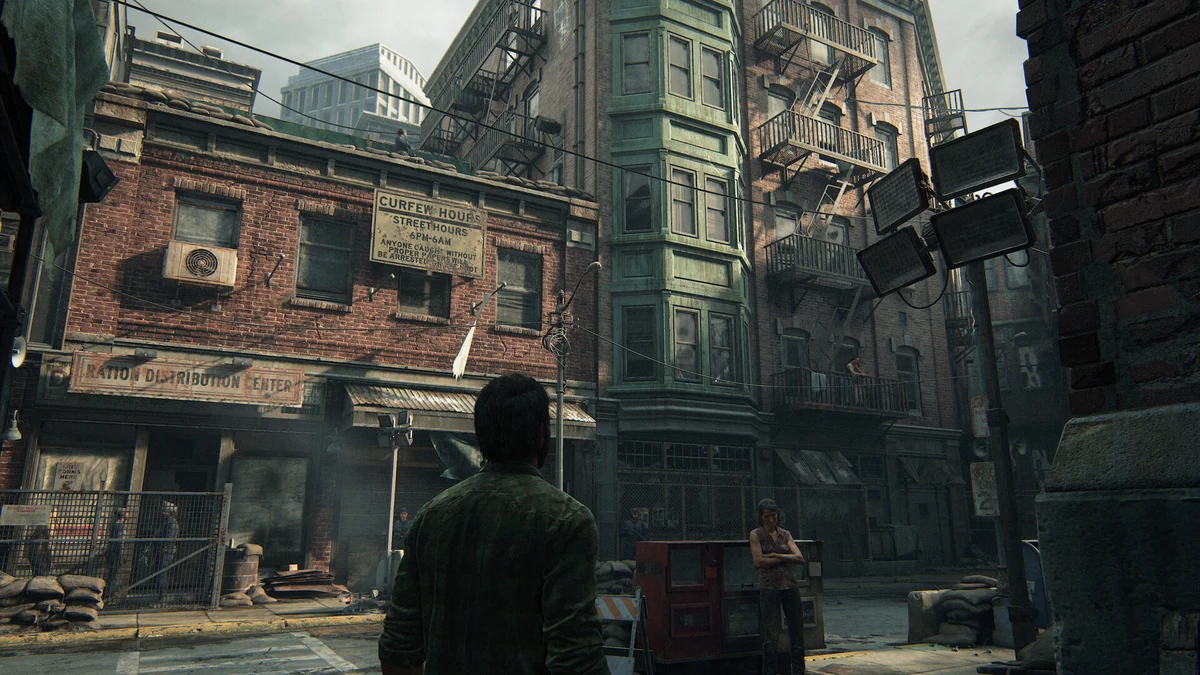
The Last of Us Part I and The Last of Us Part II are both Naughty Dog productions set in the same post-outbreak world, but they are built on different engines, different gameplay philosophies, and different storytelling ambitions. Part I is a ground-up remake of the 2013 original (and its Left Behind expansion), while Part II is a 2020 sequel that pushed the series into more open, systemic combat. This guide breaks down how the two compare without spoiling major plot beats, with a clearly marked section at the end for readers who want the deeper story differences. For a full rundown of the entire series timeline and games, check out our complete The Last of Us guide.
How the Two Games Are Connected
Part I follows Joel and Ellie’s journey across a fungal-outbreak United States as Joel is tasked with smuggling Ellie, who is immune to the Cordyceps infection, to a resistance group called the Fireflies. Part II picks up several years later in Jackson, Wyoming, and follows Ellie as the now-older protagonist alongside a second playable character introduced partway through the game. You do not need to replay Part I immediately before starting Part II, but the emotional throughline between the two games is strong enough that most guides recommend playing them in release order.
Gameplay Evolution From Part I to Part II
Part I plays close to the original 2013 design: relatively linear, corridor-style levels, a fixed melee and firearms loadout, and a Listen Mode that highlights nearby enemies through walls. Part II, built later using tools developed for Uncharted 4, expanded the traversal and combat toolkit considerably. Ellie can go prone and crawl through tall grass, jump and vault more freely, and use a proper dodge move that opens up counterattack windows in melee fights. Levels in Part II are also more frequently semi-open, giving players multiple routes into an encounter rather than a single critical path.
Both games retain a shared skeleton: scavenging for crafting materials, upgrading weapons at workbenches, and spending supplement pills on a skill tree. Part II simply has more branches in that skill tree and more crafting recipes, including smoke bombs and stun bombs that Part I does not have.
Combat and Enemy AI Differences
Enemy behavior is where the two games diverge most sharply. In Part I, human enemies patrol in relatively predictable patterns and infected react largely to sound and sightlines. Part II’s human factions call out to each other by name, actively search in coordinated patterns when they lose track of you, and can flank or surround your position if a fight drags on. Infected also received new variants in Part II, including Shamblers, which release corrosive gas clouds, giving both stealth and combat encounters more variety than Part I’s roster of Runners, Stalkers, Clickers, and Bloaters.
Because of these AI changes, Part II generally rewards a slower, more deliberate stealth approach, while Part I’s combat can be muscled through more consistently with direct confrontation, especially on lower difficulties.
Story Structure and Themes (Spoiler-Light)
Part I is a tightly focused two-hander: almost the entire narrative is filtered through Joel and Ellie’s relationship as it develops over a single cross-country journey. Part II widens that lens considerably, splitting its runtime across multiple playable perspectives and jumping around in time more than its predecessor. Thematically, Part I is often described as a story about found family and survival, while Part II is built around cycles of violence, revenge, and empathy for people on opposing sides of a conflict. Part II is also roughly twice the length of Part I, with a full playthrough commonly running well over 20 hours compared to Part I’s 12-to-15-hour campaign.
SPOILER SECTION: Major Plot and Character Differences
The following section discusses specific plot points from both games. Skip ahead to the next heading if you want to stay unspoiled.
In Part I, Joel ultimately makes a defining choice at the Firefly hospital that shapes the rest of the series: he chooses to save Ellie rather than allow the Fireflies to operate on her for a cure, and he lies to her about it. That decision, and the audience’s complicated feelings about it, is the emotional seed that Part II grows from.
Part II opens with a time jump to Jackson, where Joel’s actions eventually catch up with him. A significant portion of the early game is spent processing the fallout of his death, which drives Ellie to hunt down those responsible. The game then introduces Abby as a second protagonist and structures its middle act around showing the same days-long conflict in Seattle from both Ellie’s and Abby’s points of view, deliberately complicating who the player is meant to root for. Where Part I ends on a morally ambiguous but relatively contained note, Part II ends with Ellie making a costly personal choice about whether to continue pursuing revenge, closing out a much longer arc about what violence takes from the people who commit it.
Which Game Should You Play First?
Playing in release order, Part I then Part II, is the recommended path for new players, since Part II is written as a direct continuation and assumes familiarity with Joel and Ellie’s relationship from the first game. If you already know the story from the 2013 original or the HBO adaptation and just want the best-playing version of each game, Part I Remastered on PS5 or PC and Part II Remastered on PS5 or PC both represent the definitive versions of their respective entries, with updated visuals, refined combat, and additional bonus content not found in the original PS3 or PS4 releases.
Length, Scope, and Replay Value
Beyond the story, replay value differs too. Part I’s main replay hooks are difficulty settings, Permadeath-style challenges, and a small set of unlockable extras. Part II Remastered adds considerably more replayability through its No Return roguelike survival mode, guitar-playable levels, and developer commentary, giving it more reasons to return after the credits roll. Both games support New Game Plus, letting you carry upgrades into a fresh playthrough on a harder difficulty.
Visual and Technical Upgrades in the Remastered Versions
Part I is a full remake rather than a simple visual update, rebuilt with new character models, environmental detail, and lighting that bring it in line with Part II’s fidelity. Facial animation and performance capture were redone as well, which is why cutscenes in Part I look noticeably closer to Part II’s than to the original 2013 or 2014 Remastered releases. Part II Remastered, by contrast, was already a technically advanced game at launch in 2020, so its Remastered pass focuses more on added content, higher-resolution textures, and PS5-specific features like faster load times and improved haptic feedback, rather than rebuilding the game from scratch.
Both Remastered editions also expanded accessibility options considerably compared to their original releases, including audio cues for traversal, high-contrast display modes, and extensive combat and navigation assists. These options make both games more approachable for players with visual, hearing, or motor impairments, and Naughty Dog has continued to cite this accessibility work as a design priority across both titles.
Left Behind and Bonus Content
Part I includes the Left Behind story, a prequel-style expansion focused on Ellie and her friend Riley, playable as a standalone chapter accessible from the main menu. Part II Remastered does not have an equivalent standalone story expansion, but it compensates with its own bonus content: a set of Lost Levels showing unfinished or cut sections of the game with developer commentary, guitar-playable free-play segments for several in-game songs, and the No Return survival mode. Neither game’s bonus content overlaps with the other, so players interested in getting the most out of each purchase should expect different types of extra material depending on which entry they pick up.
Sources: – The Last of Us Part 1 vs. Part 2 Remastered | A Side-by-Side Comparison – G2A News – what are the gameplay differences between the last of us part i and part ii? – GameGenie – The Last of Us Part I | The Last of Us Wiki | Fandom – 5 major ways ‘The Last of Us Part 2’ improves upon the original – Inverse

[…] The Last of Us Part I vs Part II: Key Differences (ESRB M) The Last of Us Part II Remastered: No Return Guide (ESRB M) The Last of Us Explained: Games, Story & HBO Show Guide (ESRB M) Horizon Forbidden West (ESRB T) […]
[…] The Last of Us Part I vs Part II: Key Differences (ESRB M) The Last of Us on PC: Requirements and Performance (ESRB M) The Last of Us Part II Remastered: No Return Guide (ESRB M) Horizon Forbidden West (ESRB T) […]