
Table of Contents
- What Is The Last of Us?
- The Story and Setting of The Last of Us Part I
- The Last of Us Part II Story (Major Spoiler Warning)
- Gameplay Systems: Stealth, Crafting, and Combat
- Difficulty Modes: Permadeath and Grounded
- No Return: The Roguelike Survival Mode
- Remakes, Remasters, and PC Ports
- The Last of Us on PC: Platforms and Performance
- The HBO Show Connection
- The Multiplayer Project: What Happened to Factions
- Critical Reception: Acclaim and Controversy
- Who Is The Last of Us For?
- FAQ
- Conclusion
- External Authority Sources
Few games have reshaped how the industry thinks about storytelling the way The Last of Us has. What began as a 2013 PlayStation 3 exclusive from Naughty Dog grew into one of gaming’s defining franchises: two mainline entries, a ground-up PS5 remake, a remastered sequel with an entirely new roguelike mode, a cancelled multiplayer spin-off, and an HBO adaptation that introduced Joel and Ellie’s story to millions of viewers who had never held a controller. If you are trying to figure out where to start, whether the remake is worth buying, how the HBO show lines up with the games, or why Part II split its fanbase so sharply, this guide brings all of it together in one place.
This is a franchise built on a simple, brutal premise — a fungal pandemic has ended civilization, and two survivors have to cross a ruined country together — but the games use that premise to ask uncomfortable questions about violence, loyalty, and what people become when the rules disappear. Below, we cover the story and setting of both mainline games, how the stealth-crafting-combat loop actually plays, every difficulty option including Permadeath and Grounded, the No Return roguelike mode added in Part II Remastered, the PS5 remake and PC ports, the HBO series and its production status, and the current state of the long-promised multiplayer project. Spoiler-sensitive sections are clearly flagged so you can skip them if you haven’t finished the games.
What Is The Last of Us?
The Last of Us is a franchise of narrative-driven action-survival games developed by Naughty Dog and published by Sony Interactive Entertainment, originally created by game director Bruce Straley and writer-director Neil Druckmann. The series consists of two mainline entries — The Last of Us (2013) and The Last of Us Part II (2020) — along with a standalone story DLC (Left Behind), a PS5 remake of the first game (The Last of Us Part I), and a remastered edition of the sequel (The Last of Us Part II Remastered) that adds new content on top of the original release.
The franchise is set in a United States devastated by a mutated strain of Cordyceps, a real genus of parasitic fungus that, in nature, infects insects and hijacks their behavior. In the game’s fiction, a mutated Cordyceps strain crossed into humans, spreading through bites and airborne spores and collapsing society within weeks. Twenty years later, the survivors live under militarized quarantine zones, in outlaw settlements, or as roaming raiders, while infected humans — Runners, Stalkers, Clickers, and the heavily mutated Bloaters — stalk the ruins alongside them. The series has since expanded into an HBO television adaptation, making it one of the most successful video game-to-television crossovers to date.
Naughty Dog was already one of PlayStation’s most respected first-party studios when the original Last of Us released in June 2013, having built its reputation on the Uncharted series’ blockbuster action-adventure formula. The Last of Us marked a deliberate shift toward slower, more grounded survival mechanics and heavier subject matter, and the gamble paid off: the original sold over 1.3 million copies in its first week and has gone on to sell well over 17 million copies across its various editions, making it one of PlayStation’s best-selling first-party franchises of all time.
The franchise is set in a United States devastated by a mutated strain of Cordyceps, a real genus of parasitic fungus that, in nature, infects insects and hijacks their behavior. In the game’s fiction, a mutated Cordyceps strain crossed into humans, spreading through bites and airborne spores and collapsing society within weeks. Twenty years later, the survivors live under militarized quarantine zones, in outlaw settlements, or as roaming raiders, while infected humans — Runners, Stalkers, Clickers, and the heavily mutated Bloaters — stalk the ruins alongside them. The series has since expanded into an HBO television adaptation, making it one of the most successful video game-to-television crossovers to date.
The Story and Setting of The Last of Us Part I
The Last of Us opens in 2013, on the night the Cordyceps outbreak begins, and follows Joel Miller, a smuggler in Texas, as he loses his daughter Sarah during the initial chaos. The story then jumps forward twenty years to the Boston quarantine zone, where a hardened, emotionally shut-down Joel works as a smuggler alongside his partner Tess. A job to move “cargo” out of the city turns out to be a fourteen-year-old girl named Ellie, who Joel and Tess soon learn is the only known person immune to Cordyceps infection.
Tess is bitten and stays behind, leaving Joel to escort Ellie across the country to the Fireflies, a rebel militia who believe her immunity is the key to a cure. The journey takes them from Boston to Pittsburgh, through rural Wyoming with Joel’s brother Tommy, across Colorado and Utah with fellow survivors Bill, Henry, and Sam, and finally to Salt Lake City, where the Fireflies are based. Along the way, Joel grows increasingly protective of Ellie, and the game builds their bond as a surrogate father-daughter relationship forged by loss on both sides.
The ending is the moment that defines the entire series. When the Fireflies reveal that curing Ellie requires an operation that will kill her, Joel refuses to accept it. He fights through the hospital, kills the surgeon and the Fireflies protecting the operating room, and carries an unconscious Ellie out of Salt Lake City. When she wakes and asks what happened, Joel lies, telling her the Fireflies found other immune people and gave up on the cure. It is an ending that refuses to resolve cleanly — Joel’s choice saves the person he loves while potentially costing humanity its only chance at a vaccine, and the game never tells the player whether he did the right thing.
The standalone expansion Left Behind, included in The Last of Us Part I, runs as a parallel story told through flashbacks. It follows a younger Ellie and her best friend Riley exploring an abandoned mall before the events of the main game, and it fills in the backstory of how Ellie was bitten and became immune, while also establishing her relationship with Riley as something deeper than friendship — a detail that carries forward into Part II.
The Last of Us Part II Story (Major Spoiler Warning)
Everything below this point discusses major plot events from The Last of Us Part II in detail, including the game’s ending. If you have not finished the game, skip ahead to the Gameplay Systems section.
The Last of Us Part II is set roughly four years after the first game. Joel and Ellie live in Jackson, Wyoming, a fortified settlement led by Joel’s brother Tommy, but their relationship has grown distant since Ellie learned the truth about what happened in Salt Lake City. Early in the game, a young woman named Abby, traveling with a group from the Washington Liberation Front (WLF), tracks Joel down and kills him in front of Ellie — a killing motivated by revenge, since Abby’s father was the surgeon Joel killed to save Ellie at the end of the first game.
Ellie, along with her girlfriend Dina, sets out for Seattle to hunt down Abby and her group. The game then structures its middle act around two parallel three-day campaigns: one following Ellie’s brutal, single-minded pursuit of revenge through WLF-controlled Seattle, and one following Abby’s own three days, told from her perspective as a WLF soldier caught in a growing conflict with a rival faction, the religious Seraphites (also called Scars). This dual-perspective structure is the game’s most discussed narrative choice — it deliberately forces players to spend hours controlling and sympathizing with the person who killed Joel, reframing her not as a villain but as another survivor shaped by loss and violence.
The two storylines converge in a violent confrontation in a Seattle theater, where Ellie kills people close to Abby and is ultimately stopped and left alive by Abby, mirroring the mercy Ellie initially refused to extend. Ellie later leaves Jackson and Dina behind to make one final attempt to find and kill Abby in Santa Barbara, discovering her enslaved and near death. In the climactic confrontation, Ellie overpowers Abby but ultimately chooses to let her go, abandoning the cycle of revenge that has consumed her — though not before losing two fingers in the fight, which later prevents her from playing guitar the way Joel taught her. The game ends with Ellie returning to the farmhouse she shared with Dina and their son, JJ, only to find it empty; she leaves the guitar behind and walks away alone, an ending as ambiguous and unresolved as the first game’s.
Gameplay Systems: Stealth, Crafting, and Combat
Both mainline games share the same core gameplay loop, refined significantly between the first and second entries. Players spend most of their time scavenging environments for crafting materials — alcohol, rags, blades, gunpowder, and scrap — while alternating between stealth and open combat depending on the encounter and the player’s approach.
Stealth is central to survival against both infected and human enemies. Players can crouch, move through tall grass, and use Listen Mode (a sonar-like ability that reveals nearby enemy positions through walls) to plan routes around threats. Human enemies in Part II were overhauled with names that other enemies call out when a companion dies, a system designed to make combat feel more consequential and less disposable than typical action-game skirmishes.
Crafting happens in real time, using a shared pool of materials to build shivs (used both for stealth kills and unlocking doors), improvised explosives, health kits, and upgraded ammunition — meaning every crafting decision is a trade-off against having supplies for something else. Weapon upgrades are handled separately at workbenches scattered through the world, using tools and parts found while exploring.
Combat blends firearms, improvised melee weapons, and environmental interaction. Ammunition is intentionally scarce, especially on higher difficulties, pushing players toward stealth or melee rather than sustained gunfights. Enemy variety is a major driver of tension: infected range from blind, echolocating Clickers to the heavily armored Bloaters and, in Part II, the acid-spewing Shamblers, while human factions — FEDRA soldiers and Fireflies in the first game, and the WLF and Seraphites in the second — behave with squad-based AI that flanks, communicates, and reacts to the player’s tactics.
Progression and companions round out the systems layer. Both games use supplement pills and training manuals to unlock skill trees governing health, crafting speed, stealth, and listening range, letting players lean into a preferred playstyle over a run. Companions — Ellie and Tess in the first game, Dina, Jesse, and Abby’s allies in the second — fight alongside the player with their own AI behavior, occasionally spotting and calling out enemies, though they’re generally invisible to enemy detection in stealth sections to keep the systems fair. Naughty Dog has also built out one of the industry’s most extensive accessibility suites across both games, including full audio descriptions, high-contrast enemy outlines, navigation assistance, and extensive control remapping, work that has been repeatedly cited as an industry benchmark by accessibility advocates and outlets.
Difficulty Modes: Permadeath and Grounded
The Last of Us offers a tiered difficulty system, from Very Light and Light up through Moderate, Hard, and the series’ signature hardcore tier, Grounded. Grounded difficulty strips away many of the tools that make survival manageable on lower settings: Listen Mode is disabled, HUD elements like the health meter and ammo counter disappear, enemies deal significantly more damage, and crafting materials, ammunition, and upgrade parts become scarce. It is built to force full reliance on environmental awareness and careful resource management rather than combat reflexes.
Part II introduced Permadeath as a separate, stackable modifier that can be layered on top of any difficulty, including Grounded. With Permadeath enabled, dying forces a full restart from the beginning of the game — though the mode does allow players to configure permadeath checkpoints on a per-chapter basis rather than requiring an all-or-nothing single-life run, giving players some control over how punishing the mode actually is. Combining Grounded difficulty with Permadeath is widely regarded as the franchise’s ultimate challenge, removing UI assistance, survival tools, and any margin for error at once.
No Return: The Roguelike Survival Mode
No Return is a single-player roguelike survival mode introduced with The Last of Us Part II Remastered, released for PS5 on January 19, 2024, and later for PC alongside the Remastered PC port. Rather than following the story campaign, No Return sends players through a randomized run of encounters across the game’s maps, choosing their path node by node before a final boss encounter.
Encounters fall into four core types: Assault, which pits the player against escalating waves of enemies; Capture, which requires breaking into a guarded safe full of supplies; Holdout, in which the player and an AI companion defend a position against swarming infected; and Hunted, which requires surviving a timer against continuous enemy reinforcements. True to the roguelike genre, death is permanent within a run — a loss mid-run forfeits all weapons, upgrades, and items accumulated so far, and the player starts over with a fresh set of randomized scenarios. No Return also unlocks a roster of playable characters beyond Ellie and Abby, including figures from earlier in the story, each with distinct starting loadouts and skills, and Naughty Dog has continued supporting the mode post-launch with free updates adding new characters, maps, and achievements.
Remakes, Remasters, and PC Ports
The franchise’s back catalog has been reworked more than once, and it’s easy to lose track of which version is which.
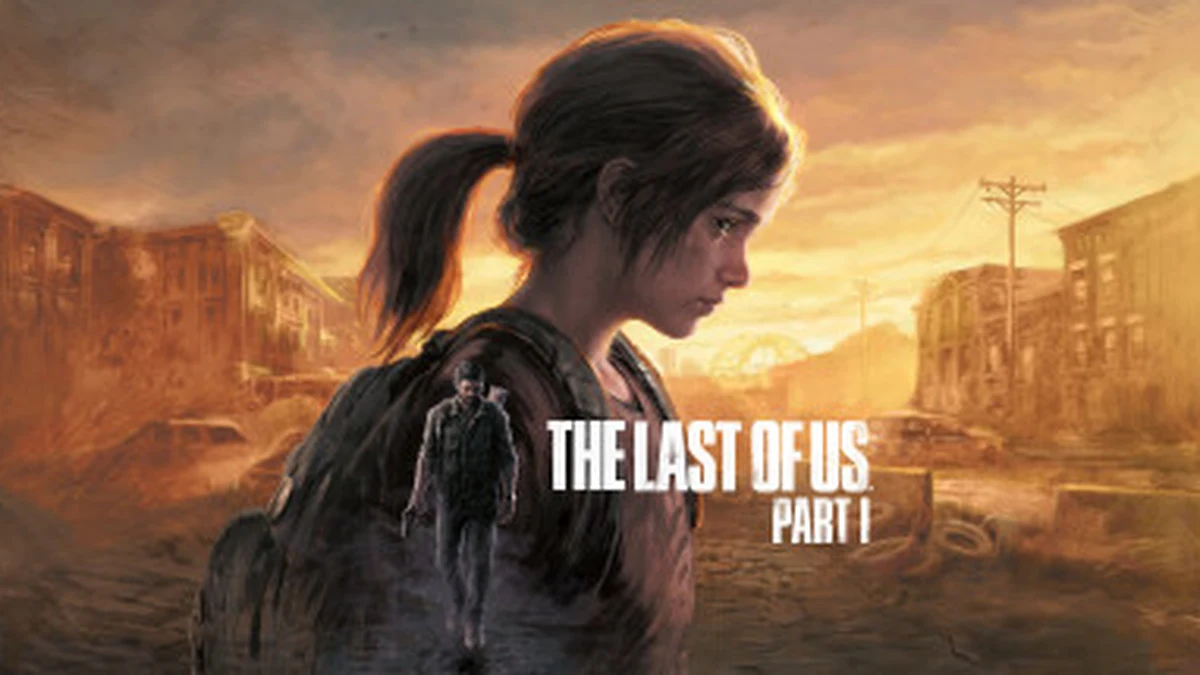
The Last of Us Part I is a ground-up remake of the 2013 original (not a remaster), rebuilt using the engine and animation systems developed for Part II. It launched exclusively on PS5 on September 2, 2022, with substantially upgraded visuals, improved character models and facial animation, enhanced enemy AI, and expanded accessibility options. It includes the Left Behind story DLC. A PC port followed on March 28, 2023, after a short delay from its originally planned March 3 release, developed with support from Naughty Dog’s PC porting partners.
The Last of Us Part II Remastered followed the same pattern in reverse order — rather than a full remake, it is a remaster of the 2020 PS5/PS4 original with meaningful new content layered on top. Alongside visual and performance improvements, it introduced the No Return roguelike mode, a set of “Lost Levels” (cut content from development, presented with director commentary), a Guitar Free Play mode, a Speedrun mode with leaderboards, and unlockable behind-the-scenes extras. It launched on PS5 on January 19, 2024, with a PC version arriving later on April 3, 2025, via Steam and the Epic Games Store, built with Naughty Dog’s development partners Nixxes Software and Iron Galaxy Studios.
Between the two, Part I is best understood as the definitive way to experience the original story with modern presentation, while Part II Remastered is aimed primarily at existing fans of Part II who want the new No Return mode and bonus content — the core story and gameplay of the base 2020 release are otherwise unchanged.
The Last of Us on PC: Platforms and Performance
Both Part I and Part II Remastered are available on PC, alongside their PS5 (and, for the original Part II, PS4) releases. The PC ports were handled with development partners experienced in PlayStation-to-PC conversions, and both include PC-specific features such as ultrawide monitor support, uncapped frame rates, DirectStorage support for faster asset streaming, HDR, full gamepad support, and PlayStation-style trophy tracking through in-game overlays.
It’s worth noting that Part I’s PC launch in March 2023 had a rocky start, with widespread reports of stuttering, crashes, and high system requirements relative to its visual output — issues Naughty Dog addressed through a series of post-launch patches. Anyone buying the PC version today is getting a considerably more stable build than what shipped at launch, but it’s a useful reminder to check current system requirements and recent patch notes before purchase, particularly on older hardware. Part II Remastered’s PC port, releasing nearly two years later, benefited from lessons learned on the first port and launched in a comparatively more polished state.
Neither mainline game has an official Xbox release; the franchise remains a PlayStation-first and PC franchise, with no console release outside Sony platforms to date.
The HBO Show Connection
HBO’s The Last of Us is a live-action adaptation co-created by Craig Mazin (Chernobyl) and Neil Druckmann, the game’s original writer-director, giving the show a direct creative link to the source material rather than a licensed reinterpretation. The first season, which adapted the story of the original 2013 game closely while adding new scenes and perspective shifts, aired on HBO from January to March 2023, starring Pedro Pascal as Joel and Bella Ramsey as Ellie. It was met with strong critical and audience reception and became one of HBO’s most-watched new series.
Season 2 premiered on April 13, 2025, running for seven episodes through May 25, 2025 — a shorter season than the first, reflecting the decision to split the events of The Last of Us Part II across multiple seasons rather than compress the game’s dual storyline into a single run. The season introduced Kaitlyn Dever as Abby, alongside Isabela Merced as Dina, Young Mazino as Jesse, Ariela Barer as Mel, Tati Gabrielle as Nora, Spencer Lord as Owen, and Danny Ramirez as Manny.
HBO renewed the series for a third season on April 9, 2025, ahead of season two’s premiere, confirming that the adaptation will continue into Abby’s perspective on events, running concurrently with the story already covered. Season 3 is expected to arrive in 2027. In a significant shift for the production, Neil Druckmann announced in July 2025 that he was stepping back from creative involvement in the show to focus fully on Naughty Dog’s next game projects, leaving showrunner Craig Mazin as the sole writer moving forward. For players wondering whether to experience the story via game or show first: the HBO series follows the games’ plot closely enough that either order works, though the games’ interactive combat and exploration sequences obviously don’t translate one-to-one to television pacing.
The Multiplayer Project: What Happened to Factions
The original 2013 Last of Us shipped with a competitive online multiplayer mode called Factions, which built a dedicated fanbase around its permadeath-adjacent squad survival format, and Naughty Dog had spent years developing a larger, standalone follow-up — reported as The Last of Us Online — intended as a live-service multiplayer game set in the franchise.
In December 2023, Naughty Dog officially cancelled the project. The studio explained that as the multiplayer team moved from preproduction toward full production, “the massive scope of our ambition became clear” — supporting the game post-launch as a live-service title would have required committing the studio’s resources for years, at the direct expense of new single-player development. Naughty Dog chose to prioritize returning to narrative single-player games rather than becoming a primarily live-service studio, and confirmed that some ideas and systems built for the cancelled multiplayer project would be repurposed elsewhere, a lineage that’s visible in the design of the No Return roguelike mode added to Part II Remastered. As of 2026, there is no standalone Last of Us multiplayer game in active development, and Naughty Dog has given no indication of reviving the project.
Critical Reception: Acclaim and Controversy
The original Last of Us received near-universal critical acclaim on release in 2013, earning a “universal acclaim” rating on Metacritic based on dozens of reviews and going on to win more than 240 Game of the Year awards worldwide, including Game of the Year at the DICE Awards, IGN’s Best of 2013 awards, and the Game Developers Choice Awards. Ashley Johnson, who voiced Ellie, won the BAFTA Games Award for Best Performer in 2014, while both she and Troy Baker (Joel) swept voice acting honors at the Spike VGX awards. Its story, character writing, and sound design were repeatedly singled out as genre-defining.
The Last of Us Part II is one of the most divisive major releases in gaming history, and understanding that split is part of understanding the game’s place in the industry. Critically, it was acclaimed on release, sitting at roughly 95 on Metacritic based on critic reviews, and it went on to win Game of the Year at multiple major award shows, including a record-setting sweep at The Game Awards. Commercially, the divisive reception did nothing to slow sales: Part II sold four million copies in its first three days and passed ten million copies within a year, making it one of the best-selling PlayStation 4 exclusives of its generation despite launching in the middle of the COVID-19 pandemic. Its player user-score reception told a very different story: the game’s Metacritic user score dropped to roughly 5.4 out of 10 in the weeks after launch, driven heavily by review bombing rather than a broad consensus among people who had actually finished the game. The backlash centered on two flashpoints: the early death of Joel, which a portion of the fanbase viewed as a betrayal of the first game’s central relationship, and the game’s prominent inclusion of LGBTQ+ characters and themes, which drew a hostile response from some players. The controversy escalated well beyond review scores — cast and crew, including actress Laura Bailey (Abby) and director Neil Druckmann, faced targeted harassment and threats. Notably, Metacritic user scores trended upward over time as more players completed the full story rather than reacting to leaked or out-of-context footage, and the game is now widely regarded within the industry as a bold, technically extraordinary, and narratively ambitious sequel — even among those who found its story choices difficult.
Who Is The Last of Us For?
The Last of Us is best suited to players who want narrative-driven, cinematic single-player experiences and don’t mind slower-paced, resource-scarce survival gameplay over fast, twitch-based action. Its combat rewards patience and planning rather than reflexes alone, and its pacing leaves substantial room for quiet exploration, environmental storytelling, and character dialogue between set-pieces.
It is not a family-friendly franchise. Both games carry Mature ratings for intense violence, graphic depictions of injury and death, strong language, and disturbing thematic content, and Part II in particular contains sequences of prolonged brutality that go further than most mainstream releases. Players sensitive to depictions of loss, violence against animals, or graphic combat should be aware going in. For horror fans, action-adventure fans, and anyone interested in games as a storytelling medium, it remains one of the strongest entry points the medium has produced — but it is a heavy, emotionally demanding experience rather than a casual one.
If you’re coming from prestige survival-horror or narrative titles like Resident Evil, God of War, or The Walking Dead’s episodic games, the pacing and tone will feel familiar. Players looking primarily for fast, arcade-style shooting or competitive multiplayer should look elsewhere for now, since the franchise’s only multiplayer offering, No Return, is built around single-player replayability rather than online play against other people.
FAQ
Do I need to play the first game before Part II? Yes. The Last of Us Part II is a direct narrative sequel that assumes full knowledge of the first game’s ending and the relationship between Joel and Ellie; playing Part II without that context significantly undercuts its central emotional arc.
Is The Last of Us Part I a remake or a remaster? It’s a full remake, not a remaster. Naughty Dog rebuilt the 2013 original from the ground up using the engine, animation technology, and gameplay refinements developed for Part II, rather than simply upgrading textures and resolution on the existing game.
Can I play The Last of Us on Xbox? No. Both mainline games remain PlayStation and PC exclusives, with PS5 versions of Part I and Part II Remastered and PC ports of both. There is currently no Xbox release for either game.
Is the HBO show the same story as the games? The HBO series follows the games’ story closely, co-created by original game writer-director Neil Druckmann alongside Craig Mazin, though it makes some structural changes, including splitting Part II’s story across multiple seasons and expanding certain supporting characters’ backstories.
What is No Return mode and do I need to finish the story first? No Return is a roguelike survival mode added in The Last of Us Part II Remastered, built around randomized combat encounters rather than the story campaign. It’s a separate mode from the main story and can generally be accessed without completing the campaign, though some playable characters unlock through story progress.
Is there a Last of Us multiplayer game I can play right now? No standalone multiplayer game exists. Naughty Dog cancelled its in-development multiplayer project, reported as The Last of Us Online, in December 2023, citing the unsustainable scope of supporting it as a long-term live-service title.
Conclusion
The Last of Us endures because it treats its post-apocalyptic premise as a backdrop for character study rather than the point of the story itself. Part I built one of gaming’s most respected father-daughter narratives around a genuinely difficult moral choice; Part II deliberately complicated that legacy by forcing players to inhabit the perspective of the person who took Joel away, and paid for that ambition with one of the most contentious receptions in the medium’s history — even as it swept major Game of the Year awards. Between the PS5 remake, the PC ports, Part II Remastered’s No Return mode, and an HBO adaptation now heading into its third season, there has never been an easier moment to get into the franchise, whichever format you prefer. What’s missing is a live multiplayer game, cancelled in 2023 with no replacement announced as of 2026 — and, for now, any word on a Part III remains unconfirmed speculation rather than an official plan.
External Authority Sources
- Naughty Dog Official Blog — The Last of Us Part II Remastered: No Return
- PlayStation Blog — The Last of Us Part II Remastered Comes to PC April 3, 2025
- Variety — The Last of Us Online Multiplayer Game Canceled by Naughty Dog
- Wikipedia — List of Accolades Received by The Last of Us
[…] The Last of Us Part II Remastered: No Return Guide (ESRB M) The Last of Us on PC: Requirements and Performance (ESRB M) The Last of Us Survival Tips and Combat Guide (ESRB M) The Last of Us Explained: Games, Story & HBO Show Guide (ESRB M) […]
[…] Last of Us Part I vs Part II: Key Differences (ESRB M) The Last of Us Explained: Games, Story & HBO Show Guide (ESRB M) The Last of Us on PC: Requirements and Performance (ESRB M) Horizon Forbidden West (ESRB […]